Russia (TDI): Indonesia has taken a major step to expand its global trade footprint by signing a free trade agreement (FTA) with the Eurasian Economic Union (EAEU), a Russia-led bloc that includes Armenia, Belarus, Kazakhstan, and Kyrgyzstan.
The deal, announced on Monday, reflects Indonesia’s strategic efforts to deepen economic ties beyond traditional partners and explore new markets for its exports.
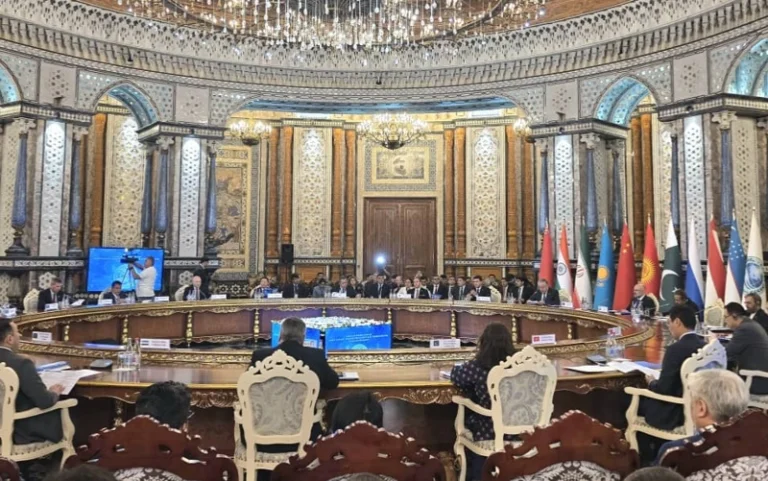
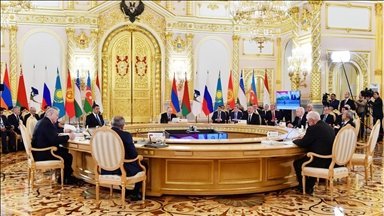
The free trade agreement was formally signed on the sidelines of a summit held in St. Petersburg, Russia.
Trade Minister Budi Santoso signed the FTA alongside Armenian Deputy Prime Minister Mher Grigoryan, Belarusian Deputy Prime Minister Natalia Petkevich, Kazakh Deputy Prime Minister Serik Zhumangarin, Kyrgyz First Deputy Prime Minister Daniyar Amangeldiev, Russian Deputy Prime Minister Alexey Overchuk, and Bakytzhan Sagintayev, Chairman of the Board of the Eurasian Economic Commission.
Indonesia becomes one of the first Southeast Asian countries to strike such a pact with the EAEU, signaling a move toward broader engagement with Eurasian markets.
Under the agreement, which followed nearly two years of negotiations, the union will grant Indonesia preferential tariff treatment on 90.5% of its total tariff lines, giving the country access to roughly 180 million consumers across the EAEU member states.
Jakarta has not disclosed the specific trade concessions it offered, but officials emphasized that the pact opens major commercial opportunities for Southeast Asia’s largest economy, which has a population of about 280 million.
Trade Minister Santoso highlighted that the FTA will allow Indonesia’s key products to enter EAEU markets under more competitive terms, boosting exports of palm oil and its derivatives, footwear, textiles, fishery products, rubber, furniture, and electronics.
The deal comes amid shifting global trade patterns as countries aim to build more resilient supply chains and strengthen South-South economic cooperation, partnerships among developing and emerging economies.
The FTA reflects Indonesia’s ambition to become a central hub in multiple trading networks across Asia, Europe, and beyond.
Despite the economic challenges the EAEU has faced in recent years, leaders on both sides expressed hope that the new free trade agreement will boost growth, generate jobs, and foster collaboration in areas like food processing, machinery, and small businesses.
Indonesia’s move may also inspire other Southeast Asian economies to explore similar arrangements with the EAEU, potentially reshaping trade connections across the regions and strengthening economic ties between Asia and Eurasia.

Minahil Khurshid holds a master’s degree in Peace and Conflict Studies from CIPS, NUST. She has a strong interest in current affairs, geopolitics, and policy analysis.