For decades, cross-border payments have been dominated by a handful of global networks, shaping how money moves and how economies interact. While these systems have delivered efficiency, they have also entrenched dependencies, particularly for emerging economies that rely on infrastructures they do not control.
Indonesia is now testing a different path.
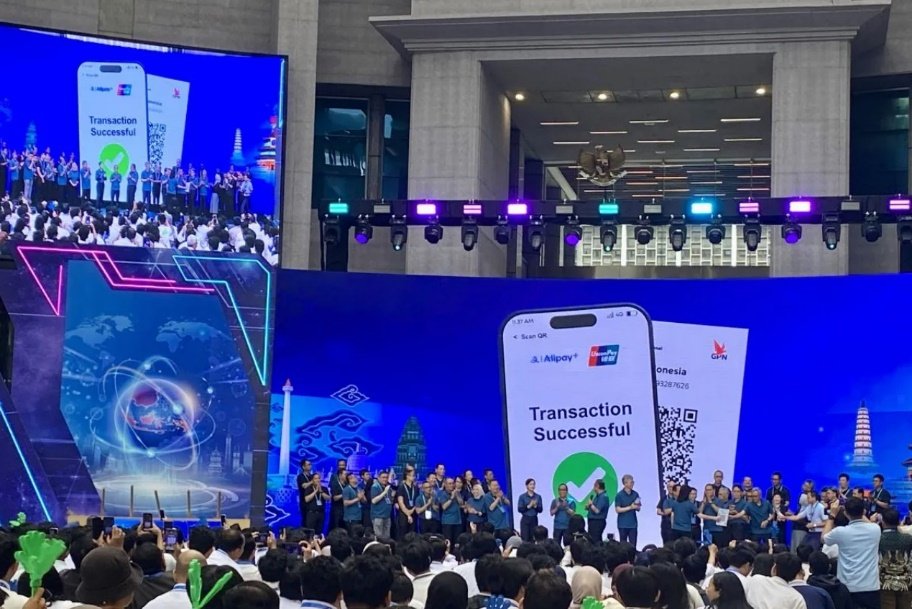
With the launch of cross-border QRIS connectivity between Indonesia and China on April 30, 2026, the country is not merely expanding its digital payment system. It is signaling a broader ambition: to build a payment architecture that is locally anchored, regionally integrated, and less dependent on traditional global intermediaries.
But beyond the technology lies a deeper question: can such innovations reshape financial power, or do they simply make transactions more efficient without changing underlying economic dynamics?
From Domestic Innovation to Global Experiment
QRIS (Quick Response Code Indonesian Standard) has evolved rapidly since its introduction in 2020. By early 2026, it had reached around 44 million merchants, most of them micro, small, and medium enterprises (MSMEs), and 61.7 million users, facilitating over 31 billion transactions with a cumulative value of approximately IDR 2,970 trillion.
These figures reflect more than adoption, they signal a structural shift in payment behavior within one of the world’s largest emerging economies.
Developed and scaled by Bank Indonesia as part of its broader digital financial strategy, QRIS reflects a policy-driven effort to enhance efficiency, inclusion, and resilience within Indonesia’s payment system.
The move into cross-border payments adds a new dimension. In the first quarter of 2026, QRIS recorded 2.79 million inbound transactions by foreign users in Indonesia, rising 222 percent year-on-year, with a total value of about IDR 713.6 billion. Meanwhile, outbound transactions by Indonesian users abroad reached 737,647 transactions, amounting to IDR 249.3 billion.
At first glance, these figures suggest clear gains for tourism and domestic consumption. Yet they also point to a more complex transformation in how financial flows are structured.
The Outbound Paradox and Financial Sovereignty
Outbound spending is traditionally viewed as economic leakage, money flowing out of the domestic economy. However, under QRIS’s cross-border design, this assumption becomes less straightforward.
Transactions conducted abroad continue to be processed through domestic banking systems, with funds debited from Indonesian accounts and routed through integrated clearing frameworks linked to the national financial system. As a result, while consumption occurs abroad, financial flows remain partially anchored domestically.
This creates an important distinction: not all outbound transactions imply a loss of economic control.
The effect is further strengthened by the use of local currency transactions (LCT), which reduce reliance on major reserve currencies and lower exchange conversion costs. By enabling settlements in local currencies, the system helps mitigate exchange rate volatility while improving efficiency.
In this sense, payment systems are no longer merely transactional tools. They are becoming instruments of financial strategy, supporting monetary stability, enhancing oversight, and reinforcing domestic financial ecosystems.
Challenging the Architecture of Global Payments
The broader significance of QRIS lies in its potential to challenge how global payment systems are structured. For decades, cross-border transactions have depended heavily on centralized global networks, often associated with higher costs and limited flexibility for emerging economies. QR-based regional systems offer a different approach, more decentralized, potentially more inclusive, and better aligned with domestic financial infrastructures.
Indonesia’s partnership with China demonstrates how such systems can evolve. Rather than replacing global networks outright, they operate as parallel frameworks, gradually reshaping how cross-border transactions are conducted.
This shift is particularly important for countries seeking greater financial autonomy. By building interoperable systems rooted in domestic networks, emerging economies can reduce external dependence while maintaining global connectivity.
At the same time, the impact is not purely structural. For millions of Indonesian MSMEs, cross-border QR payments open new opportunities. Small businesses that once served only domestic customers can now engage, directly and affordably, with foreign consumers, particularly in sectors such as tourism.
Read More: Online Payments in 2026: How to Choose the Best Payment Gateway in Pakistan
Indonesia’s QRIS initiative reflects a broader transformation in the role of emerging economies within the global financial system. For years, developing countries have largely been users of financial infrastructures designed elsewhere. Today, that dynamic is beginning to shift.
Indonesia is no longer merely adopting global systems, it is beginning to shape them. Through policy coordination, institutional capacity, and international collaboration, Indonesia is positioning itself as an active contributor to evolving financial architectures.
Still, the limits of innovation remain. Payment systems alone cannot guarantee economic transformation. Their long-term impact depends on supporting factors such as digital literacy, infrastructure readiness, and alignment with the real economy.
Yet the direction is clear. QRIS does not represent a sudden disruption of the global financial order, but it signals something more gradual and potentially more profound: the emergence of alternative pathways in global payments.
In that context, QRIS is more than a payment tool. It is an early test of whether financial power can become more distributed and whether emerging economies can move from being participants in the system to helping design its next phase.
*The views presented in this article are the authors’ own and do not necessarily reflect the views of The Diplomatic Insight.

Hari Suciono
Hari Suciono is an economic practitioner at the Bank Indonesia Representative Office in Central Kalimantan. His work focuses on regional economic dynamics, monetary policy, and financial stability, with particular attention to emerging and resource-based economies. His commentary has appeared in Indonesian national media, including Kompas.com, Kumparan, Indosiana by Tempo, and Republika.