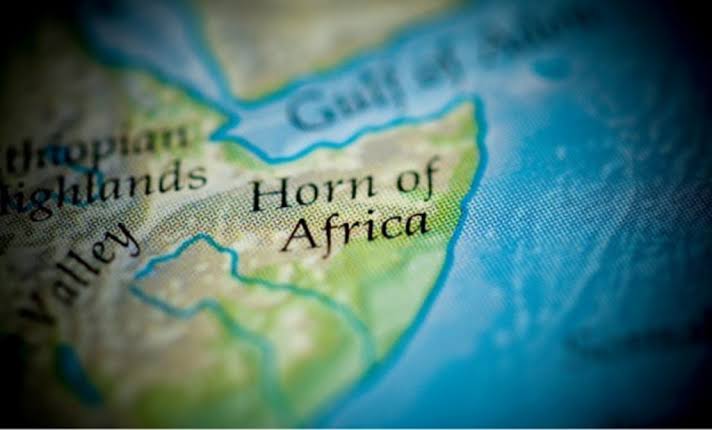
“Geography is the mother of history. Nowhere in the world is this more powerfully illustrated than in Africa.” — Ali A. Mazrui, The Africans: A Triple Heritage
For decades, relations between Egypt, Ethiopia, and Sudan have largely been reduced to a single issue: the Nile River. For years, the Grand Ethiopian Renaissance Dam has dominated political and media discussions, making it increasingly difficult to view relations among the three countries beyond the language of water, dams, and water allocations.
Yet this narrow framework is no longer sufficient to explain the rapid geopolitical transformations taking place in the region.
The triangle connecting Cairo, Addis Ababa, and Khartoum operates within a much broader geopolitical environment, where Red Sea calculations intersect with the security of the Horn of Africa, while questions of borders, trade, and ports overlap with regional and international competition.
At the center of these transformations stands Sudan—not merely as a third party in an Egyptian-Ethiopian dispute, but as a country located at the intersection of several strategic regions.
The war in Sudan, which erupted in April 2023, has made the importance of this geography even more apparent. The continuation of the conflict affects not only Sudan itself, but also the security of neighboring states and the balance of power in the Red Sea and the Horn of Africa.
Therefore, the future of relations between Egypt, Ethiopia, and Sudan will not be determined by the water issue alone. It will also depend on a broader question: How will the regional balance of power be reshaped, and what role will Sudan play in that transformation?
Sudan: More Than a Country Between Two Powers
Sudan is often treated in regional analyses as the country situated between Egypt and Ethiopia, or simply as the third party in the Nile equation. Such a view, however, understates the strategic importance of Sudan’s geography.
Sudan connects North Africa with the Horn of Africa and stretches from the Nile Basin to the Red Sea. Its borders also connect it to the wider African space extending toward the Sahel and Central Africa. This geographical position gives Sudan a significance that goes well beyond its natural resources and political boundaries.
For Egypt, Sudan represents a southern strategic depth, and its stability is closely connected to Egypt’s border security, Nile interests, and Red Sea security. For Ethiopia, Sudan is an influential western neighbor whose political, security, and economic dynamics have direct implications for Addis Ababa.
More importantly, Sudan has a coastline on the Red Sea, making it part of a strategic equation that extends beyond the Nile Basin to the Gulf states and global powers that view the Red Sea as one of the world’s most important commercial and strategic waterways.
Consequently, any major change in Sudan’s political or security environment has the potential to reshape the calculations of both Cairo and Addis Ababa.
Egypt and Ethiopia: From Water Disputes to a Struggle for Influence
The Nile and the Grand Ethiopian Renaissance Dam remain central elements of Egyptian-Ethiopian relations, but they are no longer the only factors shaping the relationship.
Egypt increasingly views its national security through a broader lens that encompasses its southern neighborhood, the Horn of Africa, and the Red Sea. As the war in Sudan continues and regional competition intensifies, Cairo has become increasingly attentive to developments across its southern and eastern strategic environment.
Ethiopia, meanwhile, is seeking to strengthen its position as a major regional power in the Horn of Africa. Access to the sea has become an important element of its strategic calculations, particularly following the loss of its coastline after Eritrea’s independence.
This pursuit is not simply about trade. It is also connected to Ethiopia’s regional standing and its ability to operate within a geopolitical environment where ports and maritime corridors have become important instruments of influence.
As a result, competition between Cairo and Addis Ababa is no longer confined to the management of Nile waters. It increasingly extends to the shape of the regional order surrounding Sudan and the wider Horn of Africa.
The Red Sea Is Redrawing the Map
Perhaps the most important transformation is the gradual shift of strategic attention from the Nile toward the Red Sea.
The Red Sea is no longer merely a maritime route connecting Europe and Asia through the Suez Canal. It has become a strategic arena where the interests of Egypt, Saudi Arabia, the Gulf states, Ethiopia, Sudan, Turkey, China, the United States, and other actors intersect.
Sudan’s importance in this context is amplified by its position along the western coast of the Red Sea. The stability of Sudanese ports, particularly Port Sudan, is not solely a Sudanese concern. It is connected to trade, maritime security, competition over ports, and the broader struggle for influence in the region.
At the same time, Ethiopia’s desire to secure maritime access makes the Red Sea littoral states increasingly important to its strategic calculations. Egypt, which controls the Suez Canal, likewise cannot view the Red Sea as separate from its national security.
Sudan therefore emerges as a point of convergence between the Nile, the Red Sea, and the Horn of Africa—not simply as a country located at the center of a political triangle. The challenge is that strategic geography does not automatically translate into political power.
The war in Sudan has revealed the other side of geography: a strategically located country can also become an arena for regional and international competition when its institutions are weak or when an internal conflict becomes prolonged.
For this reason, Sudan’s future depends not only on ending the war, but also on its ability to rebuild a stable state capable of managing its foreign relations according to its national interests.
A stable Sudan could serve as a bridge between Egypt and the Horn of Africa, between North Africa and the Red Sea, and between African and Arab markets. A weakened or fragmented Sudan, by contrast, could see its geography become a permanent source of external intervention and competition.
Treating Sudan merely as another card in the Egyptian-Ethiopian dispute would therefore be a strategic mistake. The emerging equation is no longer simply Egypt versus Ethiopia, with Sudan in between. It is a triangle whose three sides interact with a much broader regional system.
The future of the Horn of Africa may ultimately depend on the ability of these three countries to move beyond managing their disputes and toward building regional arrangements that recognize the legitimate interests of each side.
Ultimately, the most important question may not be who wins the rivalry between Cairo and Addis Ababa, but whether Sudan can reclaim its position as an active state rather than a territory over which other powers compete.
Sudan is not merely the third side of the Egyptian-Ethiopian triangle. It may be the point that determines the direction of the entire triangle.
*The views presented in this article are the authors’ own and do not necessarily reflect the views of The Diplomatic Insight.*

Abdelazim Allahgabo
Abdelazim Allahgabo is a multimedia journalist, TV correspondent, and editorial columnist. A creative professional with a diverse skill set, he is also an experienced voiceover artist, photographer, and designer. Abdelazim focuses on covering Sudanese affairs, blending his journalistic reporting with a sharp perspective in his editorial writing.