Since the end of the cold war, there has been one fundamental principle that underpins Europe’s security architecture, which is that the United States will always be present as a guarantor of security. Article 5 of NATO is not just a legal clause, but an existential promise, but it is paid for with blood and a huge military budget from Washington.
But that promise is slowly starting to crumble, especially since Donald Trump returned to the presidency in 2025; the uncertainty that Europe feared is finally becoming a reality.
The United States began to withdraw, not only from its commitment to Europe, but also from a consensus on who the common enemy was and how to fight it. This rift finally erupts in 2026, when the United States and Israel engage in a military operation against Iran.
The US expects NATO to stand on a par with them, but what happens is that when the US asks for real military contributions to open the Strait of Hormuz route, Europe’s answer is “this is not our war”. When American and Israeli F-35 jets begin bombarding Iran’s nuclear facilities in early 2026, the White House expects a wave of support from its oldest ally.
What happened was the opposite, Europe took the distance, Britain, France, and Germany, called E3, chose diplomatic corridors, not military ones.
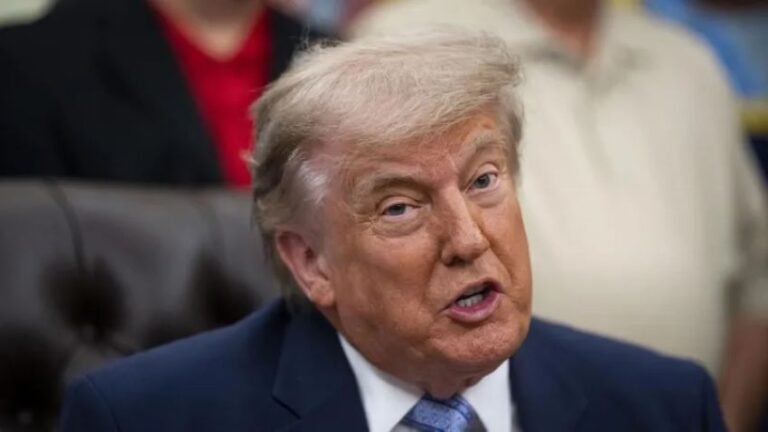
President Trump was quick to label NATO as “paper tigers” and European leaders as “cowards.” The rejection is not just about refusing to engage in the Middle East. It is a symptom of a structural shift. Europe, especially NATO, is beginning to realize that its seven decades of reliance on the “American shield” has become a structural weakness, and now they must build strategic autonomy or risk being left behind in an increasingly transactional vortex of superpowers.
Read More: NATO Has Come on Trump’s Radar, Is WTO Next?
Although Europe defense spending has reached €381 billion by 2025 at about 2.1 percent of GDP and exceeded the threshold that the U.S. has been demanding, the increase has not meant independence. Europe is still divided into 27 different logistics and weapons systems, without a unified command, and still relies on the U.S. for intelligence, strategic air transportation, and nuclear umbrella protection.
If we take the glasses of neorealism, then this behavior can be explained. In an anarchist system, each state (or region) will try to maximize its own interests.
When the perception of the threat between Washington and Europe begins to be out of sync with the US focusing on the Indo-Pacific and Iran, while Europe is still focused on Russia attacking Ukraine, then there is no longer an external balancer that automatically unites steps.
The 2026 Iran conflict shows that that legitimacy has been eroded. The Europeans refused because they were not consulted before the war began. They feel that they are being used as a tool to legitimize military operations that are not fully in accordance with the security interests of the European region. And when the US President openly insults European leaders, he only accelerates a shift in European public sentiment that has been protecting the alliance’s symbols.
When the U.S. has been defining its own so-called “threats,” controlling logistics, and determining when intervention is morally and legally justified, what is built is not a fair partnership, but a patron-client relationship.
Now, when patrons are hesitant to continue paying, clients are looking for their own way. The common thread is that the American shield has begun to crack, and will never be intact again. Europe is now faced with the uncomfortable choice of building a truly self-sufficient defense capability, at all political and economic costs, or accepting the fact that in the future, its security will be more fragile and dependent on a coalition that is temporary, not a permanent alliance.
Read More: Trump Warns NATO of ‘Very Bad Future’ if Allies Fail to Help Reopen Strait of Hormuz
An increase in defense spending to €381 billion is an important first step, but without command integration, without a coordinated industrial base, and without agreement on priority threats, Europe will only become budget-rich but capability-poor.
The Iran conflict proves that when America is no longer willing to be an external balancer, Europe is not ready to replace that role, both militarily and politically, as happened in Germany there are differences of opinion on whether they should immediately let go or defend with the US shield even though it seems that the US has been “swept away”.
In the era of Trump’s transactional leadership, patience is a scarce commodity. The U.S. response to NATO’s stance in the Iran conflict was not only cold, but also destructive. First, the US is committing public humiliation, called NATO as a whole a dead alliance that only benefits one side.
Second, the US poses an economic and political threat. Trump threatened to cut off trade ties with Spain for condemning the war, and explicitly stated that the U.S. “will never forget” Europe’s betrayal. In Trump’s transactional logic, the “American shield” is a paid service. The NATO-US rift is not an overnight rift, but a long divorce that has been seen since the end of the Cold War. Iran is just her divorce certificate.
Germany wants to break free but is indecisive, France wants to lead but is not strong alone. Meanwhile, Washington has lost its patience and is choosing to smash the negotiating table rather than fix it. Within the framework of Kenneth Waltz’s neorealism, the anarchist system does not recognize the sentimentality of eternal alliances.
All that exists is a balance of power and national interests. Europe has been living under the illusion that the “transatlantic partnership” is something sacred. The U.S. has now awakened them from that illusion in the most bitter way, by showing that for Washington, Europe is just a tool, not an end.
*The views presented in this article are the author’s own and do not necessarily reflect the views of The Diplomatic Insight.