For nearly eight decades, the United States was not just any power in the world but the maker of the global soul. It had maintained a post World War II image as the “indispensable nation;” a global leader anchored by internationalist ideals, multilateral alliances and a commitment to a rules-based order.
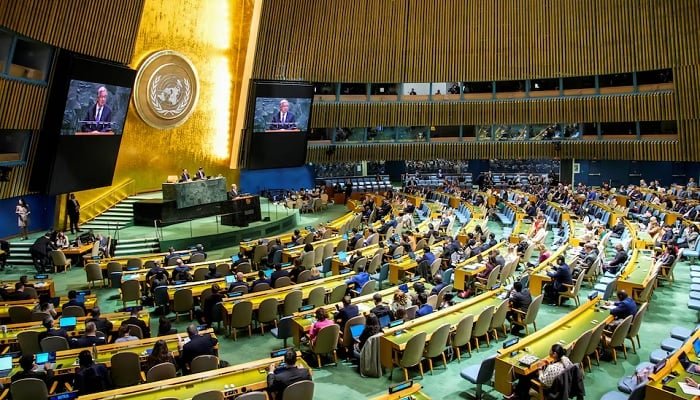
Through the establishment of the UN, calibration of NATO, expansion of the Dollar system, introduction of globalization and promotion of neo-liberal principles, the US presented itself as a hegemonic power whose authority was legitimate because it followed the global ideals and mechanisms it had created.
However, as of current times, the US global position seems to be challenged extremely – not because of any rivals or evolving international politics but because of the US own incumbent president.
Mr. Donald J. Trump has brought a seismic shift in the US agenda after he got elected for a second term. By prioritizing a crudely transactional “America First” doctrine, his administration has changed the aspect of the US from being the primary guarantor of global stability to a disruptor of the very institutions it helped build.
Hence, this change in the US leadership style – from principled to transactional – has a significant impact on the prestige of the superpower and chemistry of international politics.
Read More: Trump Warns NATO of ‘Very Bad Future’ if Allies Fail to Help Reopen Strait of Hormuz
The most visible sign of the US receding global image is its systematic exit from international organizations and agreements. In January 2026, President Trump signed a landmark executive memorandum which initiated the US withdrawal from 66 international organizations. This sweeping move targeted 31 United Nations entities and 35 non-UN organizations, including: Paris Climate Agreement, World Health Organization, UN Human Rights Council, UN Relief and Works Agency, and more.
The withdrawals from the main patron have brought dearth in funding, operations and recognition of these important organizations which have tried to balance social and economic equity in the world for a long time.
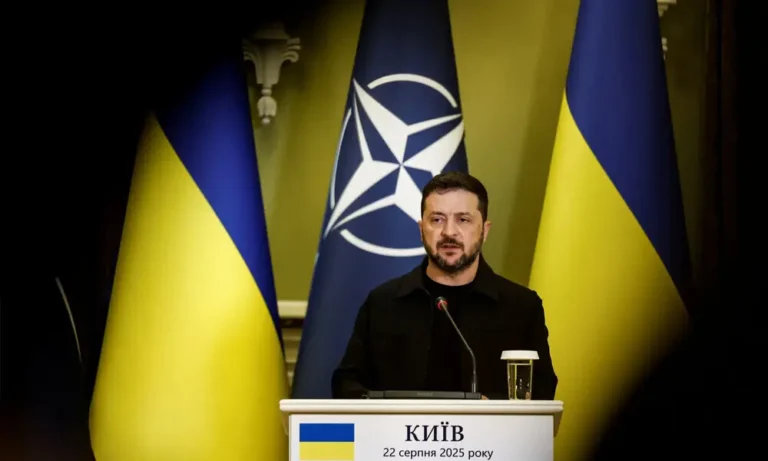
Recently, amidst the quagmire of the US-Israel led war with Iran, Trump is also hinting at leaving North Atlantic Treaty Organization due to the partner countries not fulfilling his decisions – which is shocking for the partners and US policymakers alike. Unlike Trump, who calls this military alliance a “paper tiger”, NATO has not only managed to be a deterrence force during the Cold War but also played a significant part after the 9/11 incident.
The US, which has been the most highlighted member on the basis of its military might and the biggest contribution in funding, is an inevitable part of it. If the US leaves it then there will be consequences for the security of the US and European countries.
The military interests of these countries as a bloc will be negatively impacted in all the regions and a vacuum will be created for other powerful rival countries to increase their influence or partnerships with Europe and beyond through organizations such as Shanghai Cooperation Organization (SCO) – that can be apprehensive for the US’ interests and given global order.
The cloud of fear among European countries after the announcement is already noticeable. France has immediately sought clarification from Trump on his decision while other reactions are forthcoming and expected to be similar.
Assumed Nightmare
Although the US cannot exit NATO without a two-thirds majority vote of the Congress, Trump’s record of solo decisions can wreck the US internal system and damage the vulnerable global image of the country. For example, the biggest blunder dedicated to his administration is initiating war on Iran while nuclear negotiations were ongoing – this has brought anxiety within and out of the US about the president’s unpredictable politics.
It has also shaken the US’ own ideals and position signaling that the superpower is abandoning its place as its drafted order falls into an oblivion.
As these scenarios develop, the question is which other organizations can Trump consider to leave during his remaining term for not meeting his sober realistic policy of “America First”? The quick target seems to be the World Trade Organization and core bodies of the United Nations. Though the UN withdrawal seems unlikely for now as the US maintains its writ on political decisions through it, however, leaving WTO can be next on Trump’s radar.
For some years, the US has been having issues with the WTO due to policies on China, trust issues with appellate body and tariff policies – which do not seem to be benefiting the US. The situation seems imminent as in March 2026, a major rift emerged over the e-commerce moratorium. As a result, the US joined 23 other members in a provisional e-commerce agreement explicitly outside the formal WTO framework.
As WTO is also under the US influence, the effect will be the same as on the organizations which have been left or threatened to be left. The problem is that WTO works as the international organization that regulates and facilitates trade between nations. It is the referee which has managed the smooth sailing of trade since the 1990s.
If the US drops its endorsement fully (monetary support has been decreased already), then the regulations of trade will lose the multilateral and ethical essence – that can make the global economy collapse or increase the stratification among countries.
Read More: Epic Fury: Anatomy of a Geopolitical Suicide in the Middle East
Call for Savior
The United States remains the world’s largest economy and formidable military power. Yet, by retreating into a transactional shell, the US can be predicted to resign from its post as the moralistic and institutional global leader. The world is not just becoming more multipolar; it is becoming more cynical. As Washington prioritizes short-term domestic gains, it risks a long-term strategic isolation that may prove impossible to reverse – for its own image and its created order.
The decisions by the US are not only for that state but consequential globally. If the US becomes purely nationalistic and compromises on its international historical endeavors then its domestic situations may improve for the time being (as Trump claims) but its status on the international level will be detrimental.
The moment of truth is that the world order depends upon the US as it played a crucial role in making these systems of global cooperation. If it abandons these structures then all countries can witness panic mode because they rely on it; the codified rules can crash and make global cooperation bleak.
Most of all, if these current stances by the US continue then its position might be completely replaced by another superpower. That would mean a complete restructure for a new world order, the irony is that no better replacement seems viable.
Paradoxically, by following the “America First” rhetoric domestically the US is making “America Last” on international grounds as already evident by the clashes and trust deficit it is having with longtime partners and intergovernmental organizations, specifically European countries and the United Nations.
The world is looking at the US to make things better not worse and restore the balance it had idealized. The global superpower is at the crossroads under Trump, it needs to collectively think twice before making decisions – nationally and globally altogether.
Dropping out from own patronized organizations will never help the US maintain its status but open the level playing field for others – which can fade away the US into history.
*The views presented in this article are the author’s own and do not necessarily reflect the views of The Diplomatic Insight.

Koonj Altaf
Koonj Altaf is a PhD candidate in International Relations and an academic counselor based in Karachi, Pakistan.