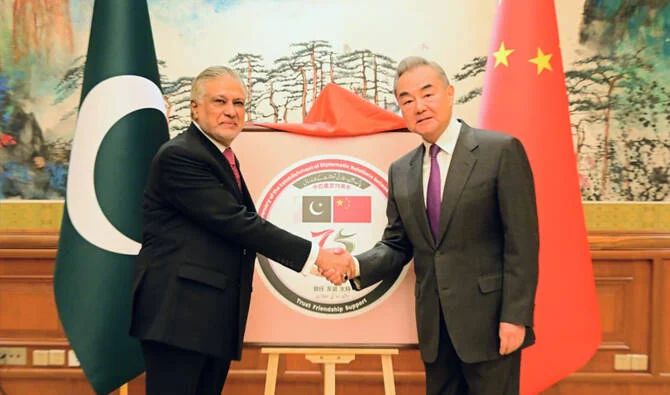
Currently, the partnership between Pakistan and China is one of the most significant in Asia, particularly in the context of changing global trade patterns. The center of this alliance is the Belt and Road Initiative (BRI), China’s mega infrastructure development project, launched in 2013.
However, this partnership extends beyond infrastructure. It has reshaped Pakistan’s economic and industrial landscape and offers China an indispensable route to the Arabian Sea through the China-Pakistan Economic Corridor (CPEC). Over time, this alliance continues to evolve in response to the changing economic, security, and political needs of both nations.
Among all BRI projects in South Asia, CPEC stands out prominently. Pakistan’s long-standing energy shortages are being addressed, and transportation networks across the region are improving. Gwadar Port, situated at the crossroads of South Asia, Central Asia, and the Middle East, lies at the core of this undertaking and is expected to evolve into a major logistics and shipping hub.
However, developing ports and roads is just the initial step. The future depends on industrial expansion through SEZs, where China is investing in manufacturing hubs, promising substantial job creation for Pakistanis and offering tangible economic opportunities. A transition from infrastructure to manufacturing will be key to achieving sustainable economic growth.
Integration and Moving Forward
This relationship is increasingly expanding beyond infrastructure. As the BRI further unfolds in Pakistan, economic considerations have gained paramount importance. For Pakistan, the gains include:
- Increasing industrial capacity in the country through SEZs;
- Creating connectivity across the region;
- Improving agriculture, science, technology, and the digital sector;
- Diversification in energy sources.
For China, the key advantages include:
- Access to the Arabian Sea
- Greater resilience of regional supply chains
- Strengthening ties westward in line with the overarching BRI strategy.
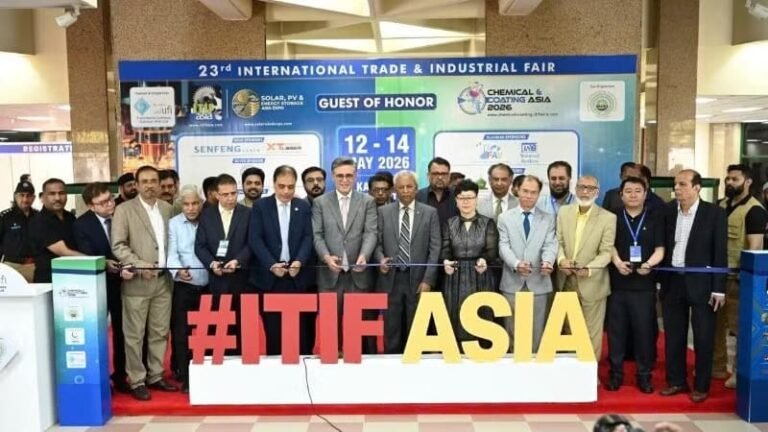
Read More: Pakistan, China Business Groups Sign Investment MoU Ahead of Lahore Forum
This endeavor, nevertheless, requires commercially viable projects and robust inter-agency coordination within Pakistan.
The partnership also carries significant strategic importance. The CPEC and other projects are not merely about the transportation of goods; they are integral to enhancing regional connectivity and mutual influence. Pakistan’s geography places it at a strategic intersection that links Central Asia, the Middle East, and South Asia.
The overland and sea routes through Pakistan serve as an alternative option for China to transport its trade and energy. While many Asian countries maintain that the BRI is development-oriented and not designed as a zero-sum geopolitical strategy, its strategic dimensions cannot be ignored.
Challenges of Sustainable Development
Despite substantial progress, the road ahead has many challenges. The most significant of these is the long-term financial sustainability of the projects. Efficient governance, optimal management, and stable policies are crucial, while security concerns also pose significant hurdles in undertaking such projects.
There has recently been a shift toward sustainable and smart development rather than large-scale projects. In Pakistan, this entails focusing on green energy, protecting the environment, developing smarter agriculture and water resource management, upgrading the digital and IT sectors, and enhancing workforce skills. Both nations recognize that true advancement necessitates developing human capital, not just physical infrastructure.
By extending highways and rail networks, Pakistan and China are forging a new blueprint for regional connectivity. The relationship is set to strengthen further with a growing emphasis on the quality of projects rather than their size. This endeavor, if handled appropriately, would transform Pakistan into an essential transit hub for the region as well as the globe and complement China’s global aspirations.
This would, however, depend on the two nations working in tandem, retaining flexibility, and aligning towards shared goals. Ultimately, this collaboration demonstrates how infrastructure continues to play a vital role in a globalized world.
*The views presented in this article are the authors’ own and do not necessarily reflect the views of The Diplomatic Insight.

Muhammad Adan Nisar
Muhammad Adan Nisar is an independent journalist. He can be reached at mohammadadannisar@gmail.com