The war in Ukraine has shaken the old rules of international security. It’s one of the biggest wars between countries in Europe since World War II, and it feels like the post-Cold War era is over. No one can confidently predict when this war will come to an end. The primary conflict is between Russia and Ukraine.
However, the North Atlantic Treaty Organization (NATO) is engaged in the conflict with Russia by providing military, economic, and political assistance to Ukraine. Ukraine has become the main arena in a large test of strength between Russia and the West. Because NATO is so heavily invested, the war has turned into a proxy fight between Moscow and the alliance, and that has changed everything.
The origins of the war trace back to 2014, when Russia annexed Crimea from Ukraine and declared it Russian territory following a controversial referendum. This act significantly escalated tensions and laid the groundwork for the full-scale invasion Russia launched in February 2022. From the Russian perspective, it was necessary to prevent NATO’s expansion near its borders.
The Kremlin has consistently framed this NATO policy as a core security threat, as articulated in President Putin’s own justifications for the war. This fundamental clash has evolved into one of the most serious and irreconcilable crises of the 21st century. Many analysts argue that this confrontation has altered the European geopolitical framework after the end of the Cold War. It is widely considered the greatest security crisis since the fall of the Berlin Wall.
NATO Revival
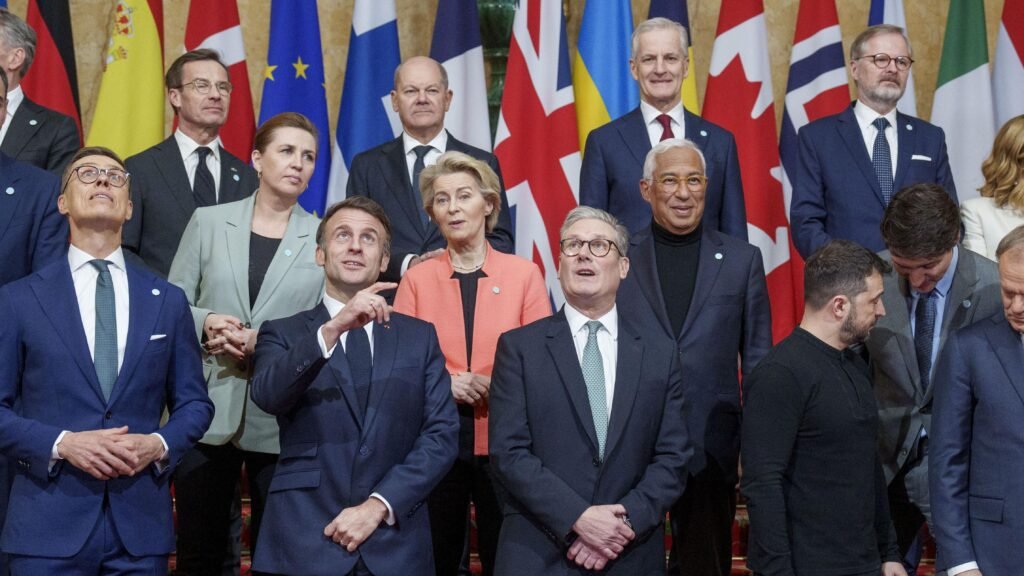
NATO looks much different now, all because deterrence is back in the spotlight. The alliance pulled together quickly after Russia invaded Ukraine. With this wave of unity, NATO didn’t just talk about plans; they actually put them into action. More troops moved to the eastern front, and they sent in eight multinational battlegroups. Air, sea, and cyber defenses got a boost, also. The Allies have coordinated billions in military aid and hit Russia with tough sanctions, and NATO’s deterrence feels stronger than it has in years.
The United Kingdom has played a crucial role in the ongoing conflict, supplying military equipment to Ukraine. London has also led the way diplomatically and helped drive some of the toughest sanctions against Russia. It published the Strategic Defense Review (SDR) on 2 June 2025, launched the previous year as a direct response to Russia’s invasion.
Read More: Europe’s Geopolitical Quandary in a Post-Ukraine World
The review reassessed the UK’s strategic priorities and defense capabilities against emerging threats while strengthening alliances and ensuring preparedness for both current and future challenges. The UK committed a record £4.5 billion in military financing to Ukraine in 2025, the highest level ever, including air defense systems, drones, and equipment.
Russia has signaled its preparation for a long-term confrontation, refurbishing older armored vehicles while ramping up production of new models. Officially, Russian authorities claim to have recruited 417,000 contract soldiers in 2025, despite the severe economic strain caused by the war. Russian President Vladimir Putin has expressed concerns over NATO’s expansion towards Russia’s borders and the global power competition that followed the end of the Cold War era. This is fundamentally a contest over who will hold predominant influence in the coming decades.
Rethinking Modern Warfare
More fundamentally, this full-scale confrontation has challenged a core orthodoxy in strategic studies. For the last two decades, scholars have been arguing that future wars might be hybrid. However, the war in Ukraine has highlighted the limitations of that theory, breaking down established analytical barriers.
A new era of great-power rivalry has begun, without any common roadmap for enduring peace. Kate Hampton examines this paradigm shift in her dissertation, “This Is Not a Bluff: An Analysis Into the Efficacy of Russian Deterrent and Compellent Nuclear Threats During the Russo-Ukrainian War,” arguing that Russia’s repeated nuclear threats are reshaping the doctrines of deterrence and potential conflict scenarios.
From a Western perspective, even if the fighting stops momentarily, Russia can just use that time to rebuild its forces. That presents a serious long-term concern for NATO. On the flip side, Russian Foreign Minister Sergey Lavrov keeps insisting this whole war is about protecting Russia’s security and stopping NATO from creeping closer to its borders.
Most experts never thought a full-scale invasion like this would actually happen, but here we are. As of February 2026, the war drags on. Russian troops make slow gains in places like Donetsk Oblast. Still, Ukrainian resistance, heavy drone attacks, and deadlocked peace talks over territory and security guarantees keep the conflict grinding with no real end in sight.
This war isn’t just one thing—it’s a bloody fight between countries and, at the same time, a proxy battle between Russia and the West. The biggest, clearest result so far? NATO has come back to life, and the West has pulled together in a way we haven’t seen in years. All of this is locking Europe and the whole world into a new era of confrontation. That’s the real legacy taking shape. For Europe, what comes next depends on whether this new, tense order actually keeps Russia in check or just keeps the conflict simmering for years to come.
*The views presented in this article are the author’s own and do not necessarily reflect the views of The Diplomatic Insight.

Muhammad Adan Nisar
Muhammad Adan Nisar is an independent journalist. He can be reached at mohammadadannisar@gmail.com

Faseeh Haider Naqvi
Faseeh Haider Naqvi is a journalist, and can be reached at FaseehhaIder508@gmail.com