The departure of Chargé d’Affaires Ross Wilson on the final evacuation flight from Hamid Karzai International Airport on August 31, 2021, marked the end of the 20-year United States military and nation-building mission in Afghanistan. The rapid collapse of the Western-backed Afghan government, the sudden flight of President Ashraf Ghani, and the swift entry of the Taliban into Kabul underscored the systemic limits of foreign military engagement.
Although international partners executed one of the largest humanitarian airlifts in history—evacuating over 120,000 personnel, foreign citizens, and vulnerable Afghans—the operation was severely marred by rapidly deteriorating airport security, human transit bottlenecks, and the devastating suicide attack carried out by the Islamic State Khorasan Province (ISKP) at Abbey Gate.
Despite these immediate security shocks, the withdrawal ushered in a new geopolitical reality: the Taliban re-established control over the state apparatus while inheriting a complex counterterrorism battle against resilient domestic insurgent groups.
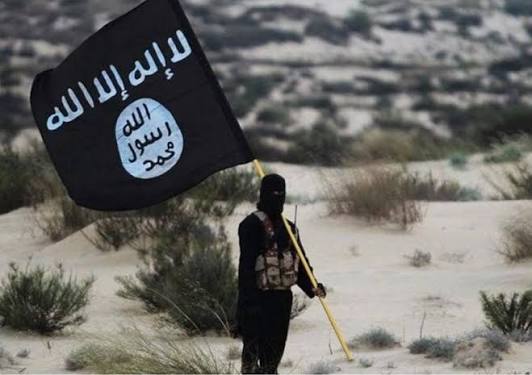
Since the Taliban returned to power, ISKP has emerged as the most persistent internal security challenge to the Islamic Emirate of Afghanistan. While both organizations adhere to Sunni Islamist doctrines, they are divided by irreconcilable ideological paradigms and strategic visions.
The Taliban function as a nationalist movement focused on consolidating authority within Afghanistan’s territorial borders, seeking pragmatic diplomatic engagement and international recognition from regional and global powers. Conversely, ISKP operates as a transnational franchise of the broader Islamic State network, rejecting nation-states, international diplomacy, and Westphalian sovereignty in pursuit of a global caliphate.
ISKP routinely denounces the Taliban as “apostates” who have compromised jihad to placate foreign powers. This ideological schism manifests in a campaign of asymmetric violence, including high-profile suicide bombings, targeted assassinations of Taliban officials, and violent assaults against religious minorities and foreign investments.
Counterinsurgency Dynamics in Afghanistan: Taliban vs. ISKP
In the immediate aftermath of the US withdrawal, ISKP capitalized on the state’s shattered intelligence network to execute high-impact strikes across major urban centers. In response, the Taliban deployed a heavy-handed counterinsurgency strategy reliant on targeted intelligence raids, extrajudicial crackdowns, and the systemic liquidation of suspected ISKP leadership and recruitment networks.
These sustained counter-operations significantly curtailed ISKP’s capability to hold territory or execute frequent large-scale attacks inside Afghan cities between 2023 and 2025. However, ISKP has demonstrated persistent structural resilience through its decentralized cells, encrypted digital communications, and transnational recruitment corridors.
As its domestic operational space within Afghanistan contracted, the group adapted by expanding its external operations capability, inspiring or directly organizing deadly attacks outside Afghanistan—most notably in Iran, Russia, Pakistan, and parts of Europe.
The rivalry between ISKP and rival militant networks extends beyond Afghanistan’s borders into Pakistan’s tribal belts, where ideological friction frequently escalates into direct tactical combat. A key battlefield in this intra-jihadi conflict is the struggle between ISKP and the Tehreek-e-Taliban Pakistan (TTP).
While the TTP maintains a close ideological and operational alignment with the Afghan Taliban, ISKP actively targets TTP cadres to siphon off hardline defectors and challenge TTP’s dominance in Khyber Pakhtunkhwa.
This violent friction came to a head on July 27, 2026, in the upper reaches of Pakistan’s Orakzai District. Intense armed clashes erupted between ISKP militants led by Commander Sadiq Yar Orakzai and TTP fighters under Commander Sajjad (associated with TTP Commander Kazim) in the Koi Kali and Mamozai areas of Upper Orakzai.
The heavy skirmishes in the mountainous terrain resulted in multiple casualties on both sides, culminating in the death of three TTP fighters who were subsequently beheaded and displayed along a roadway by ISKP militants before surviving commanders fled the area.
Such brutal skirmishes reflect a broader regional dynamic: as ISKP faces sustained pressure from both Afghan Taliban forces in Afghanistan and Pakistani security agencies across the Durand Line, it relies on extreme localized violence to assert authority over competing militant factions in border zones.
Structural Capacity and Governance Deficits
Despite ISKP’s capacity to execute violent insurgent attacks and sustain cross-border clashes, military and intelligence assessments indicate that the group lacks the structural strength necessary to overthrow the Taliban regime. Unlike the insurgency waged by the Taliban prior to 2021, ISKP possesses no broad tribal coalitions, sustained state patronage, or the heavy conventional weaponry required to capture and hold major administrative centers.
The Taliban maintain firm institutional control over the country’s armed forces, intelligence directorates, and provincial administrations. While ISKP remains a deadly spoiler capable of inflicting strategic damage, its lack of popular legitimacy and territorial depth limits its capacity to challenge the Taliban’s overarching hold on power.
Looking ahead, the conflict between the Islamic Emirate and ISKP is expected to evolve into a prolonged, low-intensity war of attrition shaped by key geopolitical and domestic factors. Unable to unseat the Taliban militarily, ISKP will likely double down on asymmetric operations inside Afghanistan—targeting foreign diplomatic missions, infrastructure projects, and minority communities to project weakness in Taliban governance—while continuing to prioritize external attacks abroad to maintain global brand relevance.
Simultaneously, internecine fighting between ISKP, the TTP, and Taliban-aligned factions in Pakistan’s border regions will likely intensify; as the TTP remains focused on its conflict with Islamabad, ISKP will attempt to exploit local grievances and ideological disillusionment to recruit disaffected fighters from TTP ranks.
On the domestic front, persistent economic isolation, frozen assets, and severe humanitarian pressures within Afghanistan could create fertile ground for ISKP recruitment, leaving the group positioned to exploit any security lapses or administrative vacuums should internal factionalism weaken the Taliban’s leadership cohesion.
Concurrently, neighboring states—including Pakistan, Iran, Russia, and Central Asian republics—will increasingly balance their posture toward the Taliban regime based on its counterterrorism performance against ISKP, potentially expanding tacit intelligence-sharing mechanisms with Kabul to contain ISKP’s spillover threat across South and Central Asia.
Ultimately, while ISKP is unlikely to derail the Islamic Emirate or achieve regime change in Kabul, it will remain Afghanistan’s most formidable security challenge, continuously threatening regional stability, undermining foreign investment, and complicating the Taliban’s pursuit of international legitimacy.
*The views presented in this article are the author’s own and do not necessarily reflect the views of The Diplomatic Insight.*

Usman Anwar
Usman Anwar is a prospective M.Phil. scholar in Politics and International Relations. His research interests include security studies, maritime affairs, comparative politics, human rights, and climate change. His academic portfolio includes 7 published articles in reputable journals (Category Q-2 and Y) and a book review (Category Q-3). He can be reached at [email protected]