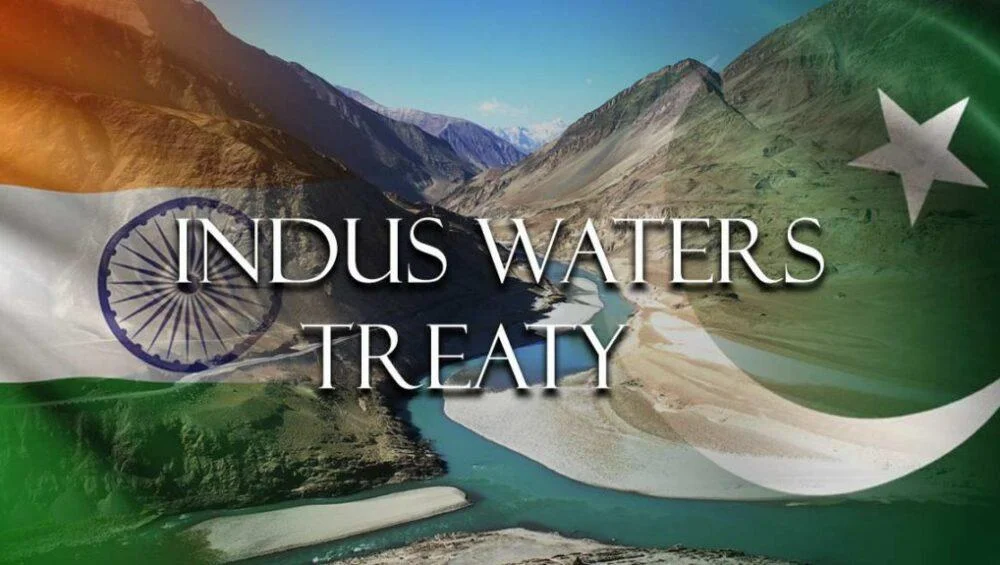
For more than six decades, the Indus Waters Treaty (IWT) has been regarded as one of the world’s most successful transboundary water agreements. It survived multiple wars, military standoffs, diplomatic crises, and prolonged political hostility between Pakistan and India. Even when bilateral relations reached their lowest point, the treaty continued to function.
That assumption is now being tested. India’s decision in April 2025 to suspend the treaty following the Pahalgam attack marked an unprecedented shift in South Asia’s water politics. Pakistan immediately rejected the move, arguing that the treaty cannot be suspended unilaterally under international law, while India has maintained that the agreement will remain in abeyance until Islamabad addresses what New Delhi describes as cross-border terrorism.
Against this backdrop, Pakistan’s Deputy Prime Minister and Foreign Minister Ishaq Dar has once again warned that any attempt to stop or divert Pakistan’s water would be considered an “act of war.” The statement underscores an uncomfortable reality, what was once a technical water-sharing agreement has increasingly become part of the broader strategic rivalry between the two nuclear-armed neighbors.
Signed in 1960 with the World Bank serving as a guarantor and facilitator, the treaty divided the six rivers of the Indus Basin between the two countries. Pakistan received rights over the three western rivers, the Indus, Jhelum, and Chenab, which account for roughly 80 percent of the basin’s total water. India was given unrestricted use of the eastern rivers, the Ravi, Beas, and Sutlej, while retaining limited rights to develop hydropower and certain agricultural uses on the western rivers under strict technical conditions.
The treaty has often been described as a model of pragmatic diplomacy because it separated water management from political disputes. That principle now faces its biggest challenge since the agreement was signed.
Pakistan argues that the treaty contains no provision allowing either country to suspend or terminate it unilaterally. Islamabad also points out that the agreement can only be modified through mutual consent. India, however, argues that changing geopolitical realities and persistent security concerns justify revisiting the arrangement. The disagreement has already entered the international legal arena.
Pakistan approached the Court of Arbitration in The Hague, which maintained that the treaty’s dispute resolution process remains valid. India rejected the proceedings, insisting that the matter should instead be handled through a Neutral Expert mechanism and refusing to recognize parallel arbitration. The legal dispute is therefore far from settled.
Now, the big question is that can India actually stop Pakistan’s water? This is where legal arguments meet engineering realities. Water experts generally agree that India cannot immediately “turn off the tap.” The infrastructure needed to completely block or permanently divert the western rivers simply does not exist today.
Most of India’s projects on the western rivers are run-of-the-river hydropower plants that have only limited storage capacity. These facilities can regulate flows temporarily but cannot indefinitely retain the enormous volume of water flowing through the Indus basin. However, experts caution that temporary disruptions are possible.
Read More: IWT Dispute: Court Orders India to Share Hydropower Records with Pakistan
India could potentially delay water releases, alter seasonal flows within technical limits, or gradually expand storage infrastructure over many years if domestic projects are accelerated. Such actions may not completely deprive Pakistan of water, but they could create uncertainty during critical agricultural seasons. Given that Pakistan depends on the Indus system for nearly all of its irrigated agriculture, even limited disruptions could have serious economic consequences.
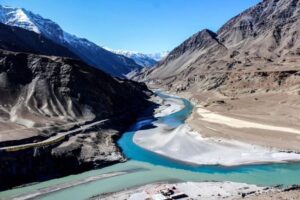
Pakistan is one of the world’s most water-stressed countries. More than 90 percent of its food production depends on irrigation from the Indus River System. Millions of farmers rely directly on predictable river flows, while major cities also depend on the basin for drinking water and industrial use. A significant reduction in water availability could trigger lower agricultural output, particularly wheat, rice, cotton, and sugarcane. It could cause food inflation and rising import bills, reduce hydropower generation, increase pressure on already declining groundwater reserves, cause economic losses running into billions of dollars and greater internal competition among provinces over water distribution. The longer any disruption lasts, the greater the risk of economic and social instability.
In such a scenario, Pakistan’s choices are primarily diplomatic and legal, although officials have increasingly used stronger political language. Islamabad is expected to continue pursuing international arbitration while emphasizing that the treaty remains legally binding. Although international courts cannot physically compel India to release water, favorable legal rulings strengthen Pakistan’s diplomatic position and increase international scrutiny.
Pakistan can continue raising the issue at international forums, including the United Nations, the Organization of Islamic Cooperation (OIC), and with friendly countries that support rules-based international agreements. Islamabad’s argument is that allowing unilateral suspension of a long-standing international treaty could create a dangerous global precedent.
Although the World Bank is not an enforcement authority, it remains a signatory to certain procedural aspects of the treaty and could facilitate renewed dialogue if both sides agree.
Many analysts argue that the country’s greatest vulnerability is not India but its own inadequate water infrastructure. Pakistan stores only a fraction of the annual river flows compared with many other countries. Expanding reservoirs, improving canal efficiency, reducing water losses, and modernizing irrigation could significantly reduce future risks regardless of India’s actions.
Read More: Pakistan Makes Strong Case for Indus Waters Treaty at International Conference
Islamabad has repeatedly declared that any attempt to block or divert water intended for Pakistan would constitute an “act of war.” Whether such a scenario would trigger military escalation would ultimately depend on the nature, scale, and impact of any action, as well as broader regional circumstances.
Unfortunately, there is no international authority capable of forcing India to comply in the way domestic courts enforce national laws. International law largely depends on diplomatic pressure, reputational costs, and negotiations. That means Pakistan’s strongest leverage lies in building international consensus rather than expecting direct enforcement.
If major global powers conclude that weakening the treaty threatens regional stability between two nuclear-armed states, diplomatic pressure on both countries to return to the agreement could increase substantially.
It should be noted that water is unlike trade or visas, it is an existential resource. For Pakistan, the Indus basin is the backbone of agriculture, food security, and economic stability.
For India, maintaining credibility as a responsible upper-riparian state also carries strategic importance, particularly as it seeks greater influence in global governance and promotes rules-based international cooperation. Neither country stands to gain from turning water into a permanent instrument of coercion.
The future of the Indus Waters Treaty will likely depend less on courtroom victories and more on political decisions in New Delhi and Islamabad. The treaty has survived wars because successive governments understood that water should remain insulated from geopolitical conflict. That understanding is now under unprecedented strain. Whether the agreement eventually returns to normal implementation, undergoes renegotiation, or enters a prolonged period of uncertainty will shape South Asia’s security landscape for years to come.
For now, the treaty remains suspended politically, contested legally, and indispensable strategically, a reminder that in South Asia, water has become as critical to national security as territory itself.

Farkhund Yousafzai is a seasoned journalist and analyst with over a decade of experience in the media industry. He specializes in national politics and international relations and regularly contributes as an analyst to national and international media outlets.