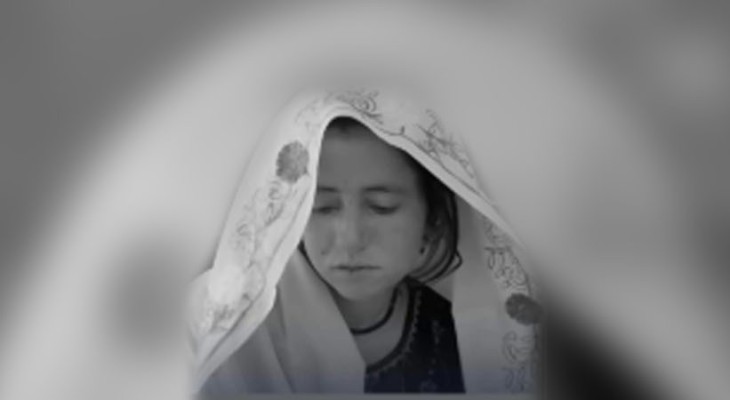
One woman fled barefoot through the kacha terrain of rural Sindh to stay alive. The other held an MBA, a beauty pageant crown, and a career built on her own terms. Gullan Bharo, 24, a mother of two from Sukkur district, Pakistan, was shot dead on May 2, 2026.
Twisha Sharma, 33, a former Miss Pune contestant from Noida, India, was found hanging at her matrimonial home in Bhopal on May 12, 2026, five months into her marriage. This is not a coincidence of timing. It is a revelation of structure.
The question at the heart of both cases is not simply violence. It is agency what happens to a woman’s autonomous choice the moment she enters marriage.
Feminist scholar Deniz Kandiyoti called this the “patriarchal bargain”: the unspoken contract offered to every woman in a patriarchal society. Comply and carry the system’s honor, subordinate yourself to its norms and you will be protected. Step outside its terms, and you will be destroyed. The woman who endures is called resilient. The woman who leaves has broken the agreement, and the agreement offers her nothing in return.
Both exercised agency: Gullan by approaching a court; Twisha by naming her situation and asking to be rescued by her family. But the patriarchal bargain ensures that every act of self-assertion by a woman inside marriage is read not as agency but as transgression. The system does not say: this woman is in danger. It says: this woman has failed her obligations. That reframing is what kills her.
Marriage in South Asian societies transfers a woman from one family’s honor to another’s. She carries the weight of two households on her body. Her decision to stay, leave, or speak is adjudicated by the combined authority of her husband’s family and her father’s and when those two authorities close ranks, a woman is no longer a person in danger. She is a problem to be managed.
Gullan had been beaten and abused for years. Her husband’s response to her leaving, eventually, was to declare her kari marked, stained a designation requiring no evidence, no hearing, no proof. In feudal Sindh, the word alone is sufficient.
She reached a police station near Rohri Railway Station, her body bearing cuts from thorns. The police brought her before a court on April 24, 2026. Her father, Imdad Bharo, placed his turban at her feet and invoked family honor. The state had briefly intervened; that single gesture undid it. Her right to survive was overruled by two families’ claims on her honor simultaneously.
Twisha Sharma’s life appears, at first, to stand in complete contrast. She was educated, financially independent, and had chosen her own partner; meeting advocate Samarth Singh on a dating application and marrying him in December 2025. She had what millions of South Asian women are told will guarantee freedom: financial independence, identity, and the right to love.
But financial independence does not dissolve the institution of marriage. It changes only the vocabulary of the cage for her.
Her WhatsApp messages, now public, are devastating. Five days before her death she wrote to her mother: “Please come here and take me away. Why did you send me to Bhopal? I don’t want to live here.” She was asking, plainly, to be rescued.
She was not rescued. Her father, Navnidhi Sharma, later said: “One of the most unfortunate things about our culture is that every middle-class family wants the marriage to succeed. The social pressure is so high. People say it’s only been five months; what could possibly be wrong?” Like Gullan’s father, he could not separate his daughter’s survival from his family’s social standing. Twisha was found hanging on May 12.
What followed Twisha’s death was not merely a legal battle. It was a systematic campaign to construct a posthumous identity for her one that would render her death explicable on her own terms, and exonerate those who survived her.
This is where the two cases converge most strikingly. Patriarchy, when challenged, does not only kill but it requires the dead woman to be found guilty.
In Gullan’s case, the mechanism was swift: the word kari transformed a victim of domestic abuse into a woman who had transgressed and therefore deserved to die. Her husband’s violence became a restoration of order.
In Twisha’s case, the vilification was more elaborate. Giribala Singh, a former officer of the court, held press conferences to construct a portrait of Twisha as morally and culturally deficient. She alleged that Twisha had confessed to consuming “large quantities of marijuana” during pregnancy, and that scented candles were kept in her room to conceal the smell.
She said Twisha had never participated in daily household rituals, never lit incense, never offered prayers to the Tulsi plant. And then, in a detail that captured public attention: Twisha had never watered her plants. Police confirmed there was no verified evidence supporting the substance abuse claims.
What was being built, brick by brick, was a woman who was impious, dishonest, and unstable responsible for her own undoing. The burden of proof was inverted. The dead woman was placed on trial.
The methods of vilification differed. The purpose was identical: an innocent dead woman is an indictment of the system. A guilty dead woman is a cautionary tale.
Both women had tried, in their final days, to exercise agency over their own survival. Both were denied exit: Gullan through a court order and a father’s turban, Twisha through the suffocating weight of a marriage she could not safely leave. When they died, the system that had left them with no escape began, immediately, explaining why they had brought it upon themselves.
Gullan Bharo and Twisha Sharma lived in different worlds. But both discovered the same truth: a woman’s education, income, or independence may change the form of her cage. The moment she tries to leave, the system responds identically. It finds reasons why she deserved to stay.
*The views presented in this article are the authors’ own and do not necessarily reflect the views of The Diplomatic Insight.

Sadia Maryam
Sadia Maryam is a final year student of International Relations at National Defence University. She takes interest in Gender Studies and Post-colonialism, and can be reached at [email protected]