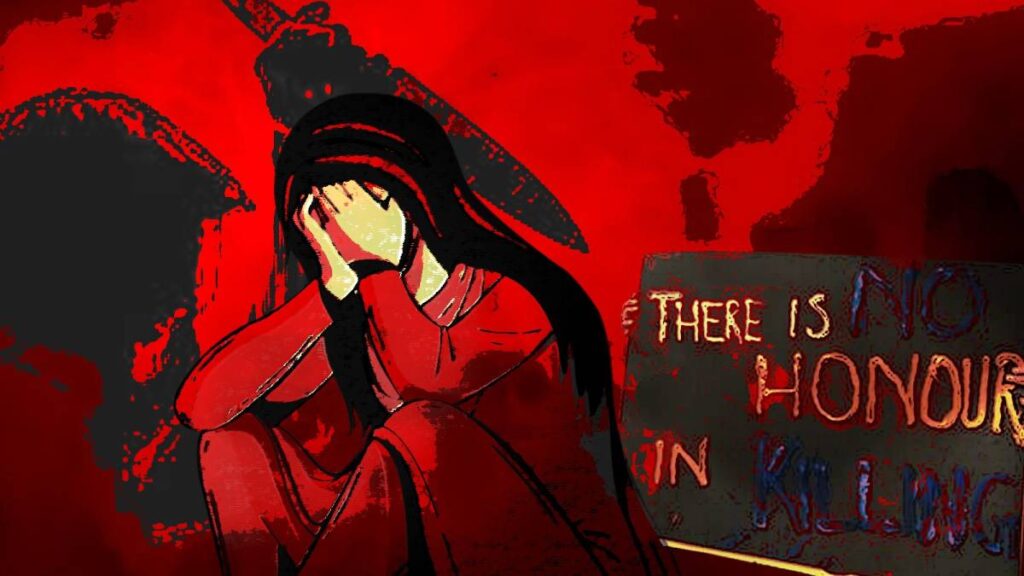
Sindh is known for its rich Sufi traditions and cultural heritage, yet beneath this pluralist image lies a grim reality: women continue to die in the name of “honor.” Locally called karo-kari, the practice remains alarmingly common, despite new laws and rising awareness. Women are still being killed — not for crimes, but for breaking patriarchal codes.
As part of my research, I spoke with families, perpetrators, police, and lawyers. What emerged was a troubling picture: ghairat (honor) is treated as a fragile inheritance carried by women, and even small acts of independence — speaking to a man, choosing a husband, or seeking divorce — can provoke violence.
Education has not been the safeguard many assume. Some men who justified or committed these killings were themselves educated. Without a shift in values, formal schooling alone cannot uproot entrenched misogyny.
Feudal power adds fuel to this violence. In rural Sindh, tribal councils (jirgas) continue to pass rulings in karo-kari cases, often with the blessing of powerful landlords who double as parliamentarians. These jirgas not only undermine the state’s authority but also legitimize the killing of women as a means of “justice.”
The legal system, too, fails victims. Despite the 2016 Anti-Honor Killing Law, police are reluctant to register cases, courts delay justice, and loopholes allow killers to escape through forgiveness laws (Qisas and Diyat). In many cases, the murderer and the complainant belong to the same family — guaranteeing impunity.
Read More: Her Death Went Viral but Her Life Was Ignored
Behind the statistics are lives cut short. Shazia, a young woman from Larkana, was murdered in daylight by a cousin for rejecting his marriage proposal. In another case, Asma was beaten and executed by her own family for trying to leave an abusive marriage. Neither case reached the courts. Neither made headlines.
What makes this violence even more chilling is the social acceptance it enjoys. In many rural communities, men celebrated as “defenders of honor” face no stigma. For poor families, accusations of being kari can also be used to extract money from the accused karo, or to settle disputes by exchanging women in forced marriages.
Ending this cycle requires more than legal reforms. First, parallel justice systems like jirgas must be abolished, and state writ enforced in rural areas. Second, police and courts must be strengthened to hold perpetrators accountable, regardless of their social status.
Third, religious scholars must speak with one voice: honor killings are un-Islamic. Finally, education must move beyond literacy, teaching empathy, equality, and critical thinking — especially to boys and men.
Sindh’s cultural heritage has long stood for tolerance and pluralism. To honor that legacy, society must reject the false dignity of violence and recognize that there is no honor in killing — only shame in silence.

Sarang Abbasi
Sarang Abbasi is a social scientist and visiting faculty member of International Relations and Sociology at leading universities in Karachi. His research interests include gender, governance, and human rights in South Asia.