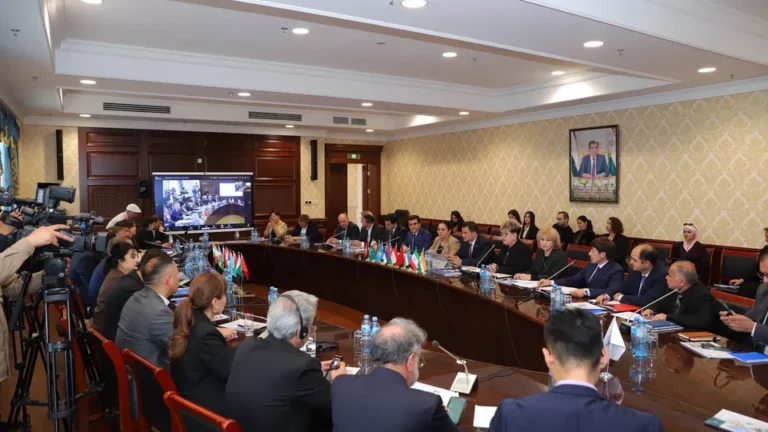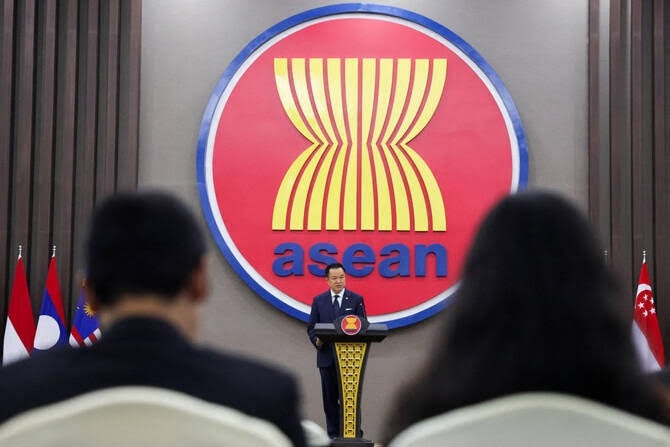
Thai Prime Minister Anutin Charnvirakul called for a “calibrated re-engagement” with Myanmar on Tuesday, speaking at ASEAN headquarters in Jakarta just days ahead of schedule meeting with Myanmar’s president and former junta chief, Min Aung Hlaing, in Bangkok on August 6-7.
The remarks, delivered after with ASEAN Secretary-General Kao Kim Hourn and a separate meeting with Indonesian President Prabowo Subianto, mark one of the clearest signals yet that Thailand, and by extension parts of ASEAN, are edging toward closer engagement with Naypyidaw after years of restricted contact.
Anutin said ASEAN’s “Five-Point Consensus,” the bloc’s peace framework for Myanmar since the 2021 coup, remains the guiding approach to managing the country’s ongoing conflict.
“Thailand has advocated a calibrated re-engagement approach that keeps dialogue open and responds to realities on ground while encouraging concrete progress,” he said.
He pointed to Aung San Suu Kyi’s recent meeting with an International Committee of the Red Cross representatives, where she “appears to be in good health,” as evidence the approach is moving in right direction.
Myanmar’s senior officials have been barred from high-level ASEAN political summits since the bloc judged the junta had failed to make progress on the Five-Point Consensus, which calls for an end to violence and unhindered human access.
Min Aung Hlaing was installed as president in April after elections that Western governments and democracy watchdogs dismissed as stage-managed, and he remains subject to Western sanctions and an ICC arrest warrant request over alleged crimes against humanity.
Whether Thailand’s outreach signals a broader thaw for Myanmar at international forums remains contested. Since taking the presidency, Min Aung Hlaing has made diplomatic trips to India, China, and ASEAN neighbors as an effort to restore Myanmar’s international standing.
However, ASEAN has not recognized the April’s elections, and full reintegration would require Myanmar to show measurable progress on the framework.
Thailand’s push is not purely about regional goodwill. Officials have been explicit that the re-engagement is driven by urgent, practical concerns along two countries’ roughly 2,400-kilometer shared border.
Foreign Minister Sihasak Phuangketkeow has said Myanmar along with Cambodia, could do a lot more to dismantle cyber-scam networks operating in border areas.
Thailand is also seeking cooperation on drug trafficking, refugee flows from Myanmar’s civil war, transboundary river pollution from mining, and agricultural burning that worsens seasonal haze, issues Anutin himself has said Thailand needs to seek cooperation on directly from Naypyidaw.
However, much of the authority over border problems has shifted away from the central government toward armed groups and militias operating with varying degrees of independence, raising questions over how much Min Aung Hlaing can actually deliver even if he agrees to cooperate.
The outreach has drawn criticism from rights groups. Justice for Myanmar said hosting Min Aung Hlaing with full ceremonial honors risks granting him “false legitimacy” rather than holding him accountable, while fortify Rights has urged Thailand to expand engagement with Myanmar’s democratic opposition rather than centering ties on the military-led government.
Thailand’s outreach reflects a pragmatic attempt to address pressing cross-border security and humanitarian challenges while keeping ASEAN’s peace keeping framework formally intact.
However, whether the calibrated re-engagement leads to meaningful progress will depend on Myanmar’s willingness to demonstrate tangible steps toward Five-Point Consensus.
Until then, the initiative remains a cautious diplomatic opening rather than a full normalization of Myanmar’s position within ASEAN or the wider international community.