Cairo (TDI): Syria’s defense ministry announced an overnight ceasefire in parts of Aleppo on Friday following days of intense fighting between government forces and Kurdish-led fighters that has killed scores and displaced thousands.
The truce, set to take effect at 3 am local time in the contested neighborhoods of Sheikh Maqsoud, Ashrafieh, and Bani Zeid, was framed by Damascus as a measure to prevent further escalation amid volatile street battles.
Both sides, however, continue to trade blame over who triggered the violence. The clashes, which erupted on Tuesday, represent the most severe confrontation between the Syrian army and the Syrian Democratic Forces (SDF) in Aleppo in months.
A March 2025 agreement envisaged merging the SDF’s civil and military structures with the Syrian state by the end of last year, but its implementation has faltered, leaving unresolved disputes over autonomy, governance, and control of the territory.
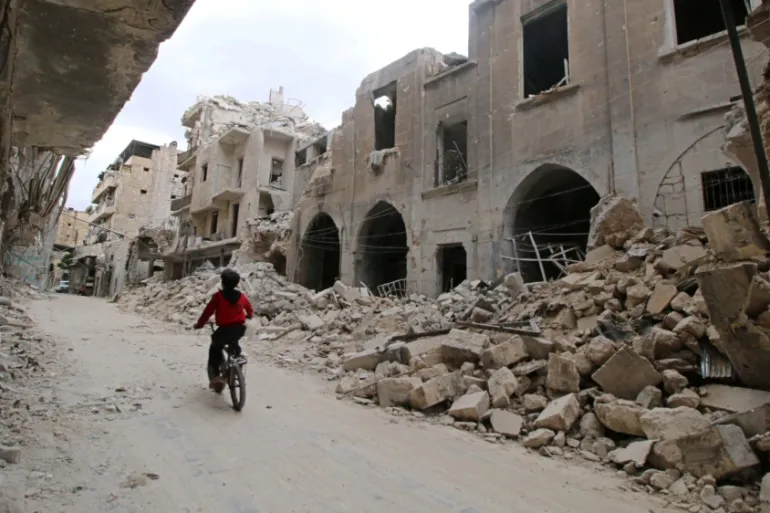
Heavy shelling and urban combat pushed tens of thousands of residents out of their homes, with some estimates suggesting well over 100,000 people have been displaced in recent days.
Families fled through corridors opened by the army as smoke and explosions filled the skyline of northern Aleppo, many carrying only what they could manage.
Read More: Syria, Israel Agree to Direct Communication Mechanism in Paris Talks
Churches, schools, and community centers in safer parts of the city have since been serving as makeshift shelters for the displaced families.
Both sides have accused the other of attacking residential areas and endangering civilians. Government officials said they were acting in response to SDF attacks that had killed numerous civilians and soldiers in recent months, while Kurdish forces described the army’s operations as indiscriminate and part of a broader offensive to uproot Kurdish communities.
Independent reports suggest that dozens of civilians have been killed and many more wounded during the clashes. The United States, which has supported the SDF in the past, has tried to mediate between the factions to avoid a wider confrontation.
Turkiye, on the other hand, has expressed support for Damascus and reiterated its opposition to the Kurdish militia, which it considers linked to groups it deems terrorist.
After more than a decade of civil war, Aleppo’s residents are once again facing insecurity and dislocation. The latest ceasefire offers a fragile pause, but without progress on the political issues underlying the fighting, many fear that peace may be temporary.