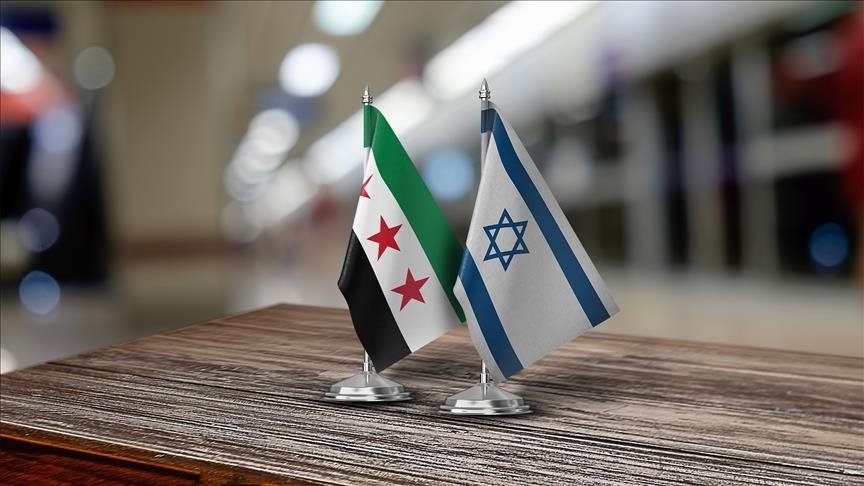
Paris (TDI): Israel and Syria have agreed to establish a dedicated communication channel following US-brokered talks in Paris. The move is being described as a confidence-building measure.
The agreement centers on the creation of a joint communication mechanism, sometimes referred to as a “fusion cell,” which will allow Israeli and Syrian officials to maintain direct contact on security and intelligence matters.
The channel is expected to focus on military de-escalation, coordination on sensitive border issues, and the management of incidents that could otherwise spiral into broader conflict.
While limited in scope, the initiative represents one of the most concrete outcomes from indirect engagement between the two sides in recent years.
Read More: US-Mediated Syria-Israel Talks Resume in Paris, Damascus Calls for Israeli Pullback
The talks in Paris were facilitated by the United States, which has been seeking to stabilize the Israel-Syria ever since al-Sharaa assumed power after the fall of Bashar al-Assad.
Washington has framed the agreement as a practical step to improve transparency and reduce miscalculations, particularly at a time when the security situation in southern Syria remains fragile.
Since Assad’s fall in late 2024, Israel has continued to conduct military operations inside Syrian territory, citing security threats and the need to prevent hostile actors from gaining ground near its borders. Damascus, for its part, has accused Israel of violating Syrian sovereignty.
During the Paris discussions, Syrian representatives reportedly reiterated calls for a return to the principles of the 1974 disengagement agreement, which established a UN-monitored buffer zone after the Yom Kippur War.
Read More: Israeli Incursion Sparks Fierce Clashes in Syria, 13 Killed
Syrian officials have also raised the issue of Israeli troop deployments in areas beyond the occupied Golan Heights, arguing that any meaningful de-escalation must include a clear framework for withdrawal.
The Syrian delegation was led by Foreign Minister Asaad al-Shibani and intelligence chief Hussein al-Salama. Prior the talks, s Syrian official noted that negotiations had stalled since October but gained new momentum following a December 29 meeting between Trump and Netanyahu.
Previous rounds of talks, including meetings as recently as September, were stalled over Israel’s insistence on creating a demilitarized zone in southern Syria.
Syrian President Ahmed al-Sharaa warned that such a demand would undermine national security and urged Israel to respect the 1974 agreement.