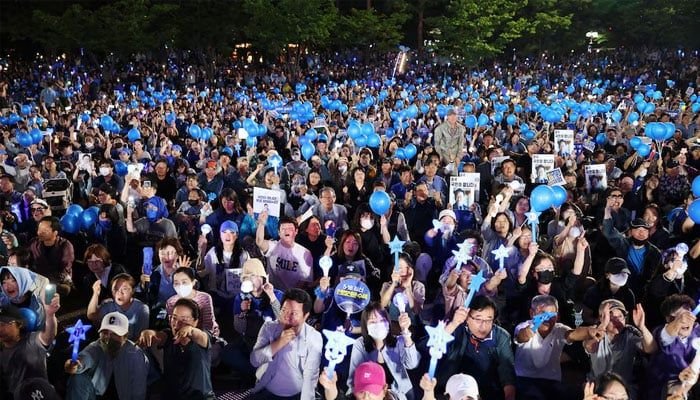
Seoul (TDI): South Koreans began voting on Tuesday in a high-stakes presidential election, marking the end of six turbulent months following the controversial imposition of martial law by former President Yoon Suk Yeol, a move that ultimately led to his impeachment.
At dawn, elderly voters were among the first to queue at a polling station in Seoul’s Munrae-dong neighborhood, reflecting the high stakes and emotions tied to the vote.
The snap vote follows a period of political chaos that has left the country without a steady hand at the helm during a pivotal time, including the opening months of US President Donald Trump’s second term.
According to the National Election Commission, over a third of eligible voters had already participated in early voting last week, underlining the intensity of public interest.
Read More: Seven Injured in South Korea Airplane Fire
Polls suggest the liberal frontrunner Lee Jae-myung is ahead, with a recent Gallup Korea survey giving him a 14-point lead over Kim Moon-soo, the PPP candidate and former ally of Yoon.
Lee, running on a platform of restoring trust and stability, has struck a chord with moderates and disillusioned conservatives alike.
Yoon’s ousting, the second conservative president to be impeached after Park Geun-hye in 2017, has dealt a major blow to the right-wing bloc.
Read More: Trump to Include US Troops Cost in Tariff Talks with Japan, South Korea
Attempts to consolidate support by merging with third-party candidate Lee Jun-seok of the Reform Party fell through, further splitting the conservative camp.
As polls continue throughout the day, the nation waits anxiously to see whether it will begin a new chapter under liberal leadership or face a divided future with a weakened right.

Farkhund Yousafzai is an Associate Editor at The Diplomatic Insight. He is a seasoned journalist and analyst with over a decade of experience in the media industry. He has deep expertise in national politics and international relations and regularly contributes as an analyst to national and international media outlets.