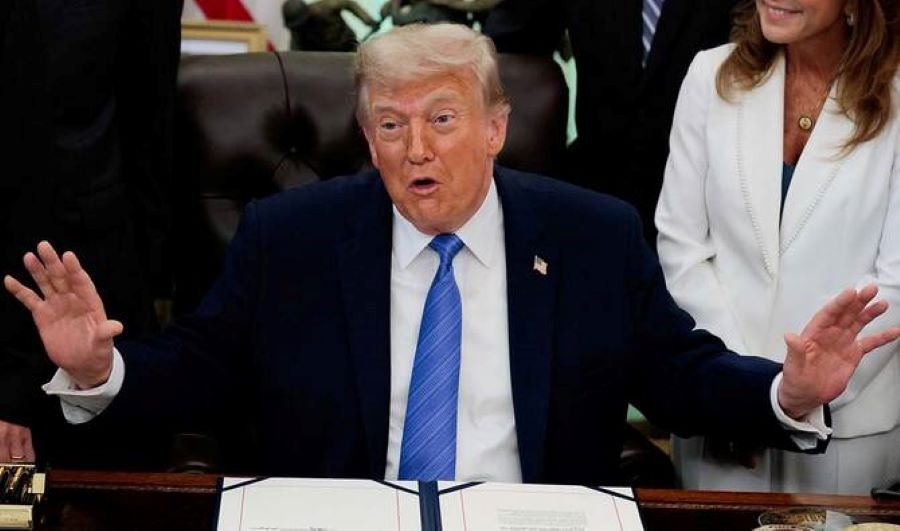
Over the past two months, US President Donald Trump has repeatedly shifted his stance on Iran, alternating between threats of military action, declarations that a peace deal was imminent, and assertions that the United States was prevailing in its confrontation with Iran.
The rapid changes in tone have raised questions about the state of negotiations between Washington and Tehran and created uncertainty over efforts to secure a lasting ceasefire and restore stability in the strategically important Strait of Hormuz.
In fact, Trump has publicly suggested that the United States was close to reaching an agreement with Iran or that peace was within reach more than three dozen times since March. At the same time, he has frequently warned of severe military consequences if Tehran failed to meet US demands.
The pattern has led some observers to describe Trump’s approach as “diplomatic whiplash”, a cycle of escalating rhetoric followed by sudden de-escalation.
One of the clearest examples came on April 7, when Trump issued a stark warning on Truth Social, suggesting that Iran faced catastrophic consequences if it did not accept US terms and reopen the Strait of Hormuz.
Just hours later, however, he announced that Iran had agreed to a temporary suspension of hostilities and described the development as a complete victory for the United States. The following day, Trump hailed the breakthrough as a major step toward global peace, but optimism quickly faded.
After US-Iran talks failed to produce a breakthrough on April 12, Trump announced that the US Navy would begin enforcing a blockade in the Strait of Hormuz, accusing Iran of exploiting international shipping routes.
The move marked a sharp escalation in tensions and reinforced concerns that diplomacy could give way to confrontation. Yet within days, the president’s tone softened once again. By April 17, he declared that the strait was effectively open and said most major issues had already been negotiated, signalling that a deal remained possible.
Read More: PM Shehbaz Says ‘Final, Agreed Text of US-Iran Peace Deal’ Reached
Later in April, Trump alternated between warnings of military strikes and assurances that negotiations were progressing. At one point, he threatened to target Iran’s critical infrastructure if a deal was not reached. When asked about the possibility of a ceasefire collapsing, he warned that renewed conflict would quickly follow. Only hours later, he insisted that he was under no pressure and expressed confidence that negotiations would be completed soon.
By the end of the month, despite the absence of a formal agreement, Trump extended the ceasefire indefinitely while keeping pressure on Tehran through continued maritime restrictions
The prospect of a breakthrough resurfaced in late May when Trump announced that a memorandum of understanding aimed at ending the conflict had largely been negotiated. He said only final details remained unresolved and suggested an announcement could come shortly.
However, optimism was tempered when reports emerged that Trump declined to immediately approve a draft agreement negotiated by his own team, instead requesting additional revisions.
The development highlighted the complexity of the talks and underscored the gap that still existed between public optimism and behind-the-scenes negotiations.
The situation became more complicated in early June when Iran and Israel exchanged strikes, raising concerns that the fragile ceasefire could unravel. Despite the escalation, Trump continued to project confidence, saying an agreement could be reached within days and that normal shipping through the Strait of Hormuz would soon resume.
On June 11, he announced that planned US strikes on Iran had been cancelled because negotiations had advanced significantly. He also claimed that major elements of a final agreement had already been approved. Later the same day, Trump went even further, telling supporters that the war with Iran had effectively ended.
Recent statements from both Washington and Tehran suggest that negotiations may be entering their final phase. Pakistan’s Prime Minister Shehbaz Sharif has also announced that a draft agreement has been completed and that efforts are underway to finalize the remaining procedural steps.
Read More: Trump Claims Major US-Iran Settlement Reached, Iran Denies Final Decision
However, until both governments formally endorse the agreement and announce its implementation, questions will remain about whether the latest round of optimism represents a genuine breakthrough or another chapter in a negotiation process marked by dramatic shifts in rhetoric and repeated claims that peace is just around the corner.

Farkhund Yousafzai is an Associate Editor at The Diplomatic Insight. He is a seasoned journalist and analyst with over a decade of experience in the media industry. He has deep expertise in national politics and international relations and regularly contributes as an analyst to national and international media outlets.