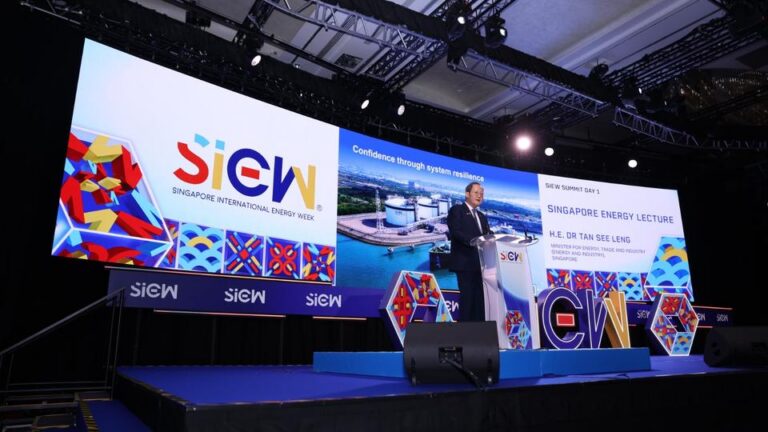
Singapore announced five new power plants by 2031, lifting overall generation capacity by 26%, and moved to deepen its preparations for a possible nuclear power program as electricity demand from data centers, Artificial Intelligence and industry climbs.
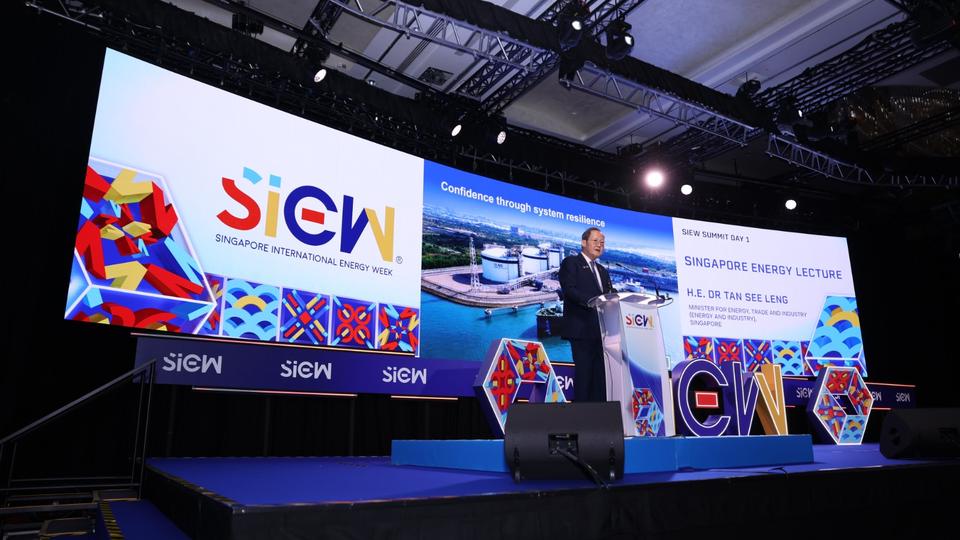
Energy Minister, Tan See Leng, made these announcements at the opening of Singapore International Energy Week, and called it the most significant build-up of the country’s energy infrastructure in decades.
The five plants will lift capacity from around 12 gigawatts today. The Energy Market Authority (EMA) is also evaluating proposals for extra capacity from 2032, with the government ready to step in if needed.
The EMA also released a Five-Year Energy Infrastructure Plan, and is studying an energy cluster on Pulau Tekong that could include a third LNG terminal, hydrogen-compatible gas plants and electricity import facilities.
On the clean-power side, Tan launched a S$75 million (US$59 million) Power Decarbonization Funding Initiative, part of a wider S$800 million Decarbonization Grand Challenge.
Read More: ASEAN Ministers Push for Energy Resilience at Manila Meeting
It will concentrate on hydrogen and its derivatives, solar energy and biomass, with government co-funding of up to 75 percent of qualifying project costs for public research performers.
The nuclear announcements were the most closely watched. Singapore has not decided whether to adopt nuclear energy, but is building local expertise to make an informed decision.
Next year it will host an International Atomic Energy Agency (IAEA) Integrated Nuclear Infrastructure Review mission to assess its readiness in areas such as safety and waste management. A new Nuclear Manpower Development Program will let selected public officers work inside leading nuclear organizations abroad.
Tan argued the investment pays off either way. Even if Singapore decides against nuclear power, the expertise will remain useful as regional interest in the technology grows. Singapore will host the inaugural IAEA@SIEW Forum tomorrow, examining how ASEAN can harness nuclear energy safely.
The announcements by Singapore come as countries world over struggle with energy supplies and high prices. Southeast Asian countries are particularly more affected as they depend heavily on supplies coming via the Middle East and the Gulf.
Indonesia has cut natural gas exports to Singapore, though the EMA said the reduction is less than 2% of daily gas demand. Tan stressed that the energy transition “must never come at the expense of our livelihoods and system security” as the government works to keep power affordable.