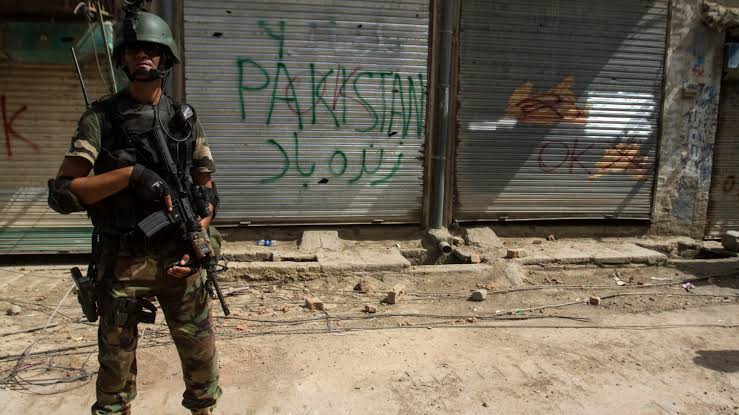
The scourge of terrorism is a global problem, but its causes and solutions are domestic and country-specific. History teaches us that terrorism can be defeated only with public support and a pragmatic, proactive policy. Pakistan has been fighting a war against terrorism for the past two decades, which has claimed thousands of lives and caused huge economic losses.
It continues, with Pakistan topping the Global Terrorism Index (GTI) 2025 list. Despite terrorists’ violent attacks and tactics, decentralized leadership, and access to sophisticated weapons, Pakistan’s resilient population and professional armed forces have defeated the insurgency and prevented non-state actors from flourishing.
Despite this, Pakistan’s counter-terrorism policy still contains structural and tactical weaknesses. This piece of writing examines those weaknesses, their implementation, and a framework for moving forward.
The first weakness in Pakistan’s counter-terrorism policy is its inconsistency and reactive nature. Pakistan’s counter-terrorism policy revolves around personalities, government priorities, and specific events. After 9/11, Pakistan applied a pragmatic but unplanned policy with terrorists and signed the Shakai Agreement with terrorist commander Naik Muhammad in 2004.
Read More: Pakistan, EU Agree to Deepen Counterterrorism Cooperation at UN and Global Forums
In addition, various jirgas, agreements, and negotiations were held with Mullah Fazlullah from 2006 to 2009. The last dialogue with Tehrik-i-Taliban Pakistan (TTP) was a Kabul-mediated negotiation in 2021-22, which aimed to bring violent non-state actors and terrorists within the constitutional framework of Pakistan. But all these negotiations failed due to clear violations by the violent groups, thus giving them time and space to reorganize and arm themselves.
Pakistan launched some major operations in response to every violent act of the TTP and other terrorist groups, which showed that its policy has been reactionary in nature. After the Lal Masjid incident in 2007, the state carried out major operations in formerly Federally Administered Tribal Areas (FATA) and Swat, which to some extent broke the back of the terrorists.
Similarly, after the 2014 Army Public School incident, where the terrorists killed more than 150 school children, Pakistan launched a military operation in Waziristan called Operation Zarb-e-Azab. When the Taliban came to power in Afghanistan in 2021, Pakistan started negotiations again with TTP with the mediation of the Afghan Taliban. The government released thousands of terrorists from prison as an appeasement policy, but that too failed.
Pakistan changed its policy and launched operations in different parts of KPK and the formerly tribal area. Pakistan’s inconsistent and reactive policy has resulted in a lot of human and economic losses in defeating terrorism. Therefore, the state needs to develop a holistic, proactive counterterrorism policy that engages all government stakeholders.
Read More: Pakistan, Turkiye Sign Agreement to Strengthen Counterterrorism and Security Cooperation
The second weakness in Pakistan’s counter-terrorism policy is the lack of a Leadership decapitation strategy. Pakistan has conducted thousands of operations against terrorists, most of which have killed the foot soldiers of the terrorists who can easily be recruited and replaced. In any terrorist organization, the leader plays a central role in planning, resource allocation, recruitment, and target setting.
Decapitation is an effective strategy in counter-terrorism operations. It has a psychological impact on the group, disrupting their capabilities, creating a command-and-control vacuum, and weakening operational capabilities. The killing of the terrorist leader creates an internal division and a leadership struggle over succession.
In 2006, when American forces killed Al-Qaeda’s first emir, Abu Musab al-Zarqawi, in Iraq, the group was greatly weakened and began to face a legitimacy crisis in Sunni areas because he was a charismatic leader who helped a lot with recruitment. Pakistan’s military operations show that its decapitation strategy is very weak.
All the terrorist leaders killed in Pakistan, including Baitullah Mehsud, Hakimullah Mehsud, and Mullah Fazlullah, were killed by American drones.
Therefore, the state should target the central leadership of the terrorist groups based on ground intelligence to dismantle, discourage, and weaken them. Local sources are vital for ground intelligence, but cross-verification is crucial to minimize collateral damage and the effects of incorrect information, given the ethnic, tribal, or personal issues in the operational area.
The tools, technology, and investigative techniques used in the war against the TTP and other terrorist organizations differ from those of conventional warfare. They must be aligned with the decentralized nature of violent groups, topography, and local population constraints, necessitating intelligence-based operations and a population-centered counter-insurgency approach.
The western part of Pakistan, which is most affected by terrorism, has a topography that favors terrorists, including concealment, local knowledge, and easy mobility. This topography consists of rugged mountains, narrow valleys, unpaved and difficult roads, and caves.
Undoubtedly, conventional firepower can ensure tactical gains and state control, but its impact in counter-terrorism is very limited. Tanks, due to their heavy weight and visibility, are not effective for terrorists as they quickly change their positions.
Helicopters and fighter jets are also visible at a distance, making it easy for terrorists to disperse and hide in caves quickly. The decentralized structure of terrorists makes it difficult to use heavy air power against them, as they have no headquarters, no barracks, and no large concentration of personnel in one place. If local people helped terrorists, such cases should be deeply and impartially investigated.
How is it possible for common and unarmed people that if a dozen terrorists with sophisticated weapons ask for bread or other help at midnight, local people cannot refuse because of the fear of reprisal and harm, as terrorists don’t follow any rules or laws. At night, law enforcers are normally limited to mountain peaks, forts, and headquarters, and local people cannot inform them.
In case of informing state institutions, local people’s lives, businesses, and relatives will be in danger as security forces cannot guard individual homes and the reprisals of terrorists are certain. Therefore, these local people are victims of terrorism and should not be considered as terrorist sympathizers.
Hence, drones are the most effective weapons to use against terrorism with effective ground intelligence, as they can serve as surveillance, observe and follow movements of terrorists, and target them with less visibility and minimum chances of collateral damage. Moreover, intelligence-based operations are also effective in neutralizing terrorism.
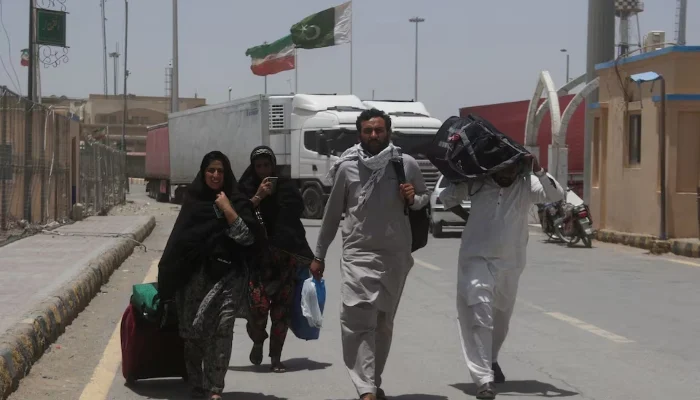
Proper border management plays a key role in counter-terrorism policy, and it prevents terrorists, weapons, illegal people, and smuggling. Pakistan has fenced the Afghan border, but it has failed to stop the cross-border movement of terrorists. The fencing is 11-13 feet high, 13 feet wide, and made of barbed wire. However, the long and dangerous topography on the border, rugged mountains, and social interconnectedness facilitate the movement of terrorists.
Read More: US Supports Pakistan’s Right to Self-Defense as UN Passes Global Counterterrorism Strategy
Therefore, it is necessary to establish legitimate crossing points along the Pakistan-Afghanistan border to reduce local reservations and facilitate legal trade and movement. Historically, there were more than 350 crossing points on the Pak-Afghan border, but now there are only 17, and those have been closed for a long time, which is why illegal crossings are increasing. A clear and controlled buffer zone is essential at the border to ensure effective deterrence.
A stand-off distance is required to separate the border and the population. In many areas, communities approach the fence to cut firewood or graze livestock, posing significant enforcement challenges. A clear buffer zone will improve visibility and reduce people’s movement near the fence. It will also make it easier to identify suspicious movement and enable a quick response by law enforcement.
Effective border management not only stops the cross-border movement of terrorists but also builds the trust of the local people. For example, in January 2026, an operation was launched in Tirah, Khyber district, resulting in the mass evacuation of residents. Without strong border management, terrorists can cross the border and move to Afghanistan.
However, when this military operation ends and residents return, terrorists can also cross back the border to Pakistan and continue their vicious activities. In such a situation, terrorists will engage in terrorism, which will increase doubts in the minds of the local people that even after expelling us, the scourge of terrorism has not ended, and this cycle will continue. Therefore, border management plays a key role in counter-terrorism policy.
Disruption of the financial ecosystem is essential for counter-terrorism. This curbing of the financing of terrorism is important not only because it restricts the purchase and supply of weapons, but also because it discourages new recruitment. The economic incentive for new recruitment is central, and most unemployed people therefore become part of terrorist organizations. The major sources of financing for terrorists are extortion, forced taxation, narcotics trafficking, smuggling, illegal mining, timber and other high-value natural resources.
Read More: Pakistan, Norway Bolster Cooperation on Counterterrorism, Migration
In addition to the money that terrorists earn from this, terrorists also receive money from hawala and charitable funding. Due to poor enforcement, people pay extortion to terrorists without reporting to the law enforcement agencies because of fear of reprisal.
Therefore, Pakistan must create a confidential reporting mechanism so that whoever asks for extortion from people can report here and terrorists can be neutralized without any retaliation. Money laundering and narcotics trade play a central role in sustaining terrorism.
To curb narcotic cultivation, alternative crops should be introduced that align with the area’s irrigation system, climate, and topography. The state needs to provide people with alternative crops, technologies, and training to create income opportunities. Registration and licensing of mining operations, forest monitoring, and border management are necessary.
Hawala and informal financial networks need proper regulation, increased awareness of illegal transactions, and targeted enforcement against unlicensed operators. Charitable and religious donations need to be regulated through registration, audits, financial record-keeping, and digital financial surveillance.
*The views presented in this article are the authors’ own and do not necessarily reflect the views of The Diplomatic Insight.*

Muhammad Ilyas
Muhammad Ilyas is a graduate in International Relations from the University of Sargodha. He serves as a Research Associate in International Law and Public Policy at EastLaw Legal Research and works as an independent researcher. His research focuses on international law, security studies, and public policy. He can be reached at [email protected]