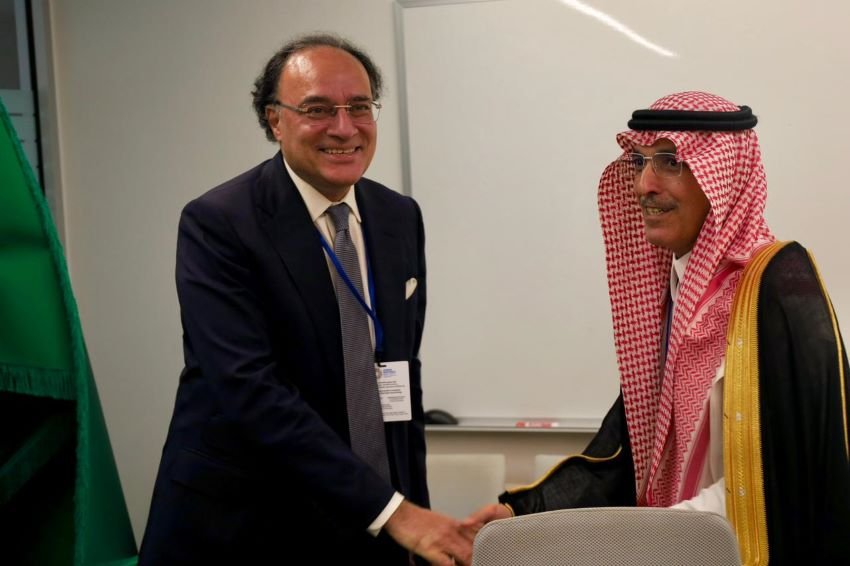
Washington (TDI): Saudi Arabia has pledged an additional $3 billion in deposits for Pakistan and extended its existing $5 billion facility until 2028, Finance Minister Muhammad Aurangzeb announced during his visit to Washington.
The development comes at a critical time as Pakistan prepares to repay a $3.5 billion loan to the UAE, a move that could otherwise place pressure on the country’s foreign exchange reserves and its commitments under the International Monetary Fund program.
Aurangzeb said the extended $5 billion Saudi deposit would no longer follow the earlier annual rollover arrangement and would instead remain in place for a longer duration, providing greater financial stability.
Speaking on the sidelines of the World Bank–IMF Spring Meetings 2026, the finance minister described the Saudi support as timely and essential for strengthening Pakistan’s external account and reinforcing its reserves.
Read More: Aurangzeb Says Pakistan Exploring Multiple Financing Options to Replace $3.5bn UAE Loan
He reiterated the government’s goal of building foreign exchange reserves to around $18 billion, roughly equivalent to 3.3 months of import cover, by the end of the current fiscal year, in line with IMF program targets.
Aurangzeb also highlighted that Pakistan had recently repaid $1.4 billion in external debt, including a Eurobond, reaffirming the country’s commitment to meeting all financial obligations on time.
The minister noted that the government is pursuing a diversified external financing strategy, including plans to issue Eurobonds, Islamic sukuk, and dollar-settled rupee-linked bonds, alongside exploring commercial borrowing options.
He further revealed that Pakistan is moving ahead with its Global Medium-Term Note program and preparing for its inaugural Panda bond issuance to tap new financial markets.
Read More: Pakistan, UAE Reaffirm Trade Ties in Virtual Talks
Aurangzeb said the government had exercised caution in publicly discussing the Saudi package until formal confirmation was received, emphasizing the importance of clarity and coordination in such matters.
He expressed gratitude to Saudi leadership, particularly Crown Prince Mohammed bin Salman, for their continued support, noting that the assistance reflects strong bilateral ties and strategic cooperation.
The finance minister added that Pakistan has recently received positive feedback from international financial institutions and investors, especially for its diplomatic role in facilitating dialogue during ongoing geopolitical tensions.
He stressed that maintaining adequate reserves, currently around 2.8 months of import cover, remains essential for macroeconomic stability.
While Pakistan has not yet sought changes to its IMF program despite external shocks, Aurangzeb said this remains an option depending on how the situation evolves.
He concluded by reaffirming the government’s commitment to economic reforms, fiscal discipline, and sustained engagement with global financial partners to ensure long-term stability and growth.