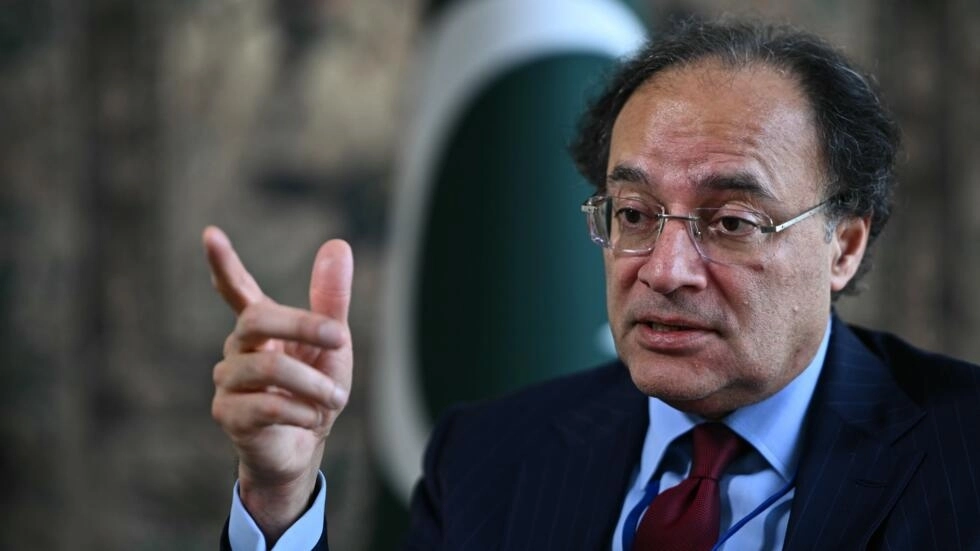
Washington (TDI): Finance Minister Muhammad Aurangzeb has said that Pakistan is considering a range of financing options, including Eurobonds, commercial borrowing, and bilateral loans, to replace a $3.5 billion facility from the United Arab Emirates and help stabilize foreign exchange reserves.
In an interview with Reuters on the sidelines of the IMF and World Bank Spring Meetings in Washington, Aurangzeb said the government is keeping “all options on the table,” including possible financing arrangements with other friendly countries such as Saudi Arabia.
The minister confirmed that Pakistan is preparing to repay the UAE loan this month, a move that could temporarily pressure foreign reserves and test the country’s targets under its ongoing International Monetary Fund program.
He said Pakistan’s reserves currently cover around 2.8 months of imports and stressed that maintaining this level remains central to macroeconomic stability.
Aurangzeb noted that Pakistan plans to tap international capital markets, including Eurobond issuance, Islamic sukuk, and dollar-settled, rupee-linked instruments. The country is also preparing for its first-ever “Panda bond” issuance in Chinese yuan, expected next month.
Read More: Aurangzeb in Washington to Attend IMF, World Bank Spring Meetings
On the IMF program, the finance minister said Pakistan has not yet requested any formal changes despite global economic disruptions caused by the ongoing conflict in the Middle East, though he did not rule out future discussions depending on how conditions evolve.
He added that the IMF board is expected to approve the next tranche of funding soon, which would unlock around $1.3 billion under existing arrangements.
Aurangzeb said Pakistan’s projected economic growth, strong remittance inflows, and targeted social support measures would help the economy absorb external shocks this fiscal year.
However, he warned that rising global energy prices underline the need for stronger energy security planning, including the development of strategic petroleum and LPG reserves and a faster transition toward renewable energy sources.
Read More: Aurangzeb Highlights Fiscal Gains, Reforms at AlUla Conference
He said the recent volatility in global markets highlights the importance of long-term resilience planning, especially in the face of supply disruptions.
The minister emphasized that while Pakistan remains committed to fiscal stability, it must also adapt its energy and financing strategy to a rapidly changing global environment.