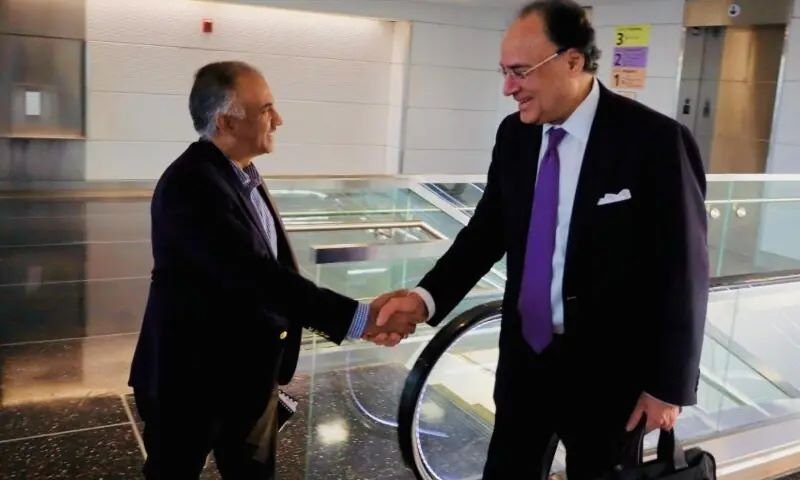
Washington (TDI): Pakistan’s Finance Minister, Muhammad Aurangzeb, arrived in Washington, on Monday to participate in the 2026 Spring Meetings of the International Monetary Fund and the World Bank Group, according to the Finance Ministry.
The minister is expected to engage in a series of high-level discussions with global financial leaders, focusing on Pakistan’s economic reform program and broader financial priorities.
Aurangzeb had departed for the United States over the weekend to attend the annual gathering, which is being held from April 13 to 18. The Spring Meetings bring together finance ministers, central bank chiefs, policymakers, and development experts from across the world, particularly at a time when the global economy is facing heightened uncertainty.
During his visit, Aurangzeb will represent Pakistan at key sessions organized by both the IMF and the World Bank. He is also expected to interact with academics, policy experts, and members of the Pakistani community in the US, where he will outline the country’s economic direction, reform efforts, and growth outlook.
Read More: Aurangzeb Highlights Fiscal Gains, Reforms at AlUla Conference
On the sidelines of the meetings, the finance minister is scheduled to hold talks with senior IMF officials, including First Deputy Managing Director Dan Katz, Deputy Managing Director Nigel Clarke, and Jihad Azour, who heads the Fund’s Middle East and Central Asia Department.
The Finance Ministry said the visit reflects Pakistan’s continued commitment to maintaining macroeconomic stability, pursuing structural reforms, and deepening engagement with international financial institutions to support sustainable and inclusive growth.
Separately, the IMF, the World Bank, and the International Energy Agency have recently agreed on a joint coordination mechanism to help countries cope with economic shocks stemming from the Middle East tensions.
The initiative is designed to improve real-time monitoring of global energy markets and evaluate the wider economic impact of supply disruptions, price fluctuations, and financial market pressures.
Read More: Aurangzeb Highlights Reform Agenda, Private Sector Collaboration in Davos Meetings
The IMF has also warned that the conflict has intensified volatility in global oil and gas markets, tightened financial conditions, and increased the cost of essential commodities such as food and fertilizers.