Islamabad (TDI): Pakistan has formally approached India for clarification over what it described as an “abrupt variation” in the flow of the Chenab River, expressing serious concern over reports of unannounced water releases upstream.
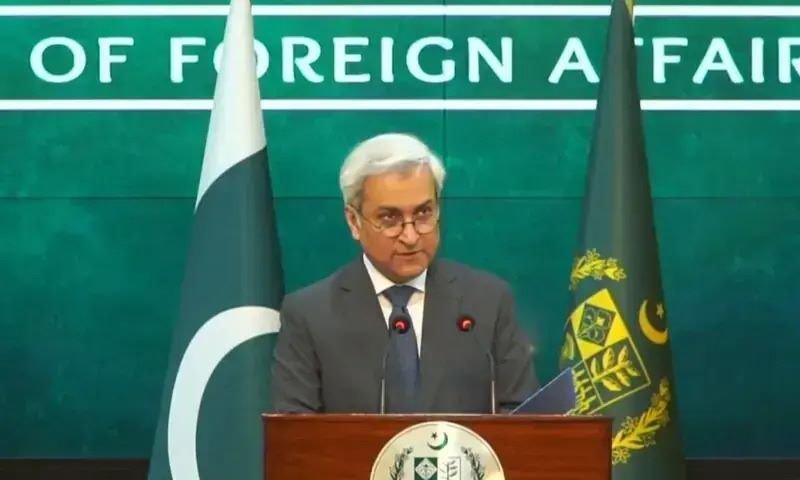
Addressing a weekly press briefing on Thursday, Foreign Office spokesperson Tahir Hussain Andrabi said the issue had drawn attention over the past week following media reports that India had released water into the Chenab without prior notice.
“Pakistan views these developments with extreme concern and seriousness,” Andrabi said, adding that the sudden changes appeared to suggest unilateral water releases by India in violation of established procedures.
He confirmed that Pakistan’s Indus Waters Commissioner has written to his Indian counterpart seeking an explanation, in line with mechanisms outlined under the Indus Waters Treaty (IWT).
“Any manipulation of river flows by India, particularly at a critical stage of Pakistan’s agricultural cycle, poses a direct threat to the lives and livelihoods of our people, as well as to the country’s food and economic security,” Andrabi warned.
He urged India to respond promptly to Pakistan’s queries, avoid unilateral actions, and adhere strictly to its obligations under the treaty. The spokesperson stressed that the Indus Waters Treaty remains a binding international agreement and has historically served as an important instrument for peace, stability, and cooperation in the region.
Read More: Zardari Rejects India’s IWT Violation, Warns Against Weaponizing Water
Under the 1960 treaty, the three western rivers, the Indus, Jhelum and Chenab, were allocated to Pakistan, while India was granted rights over the three eastern rivers of the Indus Basin.
Andrabi cautioned that any violation of the treaty undermines the sanctity of international agreements and compliance with international law, while also threatening regional peace, good neighbourly relations, and accepted norms governing relations between states.
“The international community must take note of India’s continued disregard for a bilateral treaty and urge it to act responsibly, in accordance with international law and its own commitments,” he said.
He reiterated that Pakistan remains committed to resolving disputes with India through peaceful means but would not compromise on what he described as the country’s “existential water rights”.
During the same briefing, the Foreign Office spokesperson also commented on a recent incident in India in which Bihar Chief Minister Nitish Kumar was seen pulling down the hijab of a female doctor, an act that sparked widespread criticism.
Read More: Pakistan’s UN Mission Event Highlights Grave Humanitarian Fallout of India’s IWT Suspension
Andrabi said the incident was compounded by what he described as public mockery by a minister from Uttar Pradesh, who initially defended the act before later retreating from his remarks.
“The forcible removal of a Muslim woman’s hijab by a senior political figure, followed by public ridicule, is deeply troubling and deserves strong condemnation,” he said. “Such actions risk normalising the humiliation of Muslim women.”
He added that the episode reflected a broader pattern of intolerance and Islamophobia linked to Hindutva-driven politics in India, and demonstrated a lack of respect for religious minorities, particularly Muslims.
Pakistan, he said, urged the Indian government and other responsible actors to recognise the gravity of the incident and reaffirm their commitment to protecting minority rights, upholding religious freedom, and safeguarding human dignity.