Pakistan is said to be a frontier country. Point taken. Yet it is something more. Geography is the gift that keeps on giving, but geography alone does not win influence. Pakistan’s diplomatic challenge today is to convert geography into trust, corridors into institutions and infrastructure into dependable behavior. It is time for Pakistan’s foreign policy to enter the next stage of its connectivity strategy.
Pakistan doesn’t need another policy statement outlining its geographic location between South Asia, Central Asia, China, the Middle East and the Arabian Sea. It needs corridor governance: a foreign policy that operationalizes transit, ports, energy, trade facilitation and regional dialogue.
The strategic environment is favorable. The China-Pakistan Economic Corridor, Gwadar Port, Central Asia’s search for outlets, Afghanistan’s transit capabilities and Gulf investment interests have all converged to create a unique opportunity for Pakistan. But opportunity is not a strategy. If Pakistan wants this connectivity moment to stick, it must move past corridor politics and focus on corridor governance.
Read More: Pakistan, Tajikistan Agree to Enhance Trade and Transit Connectivity
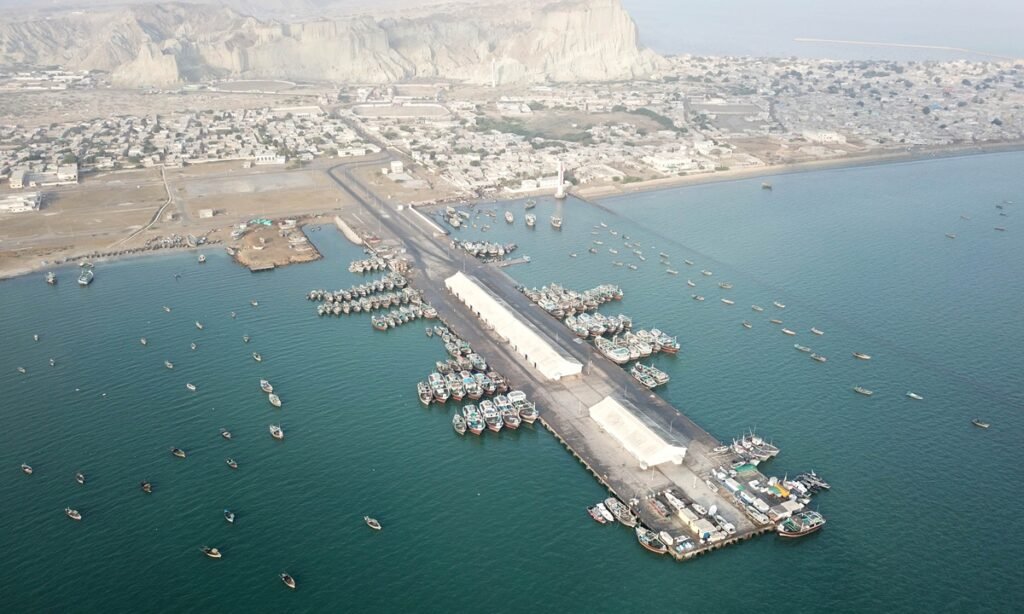
Chief among these initiatives is CPEC. Despite recent news of finance-related hurdles and criticisms over transparency, the China-Pakistan Economic Corridor remains Pakistan’s flagship connectivity project. In official Pakistani investment promotion material, CPEC is described as a “mega project” that connects Gwadar Port in southern Pakistan to northwest China’s Xinjiang province via highways, railways and pipelines.
In addition, recent reporting has outlined continued Chinese-Pakistan engagement on mining, energy and port development. But for Pakistan, the ultimate value of CPEC should not be measured in dollars invested or miles of road completed. It will be judged on whether or not CPEC becomes a regional platform — not just a bilateral corridor.
In practice, this means connectivity: If CPEC can connect Central Asian trade with Afghan transit, Gulf logistics, mineral processing and industrial centers then it has the potential to become diplomacy on rails. Commercial usability will be the benchmark of CPEC 2.0. Roads matter, but customs systems matter more.
Ports matter, but shipping schedules, insurance terms, investor confidence and local political legitimacy matter more. If CPEC is going to deliver diplomatic returns, it will be through corridor governance.
Central Asia’s Opening
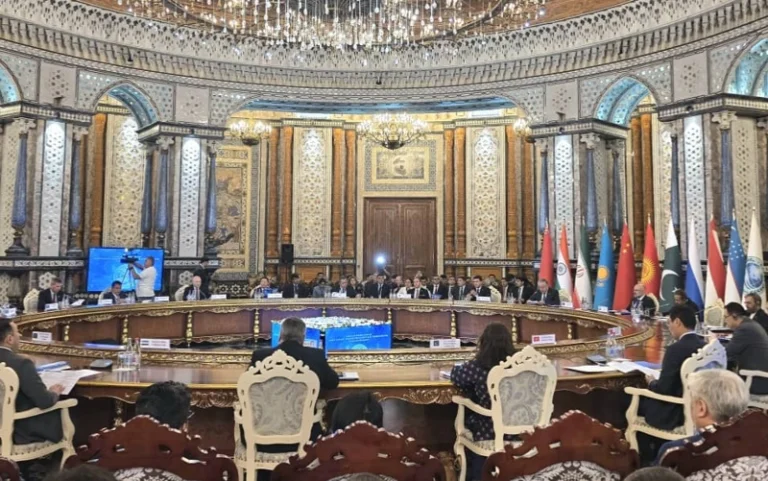
Central Asia’s role in this discussion is critical. Kazakhstan, Uzbekistan, Turkmenistan, Kyrgyzstan and Tajikistan are emerging actors in global diplomacy with a growing interest in diversified routes to world markets. Pakistan holds potential as one such route. Where Pakistan is concerned, Ministerial declarations rightly emphasize connectivity with Central Asia. Transit corridors leading to Pakistani seaports.
Energy links between South and Central Asia. Infrastructure that ties previously landlocked countries to shipping lanes. From the perspective of Central Asia, Pakistani ports could provide a southern maritime outlet. For Pakistan, Central Asia offers needed energy imports, markets for exports, mineral wealth, food security partnerships and — perhaps most importantly — diplomatic depth and diversity beyond South Asia.
The challenge for Pakistan is whether it can build trust. Kazakhstan will not use Pakistani transit just because the geography makes sense. Uzbekistan will not tie its supply chains to Gwadar Port simply because it is closer to Europe than Karachi.
Central Asian states will compare costs, security, transit times, customs certainty, political stability and Pakistan’s capacity to deliver against rivals such as Russia and Azerbaijan. Geography is helpful, but reliability is everything.
But there is one country between Pakistan and Central Asia that cannot be ignored: Afghanistan. Afghanistan is the geographical link between Islamabad and Ashgabat. But more importantly, it is perhaps the most challenging political wildcard in Pakistan’s approach towards Central Asia.
The foreign ministry has already noted Afghanistan’s geographic potential “as a regional transit and trade hub is linked to various projects underway and planned for the future including TAPI, TAP, CASA-1000 and Trans-Afghan Railway Project.”
Read More: Pakistan Delivers UAE’s First Cargo to Central Asia via Karachi Corridor
A trilateral joint statement between Afghanistan, China and Pakistan highlighted opportunities “to extend CPEC to Afghanistan…enhance transit trade through Gwadar Port…and work together for improving infrastructure development or ‘hard connectivity’ as well as streamlining laws and standards or ‘soft connectivity.’
Pakistan should pay attention to the distinction; hard connectivity are things like railways, pipelines and roads. Soft connectivity refers to legal norms, customs procedures, security coordination, payments mechanisms, shipping documentation and diplomatic consistency. Pakistan will not get far in corridor diplomacy if it only pays attention to hard projects.
Take for example the proposed Trans-Afghan Railway line linking Central Asia to Pakistan. If completed successfully, it would give Central Asian states direct access to Pakistani ports. It would deepen Pakistan’s integration into Eurasian trade.
The problem? Afghan transit. Delays. Civil war. Security. Money. Technical feasibility. Political willingness. Without some certainty on the Afghan side, the best you can do is a compelling map.
Connectivity is also about energy; projects like CASA-1000, which will see surplus electricity from Kyrgyzstan and Tajikistan flow across the borders of Afghanistan and Pakistan, create an electricity corridor between Central and South Asia.
And Turkmenistan-Afghanistan-Pakistan-India (TAPI), sponsored by the Asian Development Bank, aims to export up 33 billion cubic meters of natural gas per year from Turkmenistan through Afghanistan and into Pakistan and India. Large scale. Ambitious. Difficult. Yet notice what these projects force countries to do: communicate.
Energy corridors bind together shared risks. Shared risks require consultation. If handled well, energy connectivity can become quiet diplomacy. Pakistan shouldn’t present either project as inevitable. They’ve both had their share of delays, financing gaps and security problems. What matters is that both projects will require sustained institutionalization.
Gwadar: From Symbol to System
Finally, Pakistan needs to think beyond Gwadar. Ports are important. But ports are only one element of connectivity. Gwadar should not be presented as a unilateral solution. Put cargo through it. Simplify customs. Connect it to railways and highways. Ensure a reliable energy supply. Make sure local communities benefit from its presence. Give investors confidence in the operating environment. Then it can become a regional node.
This is critical for projects in Balochistan. Security is linked to development. Development is linked to local buy-in. Fail to give communities living next to Pak-China projects a stake in their success and you risk destabilizing the entire project. Local legitimacy is now part of Pakistan’s foreign policy agenda when it comes to corridors.
Pakistan’s connectivity vision should also extend to the Gulf. Gulf states mean more than just energy imports, remittances and much-needed but temporary financial cushions. They offer long-term investment in Pakistan’s logistics ambitions. Food security. Mining. Ports. Renewables. Digital infrastructure.
The Gulf can play a role in helping Pakistan move from transit aspiration to transit reality. But Pakistan needs to offer more than just appreciation. Pakistan should offer utility. Acting as Central Asia’s bridge to China and South Asian markets is just one way Pakistan can become more than a customer of Gulf largesse.
Again, this requires consistency and credibility. Don’t just say you need help. Show investors you have bankable projects, dispute resolution, regulatory clarity and political stability.
Pakistan finds its geographic gift at a unique moment. U.S.-China tensions are worsening. Interest in critical minerals is booming. Alternative trade corridors are being developed. Afghanistan remains insecure. There will be pressure to choose sides. Pakistan shouldn’t.
Instead, Pakistan should leverage its position with issue-based, multi-vector diplomacy. Deepen the China partnership, but maintain a useful relationship with the United States. Work with Gulf states, expand Central Asian ties, and keep lines of communication open with Turkey, Iran and other regional actors.
This isn’t neutralism. This is flexibility. If Pakistan positions itself as a useful player in a variety of regional initiatives, it can make itself too valuable for any outside power to fully disrupt.
Pakistan’s Real Moment
Connectivity is about governance. Pakistan has graduated from needing to promote its location. What it needs now is delivery. Priorities include, but are not limited to: modernizing trade facilitation, customs and border management systems so transit is quick, cheap and predictable.
Second, Pakistan must ensure security for infrastructure, foreign workers and logistics routes without selling every corridor as a national-security project. Third, Pakistan should prioritize regulatory certainty around ports, railways, mining, energy imports, industrial zones and digital infrastructure.
Fourth, Pakistan must institutionalize regular connectivity dialogues with Central Asia, Afghanistan, China and Gulf states that prioritize bottlenecks, not declarations. Fifth, and perhaps most important domestically, Pakistan must ensure local communities benefit from transit projects in Gwadar, Balochistan and elsewhere because domestic legitimacy is now a key ingredient of external credibility.
Read More: Pakistan, US Explore Rail Connectivity, Investment Opportunities
Any one of these priorities could be a separate article. But they’re important because governance is what will make or break Pakistan’s connectivity vision. Movement is just movement until people trust it. Pakistan has always had geography on its side. Its true test has been whether it could convert geography into strategic influence.
Today, Pakistan’s foreign policy can do just that — if it leverages the emerging architecture of Eurasia, Central Asia, the Gulf and South-South Cooperation to do just that. Too often we think of geography as destiny. It isn’t. Geography only translates into power when it is curated through good governance. Infrastructure is just concrete until it delivers diplomacy.
Corridors are simply lines on a map until they become reliable. Pakistan can be more than a frontier state. It doesn’t have to just be a frontline state, a buffer state or — heaven forbid — a crisis state. Pakistan can and should be a corridor state.
And, with enough focus on transit facilitation and governance, Pakistan can be a convening state: a country that connects markets, lowers transaction costs, hosts dialogue and turns transit into mutual benefit. That is Pakistan’s connectivity opportunity. Not corridors. Governance.
*The views presented in this article are the authors’ own and do not necessarily reflect the views of The Diplomatic Insight.

Federico Verri
Federico Verri is an academic writer and international educator with experience across Europe, Africa, and Asia. His work focuses on governance, institutional trust, political economy, and the relationship between legitimacy, public institutions, and international systems. His current research interests include trust, quality assurance, reputational risk, and the political economy of fee-paying institutions. He can be reached at federico.verri@cambridgeinternational.uk