Islamabad (TDI): Pakistan and China have taken a significant step toward strengthening cooperation in technical and vocational education with the signing of a Letter of Intent (LoI) aimed at enhancing youth skills and employability through modern, demand-driven training programs.
The agreement focuses on improving the quality of Technical and Vocational Education and Training (TVET) in Pakistan in line with emerging global market needs.
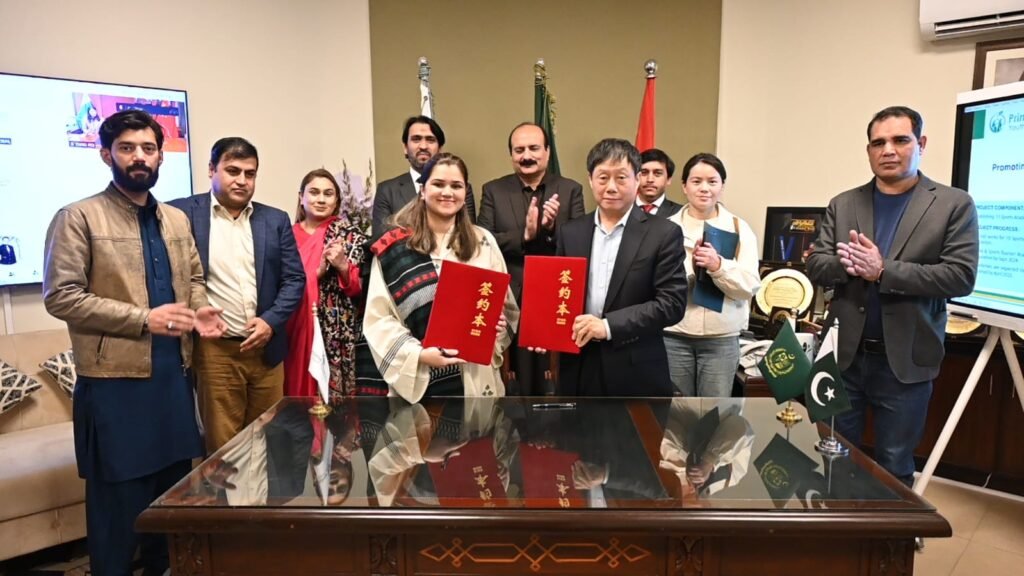
The LoI was signed at a ceremony held at the Prime Minister’s Office in Islamabad between China Pakistan TVET Cooperation, the Prime Minister’s Youth Program (PMYP), Government of Pakistan, and TANG Chinese Education and Technology.
The initiative seeks to promote digital transformation in education, strengthen institutional linkages, and foster long-term collaboration between the two countries in human capital development. The signing ceremony was witnessed by Chairman of Prime Minister’s Youth Program, Rana Mashhood Ahmad Khan.
Senior representatives from both sides attended the event, including Li Jinsong, President and Founder of TANG Chinese Education and Technology and Xanib Abdul Rehman, Section Officer of Prime Minister’s Youth Program, along with their respective delegations.
Speaking on the occasion, officials emphasized that the partnership reflects a shared commitment to empowering Pakistani youth with future-ready skills through modern training standards and innovative learning models.
Read More: Pakistan, China Sign Vocational Training MoUs, Boosting Youth Skills and Job Opportunities
The collaboration aims to introduce advanced curricula, joint certification mechanisms, and enhanced training methodologies to improve the relevance and quality of technical education across Pakistan.
Under the agreement, a large-scale capacity-building initiative will be launched over a five-year period. Approximately 2,000 master trainers will be developed to ensure sustainable knowledge transfer, while skills training will be cascaded to more than 50,000 young people across the country.
The program will focus on high-growth and emerging sectors, including digital technologies, e-commerce, fintech, artificial intelligence, media, tourism, and entrepreneurship.
The initiative also envisions the establishment of multiple smart digital training centers equipped with modern learning technologies.
In addition, opportunities for international exposure will be created through digital skills competitions and collaborative platforms, enabling Pakistani youth to compete and collaborate at the global level. Pathways for productive employment, both within Pakistan and abroad, will be a key outcome of the program.
Special emphasis will be placed on innovation, entrepreneurship, and small and medium enterprise (SME) development to support sustainable economic growth and job creation. The partnership aligns with Pakistan’s broader vision of leveraging youth potential as a driver of economic progress.