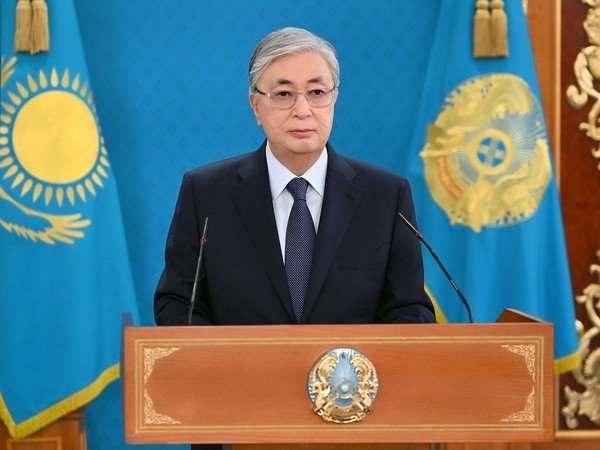
President Kassym-Jomart Tokayev’s speech at the National Kurultai on January 20 marked a serious turning point in Kazakhstan’s political journey. The address went far beyond routine policy messaging. It laid out a clear plan for how the state intends to organise power, manage succession, protect stability, and position itself in a fast-changing world.
What made the speech stand out was its clarity. Political reform, economic policy, foreign relations, energy planning, digital growth, and cultural identity were tied together as one national project. The message was simple. Long-term stability comes from strong institutions that work together, rather than from personalities or short-term fixes.
At the centre of the speech was a push for clear political rules. The proposal to create the office of Vice President, defined in the Constitution and approved by Parliament, directly addresses a long-standing gap in governance. Across the region, unclear succession has often led to elite competition and uncertainty. Tokayev’s insistence that any early end to a presidential term must be followed by elections within two months sets a firm standard. Leadership must come through the ballot box, ensuring continuity and public trust.
This focus on clarity builds on reforms launched in recent years. Since 2022, Kazakhstan has established a Constitutional Court, introduced cassation courts, and granted constitutional status to the Human Rights Commissioner. According to the President, 26 laws have already been passed following earlier National Kurultai meetings. These steps show steady progress toward a system where authority is regulated by law and oversight.
Parliamentary reform formed another key pillar of the address. Plans to move toward a unicameral legislature with 145 deputies, all elected through proportional representation, aim to strengthen political parties and improve legislative discipline. Reducing the number of committees and simplifying procedures is designed to speed up lawmaking and raise professional standards. Giving Parliament a stronger role in approving appointments to major institutions and electing Supreme Court judges reshapes the balance of power in a meaningful way.
For external observers, these changes point to a shift toward durable institutions. At a time when many countries struggle with polarisation and weak governance, Kazakhstan is attempting to lock in stability through structure rather than control.
On foreign policy, Tokayev struck a calm and measured tone. He acknowledged rising global tensions, declining trust between states, and growing militarisation. At the same time, he reaffirmed Kazakhstan’s commitment to a balanced and interest-driven diplomacy. The country will continue to act as a predictable partner, using dialogue and restraint rather than confrontation.
This approach carries particular weight for China and the wider region. Kazakhstan remains a central link in Eurasian connectivity. The President placed strong emphasis on transport and logistics, especially the development of East–West and North–South corridors. Projects such as the Beineu–Sekseuil highway are expected to shorten the Middle Corridor by around 900 kilometres. Rail upgrades on routes including Kyzylzhar–Moyynty, Darbaza–Maktaaral, Altynkol–Zhetygen, and Zhezkazgan–Sekseuil aim to raise capacity and ease bottlenecks.
These investments carry practical value. Faster routes and lower transit costs directly affect trade flows across Eurasia. Tokayev’s openness to greater private-sector participation, including in cargo aviation and fuel pricing, reflects a shift toward commercially sound infrastructure rather than purely state-led projects.
Energy security received similar attention. Kazakhstan’s coal reserves, estimated at about 33 billion tonnes, were described as a strategic asset. The President directed that coal-fired power generation be treated as a National Project, with decisions finalised by March 20. At the same time, he stressed the use of modern technologies to limit environmental impact. This balanced framing reflects a realistic approach to energy demand while keeping sustainability in view.
Gas development also featured prominently. Tokayev instructed QazaqGaz, the government, and the Samruk-Kazyna Fund to speed up geological exploration and develop new gas fields through a mix of public and private investment. Stronger oversight of major gas projects was highlighted, signalling a focus on governance alongside expansion.
Water security emerged as both a domestic and regional priority. The President described water as a strategic resource and called for closer cooperation with Central Asian neighbours on transboundary rivers. His proposal to promote an International Water Organisation as part of UN reform discussions shows Kazakhstan’s intent to shape regional solutions. Hosting an international ecological summit in Astana focused on the Aral Sea further supports this leadership role.
One of the most forward-looking parts of the speech focused on digitalisation and artificial intelligence. Tokayev argued that technological change reduces the importance of population size and rewards countries that adapt quickly. Kazakhstan, he said, has chosen accelerated digital and AI adoption across public administration and the wider economy.
At the same time, the President warned against treating technology as a shortcut. Effective digital transformation requires efficient management, strong institutions, and professional public service. Proposals to anchor digital development in the Constitution, designate zones for high-capacity data centres, and build secure infrastructure point to long-term planning rather than quick branding.
Cultural and spiritual development was woven into this vision. Tokayev linked successful reform to public consciousness and shared values. Plans to modernise museums, theatres, and libraries, support creative industries, and expand engagement through UNESCO were presented as strategic investments. Kazakhstan already ranks among leading countries in the number of elements listed under UNESCO’s Intangible Cultural Heritage, a point highlighted with confidence.
Taken together, the National Kurultai speech outlined a careful transition toward a new constitutional and governance model. It reflected confidence grounded in planning and restraint. For China and the broader international community, the message was clear. Kazakhstan seeks stability through institutions, openness guided by national interests, and development anchored in long-term thinking.
In an era shaped by uncertainty, this steady approach offers a clear signal. Reform, when paced and structured, remains one of the strongest tools for national resilience.

Muhammad Asif Noor
The writer is Director, the Institute of Peace and Diplomatic Studies