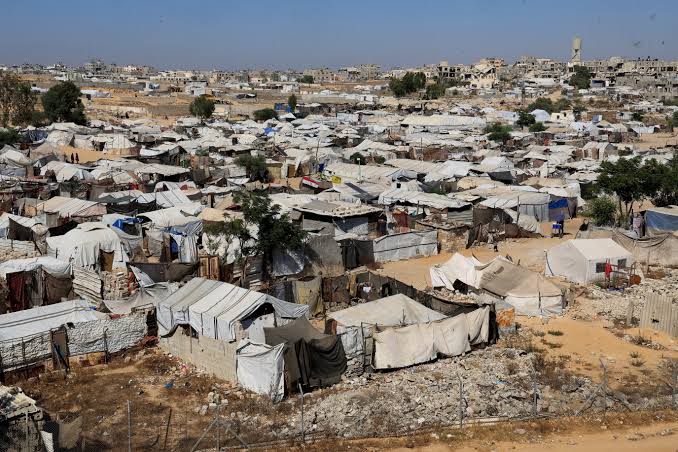
Israel’s security cabinet has approved a legal framework allowing an international stabilization force to enter selected parts of Gaza under the United States-backed postwar plan.
The proposed force is expected to include around 200 personnel from countries such as Morocco and Uganda. However, each participating country’s contingent will still require separate Israeli approval, and no timeline has been announced for its deployment.
The decision marks one of the first practical steps towards implementing the international component of the proposed Gaza plan.
According to the proposal, the stabilization force would help maintain security, support humanitarian operations and facilitate the gradual transfer of civilian administration to a Palestinian technocratic body.
The plan also envisions the eventual withdrawal of Israeli troops and the demilitarization of Hamas. Nickolay Mladenov, the Board of Peace’s envoy for Gaza, described the cabinet’s decision as an important step toward stabilizing the territory.
Challenges Still Remain
Despite the approval, several key questions remain unanswered. Hamas has not agreed to disarm, while the proposed Palestinian administration has yet to assume responsibility inside Gaza.
Israel also continues to maintain military control over large parts of the territory, raising questions about how and where the international force would operate.
Another important aspect is that every national contingent will require separate approval from Israel before deployment.
While the framework has now been approved, the mission’s effectiveness may ultimately depend on the composition of the force and the level of cooperation between all parties involved.
The timing of the decision is significant as it comes ahead of Israeli Prime Minister Benjamin Netanyahu’s expected visit to Washington, where Gaza and regional security are likely to feature prominently in discussions with President Trump.
The coming days are expected to provide greater clarity on the force’s mandate, participating countries and possible deployment timeline.
Reactions from Hamas, Palestinian officials and potential troop-contributing states will also indicate whether the proposal can move beyond political approval and into implementation.

Anoush Taimur
Anoush Taimur is an International Relations graduate from DHA Suffa University, Karachi, currently based in Doha. Her research interests include Gulf politics, small-state diplomacy, Global South studies and conflict
mediation. Her work examines how states create influence through connectivity, institutions and strategic relationships. She can be reached at [email protected]