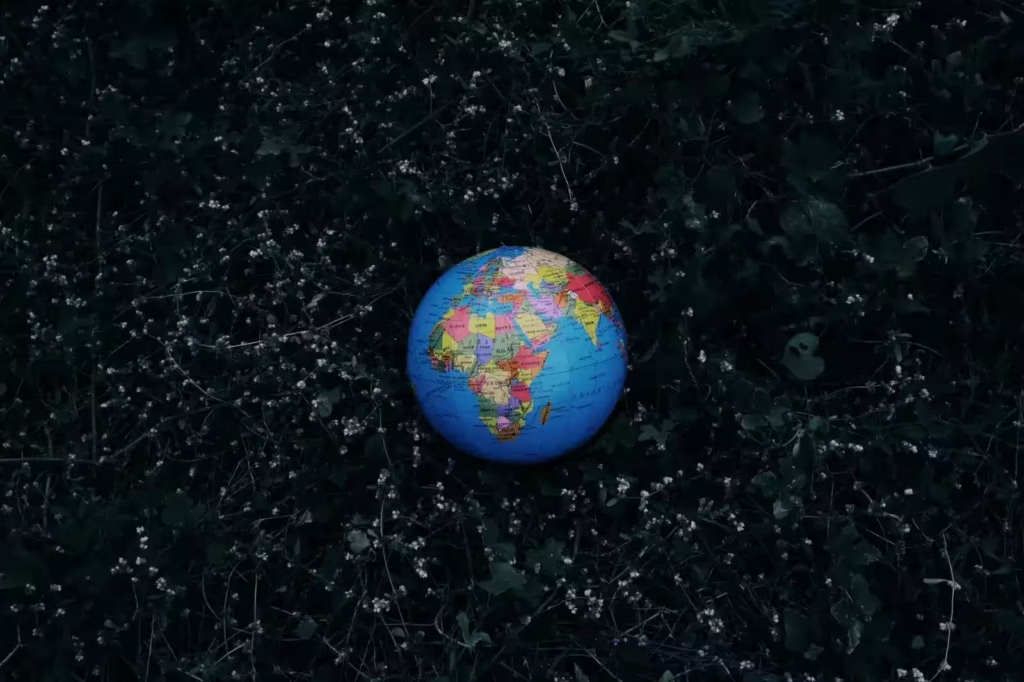
What matters most at the UN climate summit in Antalya is neither the number of delegates nor declarations, but 2.6°C. In its latest evaluation, the United Nations Environment Program (UNEP) has found out that despite the implementation of the existing pledges, the planet is set to experience this magnitude of warming throughout the 21st century. While diplomacy continues to move forward, physics is already working.
Now, as COP31 unfolds, the question is not whether nations believe in climate change action. The issue is whether the international system can achieve the necessary pace and scale of action demanded by science. Climate diplomacy becomes the issue of credibility – a tool which demonstrates whether the promises are fulfilled upon meeting the negotiating hall and national politics.
The issue has been clarified by science once again. As per UNEP’s 2026 Emissions Gap Report, the pathway which allows minimizing the overshooting of 1.5°C would require a 45% reduction of the global greenhouse gas emissions from the level in 2025 to 2035.
Existing pledges of the countries would result in only 11–15% reduction. This is not a marginal policy shortfall. It is a profound mismatch between the climate future governments endorse and the one their actions are financing.
As if to bring us back down to Earth, the World Meteorological Organization COP31 briefing highlights the immediate reality that the first nine months of 2026 registered an average temperature of around 1.47°C above the pre-industrial benchmark, while ocean heat and sea levels were breaking records yet again.
While a single year or nine months above 1.5°C does not constitute a formal breach of the Paris Agreement’s temperature limit, it clearly means that the room for maneuvering is fast diminishing.
For Pakistan, the discussion has a very concrete dimension. The catastrophic floods of 2022 affected 33 million people, causing over $30 billion in damage and economic loss. The flood wiped out villages, farms and roads, but the consequences extended much further into debts, food prices, government budgets and lost development opportunities. Climate shocks cannot be neatly compartmentalized by diplomats as issues of environment, economy or security.
This is why climate justice must be seen as an issue of international stability and not simply as a matter of ethics. For a country whose vulnerability leaves it struggling to allocate resources to education, healthcare and infrastructure while constantly responding to climate shocks, such vulnerability becomes a self-defeating cycle.
The financing structure, however, continues to be seriously out of alignment with the risks involved. UNEP estimates that developing countries would need $310–365 billion per year for adaptation by 2035. International public finance for adaptation amounted to only $26 billion in 2023.
This gap is not merely an accounting issue but rather means flood defenses that have not been constructed, water systems that have not been upgraded, and early warnings that may never make it to those who are vulnerable.
In any event, we should resist the convenient storyline that responsibility rests exclusively on the shoulders of the treasury departments of wealthy nations. Developed countries should live up to their responsibilities and provide predictable and accessible finance, especially grants, in particular for countries that face high debts.
However, developing countries should do more to prepare projects and manage investments, set up safeguards and report credibly.
Nationally determined contributions in Pakistan illustrate the ambition as well as the implementation problem. NDC 3.0 promises to cut down emissions by 50% compared to those expected in 2035. Of that figure, 17% will be achieved unconditionally while another 33% will depend on international assistance.
The document notes the need for an estimated $565.7 billion in investments. This is a task far from being a mere bragging matter; rather, this is a tough job of turning the country’s ambitions into viable investment plans in renewable energy, transportation efficiency, agricultural resilience, water security, and risk reduction.
A good climate diplomacy would begin with redefining success. First, negotiations should distinguish money pledged from money committed, disbursed and delivered to communities. Second, international financial institutions should treat resilience as an investment in macroeconomic stability, not a discretionary environmental add-on.
Third, technology cooperation should be judged by deployment and local capability, not by the number of partnership announcements.
Fourthly, transparency has to be the lingua franca of trust. The enhanced transparency framework of the Paris Agreement provides a starting point for measuring progress, spotting deficiencies, and providing assistance. Robust greenhouse gas inventories, transparent climate risk data, and trustworthy measurement, reporting, and verification are no bureaucratic niceties.
Rather, these are the building blocks of successful diplomacy. Otherwise, carbon markets face the danger of selling disputed reductions, adaptation measures face the danger of rewarding action rather than success, and diplomats face the danger of mistaking good intentions for tangible achievements.
Lastly, the next stage of climate diplomacy has to acknowledge that adaptation and mitigation are two sides of the same coin. An economy suffering from constant floods has a hard time pursuing decarbonization; a planet that fails to mitigate the effects of global warming makes adaptation a very costly endeavor. These false dichotomies harm both agendas.
COP31 should be judged less on the length of the closing declaration and more on how things go following Antalya: Will funding be forthcoming for developing nations under realistic conditions; will the trend lines of emissions start reflecting what countries have pledged to do; will the figures be independently verifiable; and will people who experience unbearable heat, water shortages and flooding be made safer?
Eleven years after the signing of the Paris Agreement, the problem that the world faces is not one of climate terminology but of delivery. No amount of beautiful language can fool the atmosphere into believing that there has been progress in emissions reductions or building resilience.
Neither can it fool the family putting itself back together after a devastating flood. The test of climate diplomacy is straightforward: In our history, will our commitments show up as less emissions and better resilience or just great rhetoric?
*The views presented in this article are the authors’ own and do not necessarily reflect the views of The Diplomatic Insight.*

Muhammad Arif Goheer
Muhammad Arif Goheeris the Executive Director of Pakistan’s Global Climate-Change Impact Studies Centre (GCISC), with 25 years of experience in climate science, governance, and sustainable development. A former research fellow at IIASA, Austria, and AusAID Fellow at the Australian National University, he has contributed to WMO initiatives and shaped Pakistan’s NDCs, National Adaptation Plan, and climate transparency systems. Internationally, he serves on the UNFCCC Article 6.4 Supervisory Body and Technology Executive Committee, contributes as an IPCC Lead Author, and engages with UNESCAP and APN’s Scientific Planning Group. His expertise bridges scientific evidence, climate diplomacy, and policy implementation for resilient development. He can be reached at [email protected]