Peace, as a universal value, is one of the most important elements for the sustainable development of society and the state. Without ensuring peace and security, economic, social, and cultural development cannot be achieved. In the modern world, international peace holds a special position both as a norm of international law and as a manifestation of humanitarian values.
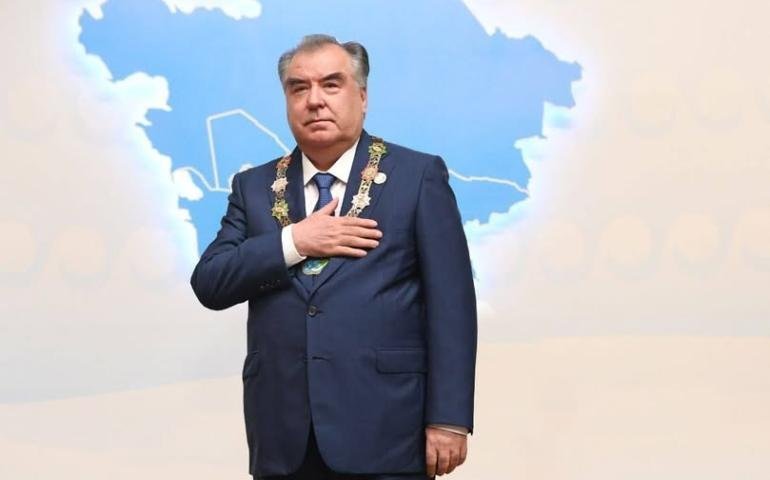
After gaining independence, Tajikistan faced the challenge of a civil war, which threatened the survival of the young state. In this context, the role of the President of Tajikistan, Emomali Rahmon, in establishing peace and national unity is of historic significance.
International peace is primarily emphasized in major international documents, including the Charter of the United Nations, the Helsinki Final Act, and other international legal instruments. International peace is recognized as a fundamental value and legal norm by both the Charter of the United Nations (1945) and the Helsinki Final Act (1975).
According to Article 1 of the UN Charter, the purposes of the United Nations include the maintenance of international peace and security, the prevention of conflicts, and the promotion of friendly relations among states based on respect for sovereignty and territorial integrity.
Read More: Tajikistan’s UN Diplomacy: From Water Security to Global Peace Initiatives
The Charter emphasizes that disputes should be resolved through peaceful means, such as negotiation, mediation, and diplomacy, rather than through the use of force, except in cases of self-defense or with the authorization of the UN Security Council. Similarly, the Helsinki Final Act highlights that lasting peace in Europe and beyond depends on mutual respect for sovereignty, the inviolability of borders, and the independence of states.
It underscores those conflicts should be settled peacefully and that human rights and fundamental freedoms are essential components of sustainable peace.
The Act also stresses the importance of building trust and cooperation through political dialogue, economic collaboration, and cultural exchanges, thereby preventing tensions and promoting stability in the international arena. Together, these documents establish that international peace is not merely the absence of armed conflict, but a comprehensive framework of law, dialogue, respect for sovereignty, and protection of human rights, forming the foundation for global stability and cooperative development.
According to these documents, every state is obliged to contribute to international security, respect the sovereignty of other countries, and promote peaceful coexistence. In the 21st century, new threats such as terrorism, extremism, radicalism, the illegal trafficking of drugs, and regional conflicts put international peace at risk. Therefore, the peace-oriented policies of states are of key importance.
Read More: Tajikistan’s Multilevel Diplomacy at UNGA: Balancing Global Engagement and Bilateral Ties
Tajikistan represents a rare example of peacebuilding in the late 20th century. The civil war (1992–1997) not only led the country into political and social crises but also posed a threat to the entire Central Asian region. In this context, the Founder of Peace and National Unity – Leader of the Nation, President of Tajikistan, Emomali Rahmon’s efforts to initiate negotiations among Tajik factions and to sign the General Agreement on the Establishment of Peace and National Accord (June 27, 1997, Moscow) are historically significant.
Scholars refer to Tajikistan’s peace experience as a “school of peace diplomacy”, as it was based on negotiations, constructive dialogue, and mutual concessions. Today, this experience is recognized by the United Nations and other international organizations as a unique model of peacebuilding.
The President of Tajikistan, Emomali Rahmon, not only ensured peace and unity within the country but is also recognized internationally as a promoter of peace and regional cooperation. Notable initiatives include:
- The proposal to establish the International “Clean Water” Foundation and the declaration of international years of freshwater (2003, 2010, 2013, 2018) by the UN.
- Initiatives to combat global threats, including terrorism, extremism, and the illegal trafficking of drugs.
- Contribution to the development of regional diplomacy and the strengthening of cooperation with Central Asian, Middle Eastern, and global partners.
- Most importantly, presenting Tajikistan’s experience as a model of sustainable peace for countries affected by conflicts.
Read More: Tajikistan in the New Regional Order of Central Asia
Researchers note that Tajikistan’s peace experience encompasses several dimensions:
- Legal dimension – agreements were signed in accordance with international law.
- Political dimension – peace in Tajikistan was ensured through negotiations and national dialogue.
- Social dimension – peace contributed to economic recovery and peaceful coexistence.
- International dimension – through global initiatives, Tajikistan strengthened its position as a peace-promoting country.
International peace is a supreme value and a necessity that all humanity must protect. Under the leadership of President Emomali Rahmon, Tajikistan transformed from a civil-war-torn country into a peace-promoting and internationally recognized state. This experience is not only significant for the political history of Tajikistan but also for global peacebuilding practice and scholarly research.
*The views expressed in this article are the author’s own and do not necessarily reflect the editorial policy of TDI.

Saidzоda Halim Aziz
Saidzоda Halim Aziz is a Senior Research Fellow of the Department of the Middle and Near East, and a doctorate in Philological Sciences.
Saidzоda Halim Aziz
Saidzоda Halim Aziz is a Senior Research Fellow of the Department of the Middle and Near East, and a doctorate in Philological Sciences.