Indonesia and China have agreed to strengthen economic and security cooperation, seeking to deepen their strategic partnership amid growing geopolitical and economic uncertainty in the region.
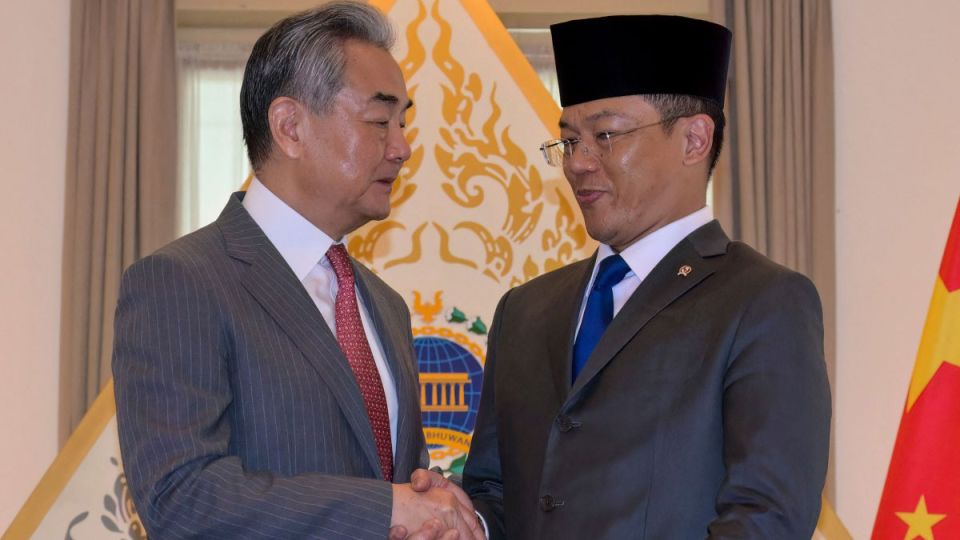
The agreement was reached during high-level meetings in Jakarta on Friday, where Indonesian Foreign Sugiono and Chinese Foreign Minister Wang Yi led the countries’ first Comprehensive Strategic Dialogue.
The talks also included defense ministers from both countries, with discussions covering trade, investment, defense, energy, minerals, and technology.
Indonesia and China agreed to expand bilateral trade beyond its current level of about $167 billion, while also increasing cooperation in energy, mineral resources, technology, and maritime trade, Beijing is already a major economic partner for Jakarta, with Chinese companies heavily involved in sectors including mining, electric-vehicle batteries, and infrastructure.
Read More: China, Indonesia Strengthen Economic Cooperation
The two countries agreed to increase joint military exercises, strengthening defense-industry cooperation and enhancing military technology exchanges. They are also planning a joint munitions factory in Indonesia, with Chinese technology transfers expected to support production from 2027.
The two sides also discussed food and energy security, artificial intelligence, satellite communications, green energy, and fisheries. Indonesia and China also seeking closer coordination on maritime issues while supporting progress toward a regional Code of Conduct for the South China Sea.
The growing partnership between two countries comes as Indonesia continues to pursue its traditionally non-aligned foreign policy while maintaining relations with other major powers, including the United States, Japan, and Australia.
Jakarta’s closer engagement with Beijing therefore reflects an effort to expand economic and strategic options without formally aligning with either side of the broader US-China rivalry.
The latest agreement signals that Indonesia-China relations are moving beyond trade and investment toward broader cooperation in defense, technology, energy, and regional security, potentially giving both countries a larger role in shaping the strategic environment of Southeast Asia.