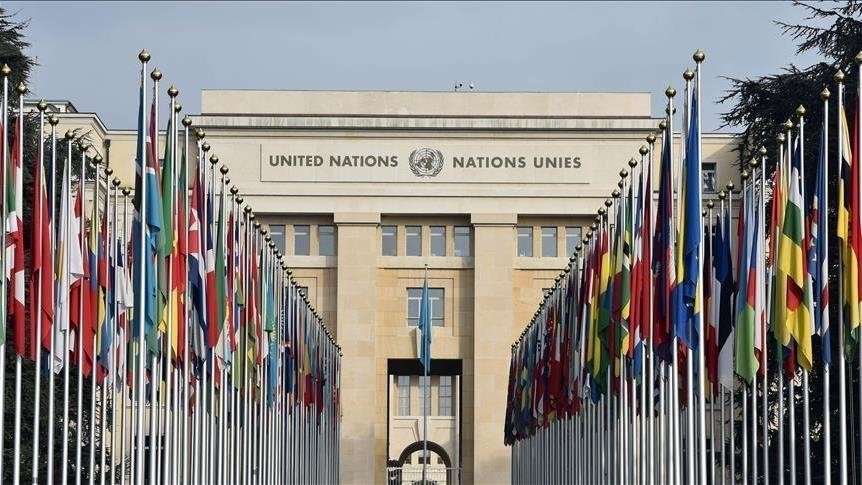
The selection of the United Nations Secretary-General follows a structured framework defined in the UN Charter, but in practice it is shaped by political negotiation, especially within the United Nations Security Council (UNSC).
The General Assembly adopts resolution 79/327 and establishes the legal framework for the selection and appointment process. Under Article 97 of the Charter of the United Nations, the Secretary-General is appointed by the United Nations General Assembly (UNGA) on the recommendation of the United Nations Security Council.
The process moves through nominations, public hearings, private consultations, and a final decision endorsed by member states.
The process begins with a joint letter issued by the President of the General Assembly and the President of the Security Council inviting member states to nominate candidates. Each nominee is put forward by one or more countries and submits a vision statement, curriculum vitae and campaign financing disclosures.
These documents are made public to ensure transparency and allow member states to review candidates before discussions begin.
The President of the General Assembly then conducts interactive dialogues which were held just recently on 21-22 April 2026 and candidates present their priorities and respond to questions from member states.
Read More: Four UN Secretary-General Candidates Lay Out Their Vision in Interactive Dialogue
These sessions are broadcast and serve as the first major public assessment of the candidates.. After the hearings the process shifts to the Security Council where members begin closed consultations to assess support for each candidate.
The current Secretary-General of the United Nations is António Guterres, who took office in January 2017 and is serving his second term. His tenure will end on 31 December 2026.
The selection process for his successor began on 25 November 2025 and continues throughout 2026, including nominations, hearings, and informal consultations.
The United Nations is expected to finalize the appointment in the final quarter of 2026, and the new Secretary-General will assume office on 1 January 2027 for a five-year term.
The Secretary-General is the highest administrative official of the United Nations and plays a central role in conflict mediation, humanitarian coordination, and global diplomacy. The position influences how international crises are managed and how consensus is built among member states. The process also reflects the balance of power within the UN system.
While all 193 member states participate through the General Assembly, the Security Council holds decisive authority in narrowing candidates. The five permanent members – China, France, Russia, the United Kingdom and the United States each have veto power, meaning any one of them can block a candidate regardless of wider support.
Over time, reforms such as public hearings and published nomination documents have improved transparency. However, decision-making remains concentrated within the Security Council, making consensus among major powers essential.
The Security Council’s 15 members evaluate candidates through private discussions and informal “straw polls,” where they indicate support, opposition, or neutrality. These rounds are repeated, gradually eliminating weaker candidates.
Read More: The Aging Giant: Is the United Nations Losing Its Global Relevance?
In later stages, voting may distinguish between permanent and non-permanent members due to veto influence. Several member states have proposed reforms, including replacing informal polls with formal voting or requiring multiple candidates for General Assembly choice.
Others have suggested stronger General Assembly consultations but no binding reform exists. Debates also continue on gender representation, regional balance and ensuring candidates have both diplomatic and administrative experience.
Once consensus is reached, the Security Council adopts a resolution recommending a candidate to the General Assembly. Typically, only one name is forwarded. The General Assembly then votes, usually by simple majority. Although it can reject the recommendation and this has rarely happened.
After approval, the President of the General Assembly organizes a swearing-in ceremony. The Secretary-General-designate takes an oath of office, committing to act independently of any government. The transition period is used for preparation and the new term formally begins.
The selection process continues to evolve as member states push for greater transparency and inclusivity. While reforms have expanded participation, geopolitical realities still shape outcomes.
As global challenges deepen, the 2026 selection is seen as both an administrative transition and a reflection of how global governance adapts to changing international dynamics.

Muhammad Usman Hashmi is a researcher in International Relations, focusing on climate diplomacy, global governance, and political economy in the Global South. He has contributed to policy dialogues with the Foreign Policy Community of Indonesia and serves as a Senior Research Fellow at the International Council on Human Rights, Peace and Politics. He is also associated with Rethinking Economics Islamabad, contributing to research on development and sustainability.