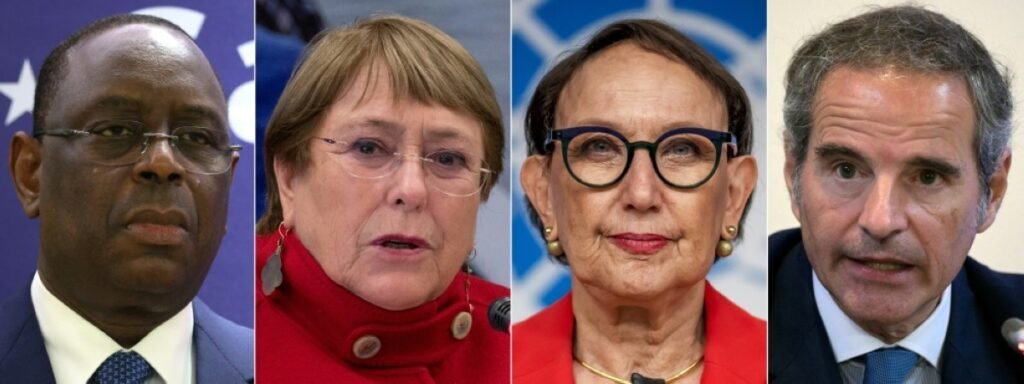
New York (TDI): Four candidates seeking to succeed Antonio Guterres as Secretary General of the United Nations presented their plans during interactive dialogues at the UN headquarters, on Tuesday.
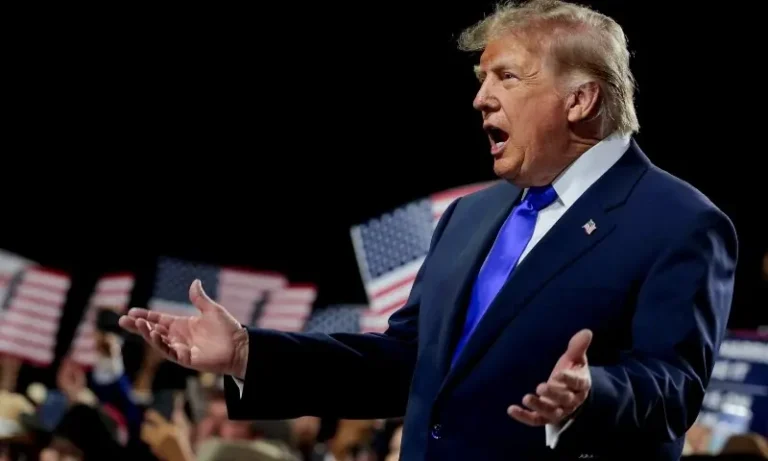
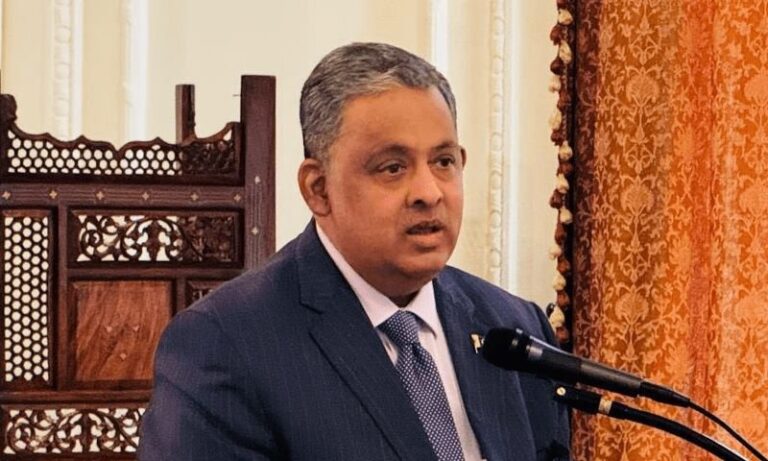
The candidates Michelle Bachelet, Rafael Grossi, Rebeca Grynspan, and Macky Sall outlined their priorities and responded to questions from member states and civil society during sessions held at the United Nations General Assembly.
The discussions focused on leadership experience, institutional reform, and the organization’s three pillars: peace and security, development, and human rights.
Bachelet said that institutional reform would be central to her approach, including improving financial transparency and reducing administrative overlap.
She also supported grant-based climate financing for vulnerable countries and emphasized the need to ensure gender balance and broader geographic representation within the UN Secretariat.
Grossi, the Director General of International Atomic Energy Agency, said he would maintain close coordination with the United Nations Security Council and uphold neutrality during international crises.
Read More: UN Experts Demand Immediate Suspension of EU-Israel Trade Agreement
He also called for stronger cooperation between the UN and financial institutions, including the World Bank, and stressed the importance of improving communication to better engage younger audiences.
Grynspan, who currently leads the United Nations Conference on Trade and Development, emphasized the need for a more flexible and accountable United Nations, with a focus on delivering measurable outcomes and strengthening trust among member states.
He highlighted development challenges and called for reforms to improve the representation of underrepresented regions in global decision-making.
Guterres will step down after completing two terms and the next Secretary-General is set to take office on January 1, 2027. The selection process involves a recommendation by the Security Council followed by approval from the 193-member General Assembly.
A candidate must secure sufficient support within the Council without facing a veto from any of its five permanent members: China, France, Russia, United Kingdom, and the United States.
Informal votes are expected as the process moves forward, while the presence of multiple candidates from Latin America has raised questions about geographic representation in the selection process.

Muhammad Usman Hashmi is a researcher in International Relations, focusing on climate diplomacy, global governance, and political economy in the Global South. He has contributed to policy dialogues with the Foreign Policy Community of Indonesia and serves as a Senior Research Fellow at the International Council on Human Rights, Peace and Politics. He is also associated with Rethinking Economics Islamabad, contributing to research on development and sustainability.