In Europe, America plays checkers, and Russia watches the clock. In spite of the continent’s largest defense pact in history, and while the continent is trapped between two giants, with no strategic space to make decisions without cost, corporate America dominates it.
Since the end of the Second World War and more recently in the many proxy wars of the twenty first century, Europe has been the prize and the pawn of the superpowers. It’s no novelty that it’s paralyzed: It’s a rerun of an old script, written by men such as Winston Churchill, but now performed under a new set of geopolitical circumstances of renewed dependency.
In 1946, Churchill spoke of an Iron Curtain dividing the continent and had more than just a warning message for the Soviet Union. He was drawing a map that put Europe between the Anglo-Americans and the Soviet Union, with Britain and America sitting off in the oceans, out of the way and out of danger.
That was the logic that led to the formation of NATO – not an alliance of equals, but a strategic insurance policy that, in the event of future war, it will destroy Europe first, but not London or New York.
Nearly intact, that old blueprint is found in Ukraine. But even as economists such as Jeffrey Sachs predicted that NATO’s expansion eastward and economic warfare against Moscow would divide Europe and isolate Russia, European leaders, caught up in Washington’s strategic agenda, opted to pursue alignment rather than negotiated de-escalation.
Read More: Striking Foot on the Saw: How Europe Killed Itself in the Ukraine War
It led to an energy shortage, a surge in inflation, and a continent again transformed into the battleground in a war played on, and for, other people’s rules.
In the deal with Kyiv, made by Washington for further arms and ammunition, there is no place such dependency more evident than that.
On April 30, 2025, the United States and Ukraine reached a deal on a U.S. – Ukraine Reconstruction Investment Fund, providing Washington with preferential access to Ukraine’s mineral, hydrocarbon and related infrastructure projects, after months of tense negotiation – and one famously unpleasant Oval Office meeting in February 2025.
The signed text names 55 minerals, including titanium, lithium and uranium; there is a list of additional ones that can be added later. Ukraine has the formal title to the bottomlands, and the final deal did not include the harsher terms first proposed in Feb. 2025, when officials in Kyiv had slammed an earlier draft as being unfair and equating Ukraine to a “junior partner.” Notably, there is no binding security guarantee for Ukraine in the agreement.
Mineral riches made the deal dependent on a Ukrainian dollop of the nation’s subsoil future, while continued ammunition and arms deliveries hinged on the maintenance of the territory it had lost on the battlefield: Kyiv was playing both sides of the street, losing the land on one side and conceding a share of it on the other to Washington.
In other words, Ukraine faces a sort of “bite” on both sides: territory is being devoured by Russia, while resource rights are being swallowed by the United States. Thus, the minerals agreement is much more than an economic transaction, it is the cost of continuing to be supported by the West, in a currency that Ukraine cannot even access, until the end of the war.
But there is a more forthright argument for the trade – and that’s the one Kyiv has made, effectively: minerals can be mined later, territory can be seized and annexed now. Hence this argument: If Russia is willing to give up a portion of future mineral revenues to gain the possession of shellfish, air-defense interceptors and long-range strike systems, then it is that remaining territory, not the mineral deposits, that makes the difference between whether Russia is stopped from expanding or not.
As per the latest frontline data, the Russians are holding 18-20% of Ukraine, including Crimea, and the pre-2022 occupied regions of Donetsk and Luhansk, a line that has shifted only slightly since late 2023 with Russia’s net territorial gains in Ukraine over four weeks of fighting from late May through late June 2026.
On that interpretation, the minerals deal isn’t paying tribute, but it’s paying insurance; it’s paying for the ongoing flow of arms that keeps the front line from falling, only this time the insurance is for the loss of future resource sovereignty, not for land. But in either case, the same weakness permeates the whole argument.
The conditions on which Ukraine’s survival is actually being financed are being set by no one but by Washington, neither Brussels nor any other European capital. When the deal was struck about the hidden assets of Ukraine, Europe didn’t even sit at the negotiation table, having provided tens of billions of euros of assistance in the past four years, and being the one most affected by the war’s spillover.
A continent which sees strategic importance could not be responsible for the deal that will decide who benefits from the reconstruction of the bordering landmass.
The paralysis is more obvious than in those countries that have learned to live with a superpower without bowing down to its commands. Finland has over a thousand kilometers of border with Russia and, via the Cold War, has followed what was derisively described as “Finlandization”—a policy of calibrated, cautious neutrality, which served to maintain its sovereignty and stability.
Its first rule of life near Moscow was never to make the survival of the nation depend on ideology. There is a second model: Turkey. Buying into Russian systems, providing Ukraine with drones, brokering grain-export talks between Kyiv and the Kremlin, or negotiating its own energy contracts with Moscow’s leaders: Ankara has done it all, all while staying inside the NATO bloc.
NATO membership is not the top but the bottom of the list of choices for Turkey. These lessons are unlearned in Europe. It has instead handed over its strategic thinking to Washington and has shrunk from its image in the mirror of the Kremlin, where it is as dependent as it is on the United States for security, as it craves genuine independence, and where it remains subject to Russian energy pressure, and is not free to move in either direction.
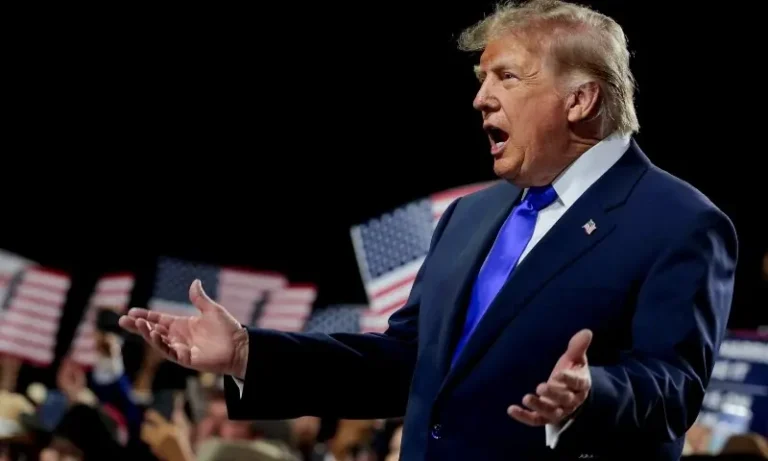
During his first year as President, in 2019, Trump showed interest in the US buying Greenland, an autonomous part of Denmark. It is truly a “big real estate transaction” and its strategic and resource qualities were mentioned. It wasn’t a suggestion or proposal by Denmark, it was an idea that came from Trump and his staff in the United States.
Denmark reacted by firmly rejecting. Greenland is not for sale, Greenland is not Danish, Greenland belongs to Greenland”, Prime Minister Mette Frederiksen said. “I strongly hope that this is not meant seriously.” She also said that the thought was “absurd.” This was echoed by Greenland’s leaders whose foreign ministry said it was open for business, not for sale. Trump has then cancelled a planned visit to Denmark in response to the rejection.
The greatest evil in this compromising is moral. The European Union is the protector of liberalism and international law, but it relies on American hard power, on sanctions that according to several independent estimates have been very costly for the European economies.
The answers have been wide-ranging — from estimates made by consultants of the loss of competitiveness at around €1.6 trillion by cutting off Russian energy imports by 2023, to the latest analysis of how the Russian sanctions have pushed European households into a long-term cost-of-living crisis, with about 1 in 5 reporting struggling to heat their homes and 1 in 4 finding it hard to pay bills on time.
But there were signs that the Russian economy was doing better than governments in the West had thought, with Russia continuing to enjoy support from its military spending, and the US only beginning to target Russia’s largest oil producers, Rosneft and Lukoil, in October 2025, years after the EU and UK had stepped up their sanctions.
Europe, that is, has suffered a more immediate and a higher price for a policy it did not build and is not in total control of — moral posture without strategic sovereignty.
Iran, 2026 is a new sequel to the original. But once again in the Iran war, Europe has been split: On February 28, 2026, the U.S. and Israel launched an attack on Iran with scant regard for the involvement of European allies, leaving them to scramble to catch up with a war they had neither expected nor crafted.
The split was along conventional lines, with Britain expressing a balance between criticism of Iran and calls for de-escalation, initially limiting U.S. use of its Diego Garcia base, and Germany’s leadership remaining measured, with Spain’s prime minister openly criticizing the Trump administration and Israel.
Read More: Europe’s Geopolitical Quandary in a Post-Ukraine World
The crisis revealed an EU-wide structural power vacuum and split between some leaders who called on international law and condemned the strikes as a war of choice, and other leaders who resisted, even as Iran itself warned against European involvement — and, despite those warnings, the EU was divided about how to respond, with only some member states supporting mutual defense, same as with Ukraine, now in another theatre.
As Finland has demonstrated with Russia and as Turkey has proven with its membership in NATO or its geographical proximity to a great power, Europe must grasp the idea that it must not be caught between great powers surrendering its strategic choice on Ukraine or Iran or perhaps on the next adversary.
Strategic independence requires a recalibration of NATO to meet Sachs’s desires: to keep NATO as a mutual defense alliance, and to eliminate foreign vetoes that embroil Europe in wars that it did not wish to fight. The calculations and conclusions of an old man like Churchill are irrelevant to a continent that wants to lead, not live.
But if Finland is able to hold out at Russia’s doorstep, and if Turkey is able to find a place to move around next to a superpower, then a United Europe can certainly find its voice between Washington’s shadow and Moscow’s glare and be able to move, at least, from pawn to player.
*The views presented in this article are the author’s own and do not necessarily reflect the views of The Diplomatic Insight.*

Abdul Muhaymin Farooq
Abdul Muhaymin Farooq is an Mphil scholar of Political science at the University of Punjab.