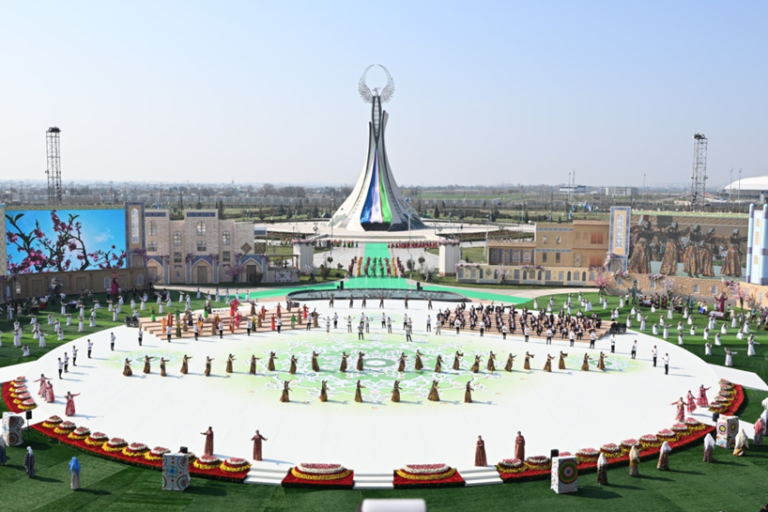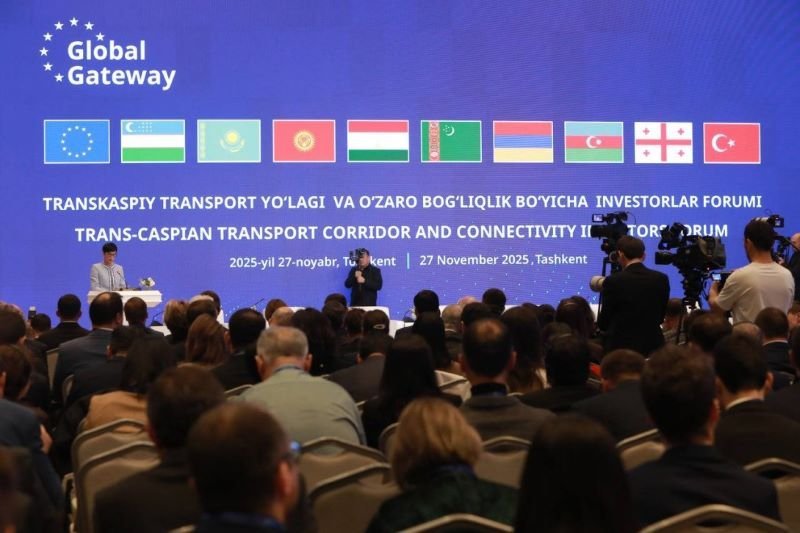
Tashkent (TDI): The Trans-Caspian Transport Corridor (TCTC) and Connectivity Investors Forum was held in Tashkent last week, bringing together officials from the European Union, Central Asian and South Caucasus countries, Türkiye, and international development banks. The forum highlighted the strategic importance of the corridor as a fast and reliable route linking Europe and Asia.
The TCTC, also known as the Middle Corridor and the EU’s designation for the Trans-Caspian International Transport Route (TITR), is a multimodal network connecting China and Southeast Asia to Europe via Central Asia, the Caspian Sea, Azerbaijan, Georgia, and Türkiye. The route can deliver cargo in under 15 days, offering an alternative to the northern route through Russia.
Delegates discussed plans to modernize both physical infrastructure such as roads, railways, ports, and logistics hubs and regulatory frameworks, digital systems, and trade facilitation mechanisms.
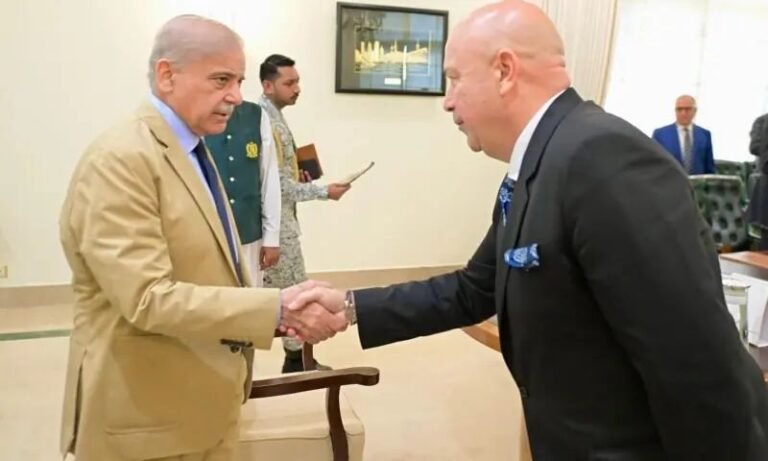
The forum, attended by European Commissioner for International Partnerships Jozef Síkela and European Commissioner for Enlargement Marta Kos, resulted in several agreements to strengthen transport links in the region.
The EU is providing EUR 10.4 million within a EUR 35 million EBRD loan to modernize Kazakhstan’s Aktau Port on the Caspian Sea, expanding berths, installing energy-efficient cranes, and increasing container-handling capacity. Additionally, an EIB loan of EUR 150 million, backed by an EU guarantee of EUR 8.8 million, will fund road rehabilitation through the national operator KazAvtoZhol.
Read More: Tashkent Summit Marks Major Step in Building a More United Central Asia
The EU will contribute EUR 15.46 million as part of a EUR 35 million EBRD loan to upgrade Kyrgyzstan’s 31.7-kilometer Karabalta-Chaldovar road, improving connectivity with Kazakhstan, cutting travel time, and enhancing road safety.
An anticipated EIB loan of up to EUR 100 million, supported by an EU guarantee of EUR 6 million, will fund the Nukus Highway Development Project in Uzbekistan. Upgrading 87 kilometers of the A380 highway, a major transport artery, is expected to boost regional trade and improve transport efficiency with neighboring countries.
Read More: Uzbek President Sets Out Ambitious Cooperation Vision at Central Asia Summit
Speaking at the forum, Commissioner Marta Kos emphasized the geopolitical and economic significance of reliable east-west transport links. “We have all learned that overdependence creates vulnerabilities,” she said. “Investing in infrastructure, digital and energy connectivity offers more options and reduces the risk of coercion. The Middle Corridor has seen cargo volumes quadruple since 2022, and with the right investments, it could triple again by 2030.”
The forum underscored the EU’s commitment to enhancing Central Asia’s transport infrastructure, ensuring smoother trade flows between Europe and Asia while reducing dependency on the northern routes.