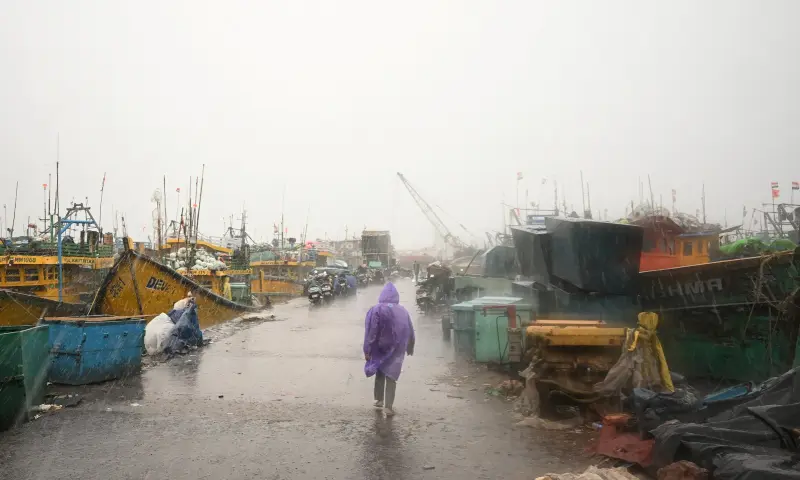
Cyclone Arnab struck India’s southeastern coast on Wednesday, bringing fierce winds and torrential rain to Andhra Pradesh. Early evacuations appeared to have prevented any loss of life.
The India Meteorological Department said Arnab hit Andhra Pradesh as a “very severe cyclonic storm,” with sustained winds of 115 to 125 kph and gusts up to 140 kph.
The agency had earlier said a deep depression over the Bay of Bengal moved westward and intensified into the cyclone. It warned of flash floods along the coast between Bapatla and Visakhapatnam.
Andhra Pradesh Chief Minister Nara Chandrababu Naidu said no deaths had been reported. His office credited “proactive measures” and praised officials who worked through the night.
Read More: Nepal Floods Kill 270 as Hundreds Remain Missing
The state’s disaster management authority said landfall had stalled for about two hours and that the storm was expected to finish crossing the shore by afternoon. It urged residents to stay alert, as strong gusts and rain continued.
There are varying accounts of the scale of the evacuations. AFP reported that about 50,000 people in Andhra Pradesh and another 48,000 in neighboring Odisha were told to move to safer ground. Citing All India Radio, Anadolu Agency said 84,396 people in Andhra Pradesh had been moved into 290 relief shelters, out of 2,199 designated across the state.
In the port city of Kakinada, near the storm’s core, gales battered trees and waves crashed ashore overnight. At dawn, residents waded through flooded streets and found damage that appeared limited.
Local businessman Hussain, 43, said there was less damage than feared, though fallen trees and damaged sheds and hoardings were visible. Another resident said early warnings had let many people lock up and leave.
Read More: UN Warns El Niño Can Break Every Record, Urges Action Before Disaster Strikes
Authorities in Andhra Pradesh and Odisha closed schools and halted fishing, and rescue teams were kept on standby. The Andaman and Nicobar Islands also shut schools for two days starting Tuesday.
The storm’s effects were also felt beyond India as Sri Lanka closed schools amid warnings of flash floods and mudslides. Nepal’s disaster authority said the system would move inland toward the Himalayas, bringing heavy rain and a high risk of snowstorms and avalanches.
The country is still recovering from a catastrophic August 26 flood that killed more than 1,400 people and left over 5,000 missing.
Cyclones are a regular threat in the Bay of Bengal, but this season has been intensified by the El Niño weather pattern, which has contributed to unprecedented warming.