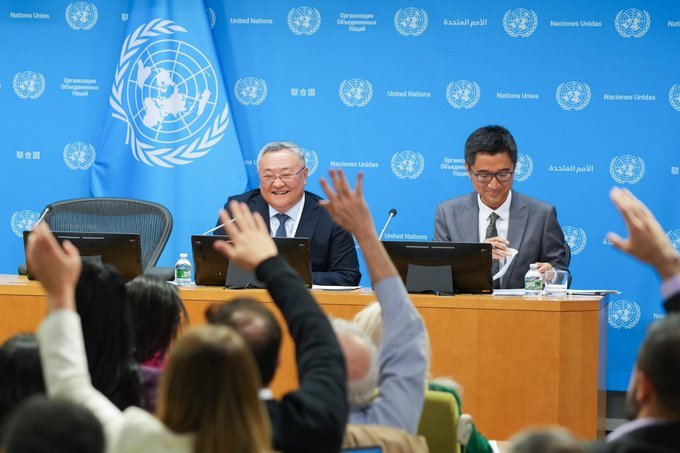
New York (TDI): China has assumed the rotating presidency of the United Nations Security Council (UNSC) for the month of May, and set out its priorities centering on multilateralism, Middle East, and development in Africa.
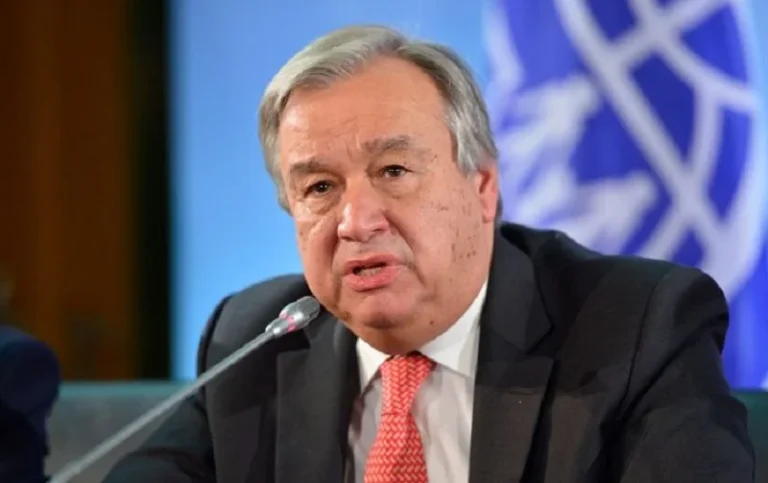
Speaking at UN headquarters in New York, China’s Permanent Representative to the UN, Fu Cong, said Beijing would prioritize “revitalizing the authority” of the UN Charter and reinforcing the role of the United Nations in global governance.
China’s presidency comes as part of the council’s monthly rotation system, under which each member state leads the body for one calendar month.
Fu emphasized that China intends to act in a “responsible and constructive manner,” committing to fairness, openness, and transparency while seeking broad consensus among council members.
It is a great honor for China to assume the rotating Presidency of the Security Council for the month of May.
We commend the work done by Bahrain as the President last month. Now that the baton is in our hand, we will continue to uphold fairness and transparency in the Council’s… pic.twitter.com/W39uQ7983O
— FU Cong 傅聪 (@ChinaAmbUN) May 1, 2026
A central pillar of China’s agenda is the pursuit of political solutions to ongoing conflicts, particularly in the Middle East.
Beijing has called for renewed diplomatic efforts to address regional tensions and has highlighted the importance of maintaining ceasefires and encouraging dialogue among parties.
Recent remarks by Chinese officials underscore concerns over instability in the region, including calls to sustain fragile ceasefires and prevent escalation.
Africa is another major focus. China has pledged to support peace, security, and development initiatives across the continent, reflecting its broader diplomatic emphasis on the Global South and developing nations.
This aligns with China’s long-standing positioning within the UN as an advocate for increased representation and cooperation among developing countries.
Read More: China Deepens Economic Integration with Africa Through Zero-Tariff Policy
During its presidency, China also aims to enhance unity within the Security Council itself. Fu said Beijing would maintain “extensive engagement and close communication” with all parties to build consensus and respond to international expectations with concrete actions.
The presidency begins amid a complex global landscape marked by geopolitical tensions and ongoing conflicts. Issues such as peacekeeping mandates and regional crises are expected to feature prominently on the council’s agenda.
For instance, China has already signaled concern over situations like Lebanon, suggesting the need to reassess decisions related to UN peacekeeping operations as instability persists.
China’s leadership of the council this month will culminate in a high-level meeting later in May, expected to be chaired by Chinese Foreign Minister Wang Yi, focusing on key international peace and security challenges.