Beijing (TDI): China has firmly rejected India’s assertion that the Shaksgam Valley in Kashmir belongs to New Delhi, stating instead that the region is part of Chinese territory.
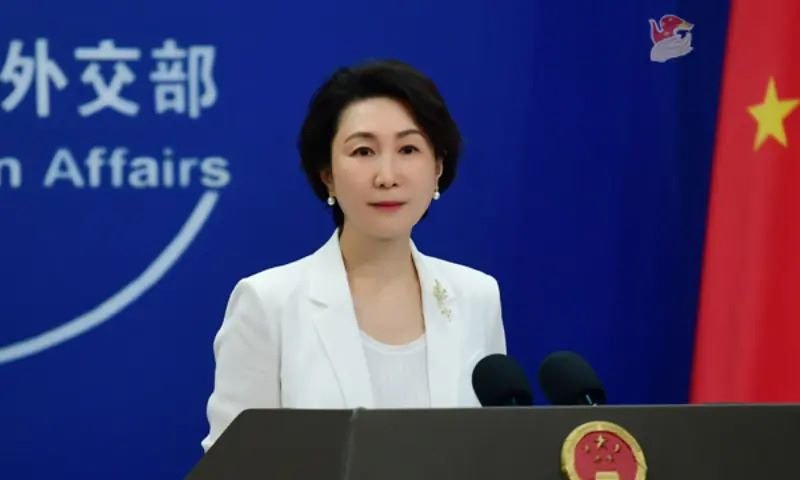
Responding to questions during a regular press briefing on Monday, Chinese Foreign Ministry spokesperson Mao Ning defended Beijing’s infrastructure activity in the area after Indian criticism. Asked by India’s Press Trust of India (PTI), Mao said China was fully within its rights to carry out construction work there.
“The territory you referred to belongs to China,” she said, adding that infrastructure development on Chinese land was both legitimate and justified.
India’s Ministry of External Affairs had earlier taken a strong position on the issue. On Friday, its spokesperson said New Delhi reserved the right to take appropriate steps to protect its interests, asserting that the Shaksgam Valley was Indian territory.
He reiterated India’s long-standing rejection of the 1963 China-Pakistan boundary agreement, calling it illegal and invalid. Speaking at a press briefing in response to a question from state broadcaster Doordarshan, the spokesperson said India had never recognised the agreement or the China-Pakistan Economic Corridor (CPEC).
Read More: Between Mediation and Manipulation: China’s Role in the India-Pakistan Rivalry
“The entire union territories of Jammu and Kashmir and Ladakh are integral and inalienable parts of India,” he said, adding that this position had been conveyed repeatedly to both Pakistan and China.
India, he added, had consistently lodged protests with Beijing over what it views as attempts to change the situation on the ground in the Shaksgam Valley.
In response, Mao Ning said China and Pakistan had lawfully signed a boundary agreement in the 1960s, describing it as a sovereign decision taken by both countries. She stressed that the agreement clearly defined the border between the two sides.
Read More: Congress Demands Modi Clarify China’s Claim of Mediating Pak-India Truce
Addressing Indian objections to CPEC, Mao said the initiative was an economic cooperation project designed to boost regional development and improve living standards.
She also maintained that neither the boundary agreement nor CPEC altered China’s position on the Kashmir issue, which she said remained unchanged.
India and China have a long history of territorial disputes, particularly along their Himalayan frontier. Tensions escalated sharply after a deadly clash in 2020 that left 20 Indian soldiers and four Chinese troops dead. However, both sides reached an agreement in 2024 aimed at easing military tensions along the disputed border.