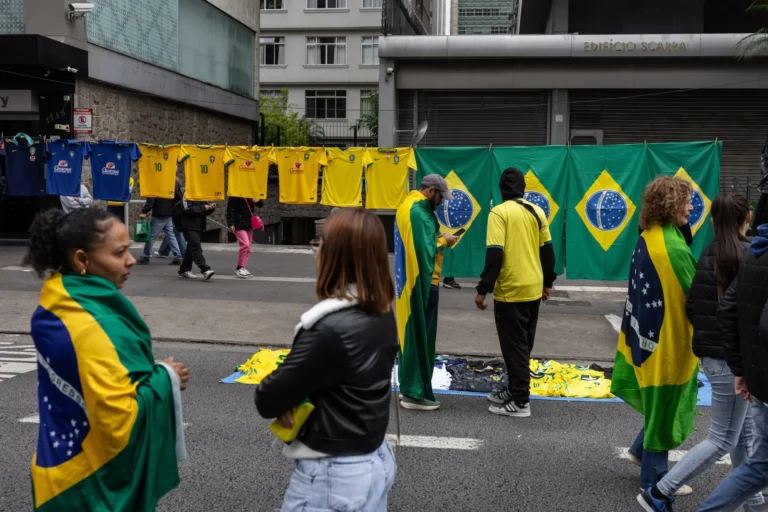
Brazilians head to the polls this weekend in a presidential election that is about more than domestic politics. It will also help decide whether South America’s largest economy leans toward Beijing or Washington.
President Luiz Inácio Lula da Silva, who maintains close ties with Beijing, is seeking a fourth non-consecutive term. His challenger is Senator Flavio Bolsonaro, son of former president Jair Bolsonaro, who was jailed last year for attempting a military coup.
A pre-election poll shows the two in a technical tie in a potential runoff. The foreign policy gap is wide as Lula has promoted “active non-alignment,” while the younger Bolsonaro centers his foreign policy strategy on a “special alliance” with Trump.
If Bolsonaro wins, one expert expects a return to an alignment of Brazil with Washington, at least under Trump’s government.
Trade is at the heart of the dispute as well. The United States is Brazil’s second-largest trading partner, and Lula has denounced Washington’s tariff pressure as an attempt to exert political influence in an election year. Washington recently added a 12.5% Section 301 tariff on major trading partners, including China and Brazil.
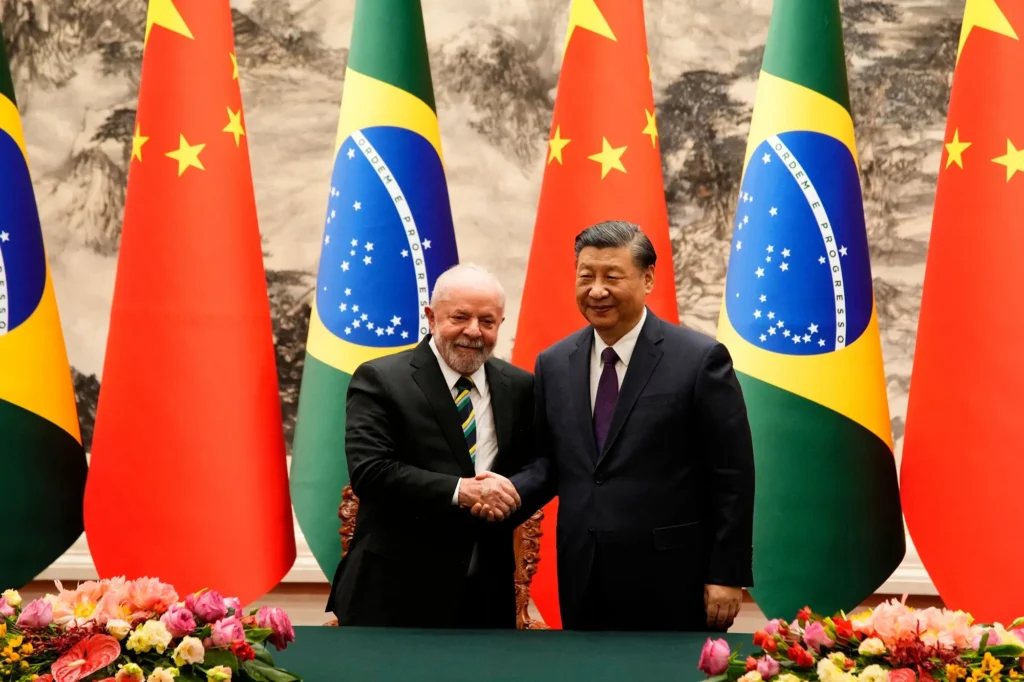
Beijing has made its preferences hard to miss. In a phone call this summer, Chinese President Xi Jinping told Lula that China was ready to support Brazil in “safeguarding its own sovereignty and independence, and opposing foreign interference.”
The Brazilian presidency said the two leaders also agreed on the importance of speeding up negotiations for a Mercosur-China agreement. Lula told Xi he was committed to diversifying markets and trade partners.
Tensions with Washington have also played out in electoral administration. AFP reported that Brazil denied visas for two US officials who sought to meet with election authorities in Brasília ahead of the vote. Flavio Bolsonaro has recently renewed unfounded claims that the country’s voting system is insecure.
A Lula win would not mean a definitive shift by Brazil into China’s camp, and his recent call with Trump signals “economic pragmatism” likely to persist whatever the result.
The history supports that view as trade between Brazil and China grew from about $100 billion in 2019 to $135 billion in 2021 even under Jair Bolsonaro’s anti-Beijing rhetoric.
For investors and diplomats alike, the result matters well beyond Brazil’s borders. China is Brazil’s largest trading partner, and Washington is watching closely as it presses its tariff campaign. If no candidate wins an outright majority, the race goes to a runoff later this month.