The naval co-operation between Australia and India in the Anti-Submarine Warfare (ASW) is moving from merely ensuring the interoperability in the naval exercises to a campaign style co-operation while developing a networked and a layered ASW architecture having implications for other littoral countries in the Indian Ocean Region (IOR), especially for Pakistan.
The undersea systems of Royal Australian Navy (RAN) include Collins-class submarine, future Virginia class SSN (nuclear powered conventionally armed submarines), and similar SSN under the AUKUS framework alongside a couple of autonomous undersea vehicles.
For the systems operating on the surface, RAN has a Hobart-class destroyer, ANZAC-class frigate, Hunter-class frigate, Mogami-class frigate, and Blue Bottle Unmanned Surface Vehicle (USV). For the Airborne capabilities, RAN operates P-8A Poseidon and MH-60R Seahawk.
Similarly, the Indian Navy (IN) operates Kamorta-class ASW corvettes, ASW-Shallow Water Craft (SWC), and ASW-capable frigates and destroyers. For Airborne capabilities IN operates P-8I and MH-60R. Currently IN has no undersea autonomous vehicles.
There is a great prospect of co-operation between RAN and IN in the undersea autonomous vehicles. The undersea autonomous vehicles operated by RAN include Ghost Shark XL-AUV and Speartooth Large UUV. These platforms have the ability to be fitted with communication, intelligence and sonar payloads, while linking it with other platforms operating in other domains. Potentially, this can assist India in developing a robust, autonomous, and networked surveillance system.
The foremost implication for PN will be a complex and a comprehensive under-sea surveillance architecture that will be networked as well. If plenty of those autonomous undersea vehicles are placed distantly covering a wider area, while operating in a networked environment, it will complicate for the PN to employ its undersea platforms. The employment will be difficult because it will be tricky to locate all undersea vehicles with greater precision, thus unable to exactly map the hostile area.
Although, it will create incentives for the PN to develop and deploy similar platforms, and there is a strong possibility that these vehicles will be mounted with Electronic Warfare (EW) and Acoustic jamming suites for neutralizing hostile undersea autonomous vehicles. In the future if both PN and IN deploy such systems having payloads for kinetic engagement, the survivability of SSBNs (nuclear powered ballistic submarines) will be heavily impacted, thus destabilizing the deterrence stability between the two.
Furthermore, differentiating between the acoustic signatures of undersea autonomous vehicles and submarines will also complicate the crisis decision-making. However, this whole debate centers around one proposition that is how effectively IN adopts, integrates and develops these autonomous undersea vehicles locally.
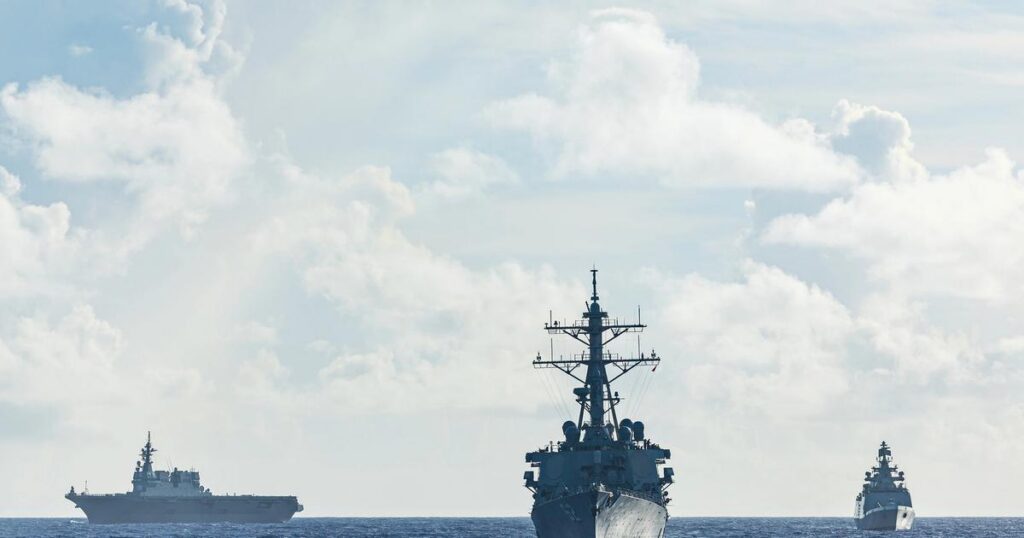
The ASW surface platforms operated by RAN and IN have some common features including hull mounted and towed array sonars possessing both active and passive capabilities. The naval exercises AUSINDEX and Malabar indicate that the two navies have focused on improving interoperability, especially in the ASW.
During these naval exercises submarine detection and tracking, information sharing and developing similar operational procedures have been practiced. For this, the homogeneity between the hull mounted sonars will ease the networking of different surface ships operating distantly.
The Blue Bottle (autonomous surface vessel vehicle) operated by the RAN can act as a pivot for sharing information from undersea autonomous vehicles to the crewed surface ships, additionally it can also relay information between the surface ships, thus increasing their area of engagement.
The Australian Defense Ministry is also mulling over the options for equipping these un-crewed vessels with payloads for kinetic engagements. So far, the stated capabilities include radar and electro-optical sensors.
Accounting for the aforementioned, it is likely that the IN is on the track to develop a robust and networked ASW surface architecture, while improving the detection and sensing capabilities. For PN situation goes beyond this, if in the future India develops a tactical data link with Australian surface ships both crewed and uncrewed, it can significantly improve its Maritime Domain Awareness (MDA), adding to its offensive potential.
For instance, if Indian crewed surface ships for ASW role are relieved partially from surveillance by deployment of autonomous surface and undersea vehicles, their payloads for kinetic engagement can be increased substantially. This means that an Indian frigate or a corvette previously having a dedicated role of ASW, can be reconfigured to carry more missile tubes. This possibility is not far-fetched accounting for the pace of Australian and Indian naval co-operation for ASW capabilities.
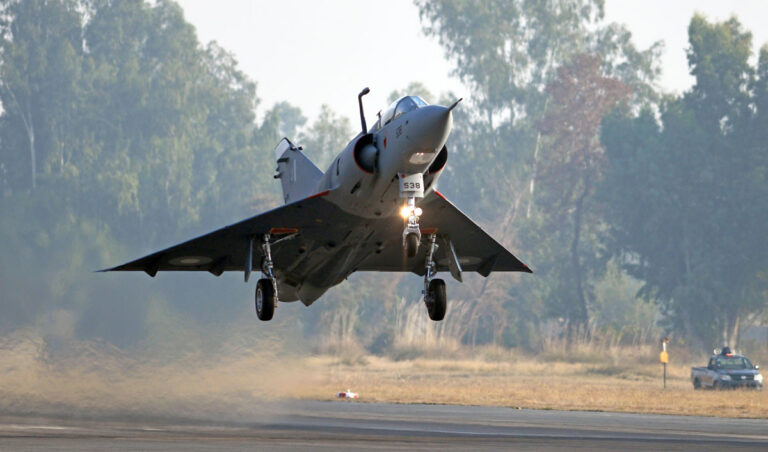
Currently RAN and IN both operate P-8A and P-8I as Long Range Maritime Patrol Aircrafts (LRMPA) alongside MH 60-R, a multi-mission naval helicopter, capable of performing ASW. During AUSINDEX and Malabar exercises, the two navies have shared information, performed real time communications and established tactical data link integration via P-8A and P-8I. Both P-8A and P-8I are modified versions of Boeing airframes. This aspect makes the sharing of information and data quite plausible between them.
The IN will be emboldened to operate on the forward lines, due to deployment of multiple P-8A and P-8I aircrafts operating in sync with the MH-60 R. Both the platforms are capable of launching light weight torpedoes against the submarines or other under-sea platforms.
The most obvious implication for the PN will be the complications in moving undersea platforms with stealth, as forward deployment of multiple P-8A and P–8I aircrafts being fitted with torpedoes, will raise the cost for PN, and make interdiction likely.
As Indian military thinking envisions space for limited action, this forward deployment will anchor offense more, then defense. The basic idea will be restricting PN’s operational space while ensuring their own freedom for escalation dominance.
The way forward for PN includes acquiring stealthier submarines while ensuring Network Centric Warfare (NCW) capability. The acquisition of Hangor-class submarines is a step in the right direction, as PN must possess such submarines having the ability to operate in a sensor-rich environment.
The development of decoys and other counter measures for confusing the sensors are must for PN. The PN must also develop a networked and layered ASW infrastructure while linking aerial components with the surface and under-sea platforms for denying IN the escalation dominance.
*The views presented in this article are the authors’ own and do not necessarily reflect the views of The Diplomatic Insight.*
Saif Ul Haq
Saif Ul Haq is a Research Officer at Strategic Vision Institute (SVI), Islamabad, and has completed M.Phil. in Defense and Strategic Studies from Quaid-i-Azam University, Islamabad. He holds certifications from the United Nations Office of Disarmament Affairs and the International Atomic Energy Agency.