Artificial intelligence is increasingly presented as a national security imperative. Yet beneath the rhetoric of defense lies a troubling reality.
The infrastructure required for military AI is devastating the environment, creating civilian vulnerabilities, handing unprecedented power to unaccountable entities, and introducing risks that may undermine the very security it claims to protect.
The debate is often framed as a choice between building more AI infrastructure or falling behind geopolitical rivals. That argument reflects an increasingly common view among military planners: Data centers are no longer just commercial facilities but rather dual-use national security assets.
However, if data centers are equated with strategic military infrastructure, then society must confront the implications of treating them as such.
Environmental Harm
The rapid expansion of military-oriented data centers raises concerns about the energy consumption, water depletion, and ecological disruption associated with hyperscale computing facilities.
As governments race to build scale AI infrastructure in the name of security, however, environmental costs are often treated as secondary considerations rather than as central policy concerns.
A case in point is the Utah Data Center, which services the US National Security Agency’s data analysis and intelligence operations.
Even though the Utah facility has been widely criticized for its unsustainable water consumption in the drought-prone area, there are now plans for another military data center to be built in the state.
Dubbed the Stratos Project, this new data center is projected to consume more power than does the entire state of Utah.
Read More: The Silent Rise of Data Colonialism in South Asia
Civilian Impact
The military justification for AI expansion also creates a dangerous feedback loop. The more governments integrate AI into military systems, the more valuable data centers become as strategic assets. And, of course, the more strategically valuable data centers become, the more likely they are to become targets during conflict.
The implications are profound. Data centers frequently sit near civilian populations and support hospitals, schools, communications systems, financial networks, and local businesses.
If these facilities become legitimate military objectives in wartime, civilians inevitably bear the risk. The distinction between civilian and military infrastructure becomes blurred when the same server farms host commercial services, government operations, and military workloads.
Read More: Geopolitics of Artificial Intelligence: How Countries Are Competing for AI Dominance
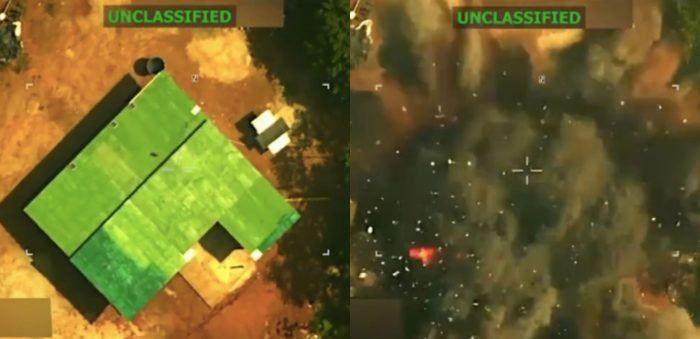
This dangerous scenario is no longer theoretical. In late February 2026, just days after the US and Israel launched wide-ranging strikes on Iran, the Islamic Revolutionary Guard Corps launched drone strikes against Amazon-owned data centers in the United Arab Emirates and Bahrain.
Iranian state television later explained that the intent was not to disrupt the digital resources of civilians but to demonstrate “the role of these centers in supporting the enemy’s military and intelligence activities.”
In other words, the militarization of digital infrastructure extends the battlefield into civilian life. A missile aimed at disabling military AI capability may simultaneously disrupt healthcare systems, emergency services, banking networks, and basic communications.
Corporate Control
It is worth noting that the infrastructure enabling dual-use and military AI is primarily owned not by democratic institutions but rather by a small number of for-profit tech corporations.
Here are some examples. Amazon and Google provide cloud computing services for the Israeli government, including for civilian agencies, the Ministry of Defense, and state-owned weapons companies.
Palantir Gotham provides digital infrastructure services, enabling everything from geospatial mapping to network analysis, for UK intelligence units, the Ukrainian military, and law enforcement in various EU countries.
Amazon’s “Top Secret” AWS Cloud Complex provides digital infrastructure, including classified cloud environments, to the UK Ministry of Defense, the US Department of Defense, and the Australian Signals Directorate. On and on.
In short, a handful of private companies are quietly gaining control over critical cloud infrastructure, advanced AI models, and the massive data centers required to train and operate these global systems.
This concentration creates a fundamental governance problem: Unaccountable tech giants have increasing influence over capabilities that shape not only domestic environmental and energy policy but also dual-use surveillance systems, military planning, intelligence analysis, and potentially lethal decision-making.
No democracy should be comfortable with such concentrated (and often loosely-regulated) authority over technologies capable of altering the balance between war and peace – both domestically and abroad.
Self-reinforcing Cycle
The global race for military AI dominance threatens to become a self-reinforcing cycle. One nation expands AI capabilities because rivals are doing so. Competitors respond with their own investments. Infrastructure expands. Energy consumption rises.
Data centers proliferate. Civilian systems become increasingly intertwined with military functions. Strategic targets multiply. The threshold for escalation falls.
The world has seen this pattern before. Arms races often begin with promises of deterrence and security. They frequently end by increasing instability and creating new risks that no participant originally intended.
As such, the national security risks are therefore broader than commonly acknowledged. Governments often portray dependence on AI companies and their digital infrastructure as a source of strength. Yet dependence can also become vulnerability.
Read More: AI in Military Systems: Pakistan Hosted Regional Consultations
If critical military functions rely on proprietary platforms, cloud providers, or privately-controlled AI systems, states may find themselves constrained by commercial interests, corporate disputes, technical failures, or market dynamics beyond democratic oversight.
The challenge is not to reject AI altogether but rather to prevent the related digital infrastructures from becoming another domain where technological capability advances faster than democratic governance.
That requires transparency, meaningful regulation, international agreements on military AI deployment, stronger protections for civilian infrastructure, and public oversight of partnerships between governments and technology companies.
Most importantly, it requires rejecting the assumption that bigger AI systems and more military integration automatically produce greater security.
A society that sacrifices environmental sustainability, civilian protection, democratic accountability, and global stability in pursuit of military AI dominance will discover that it has secured the technology and infrastructure while losing sight of what security was supposed to protect in the first place. We cannot let that happen.
*The views presented in this article are the authors’ own and do not necessarily reflect the views of The Diplomatic Insight.

Heather Wokusch
Heather Wokusch is an international educator, human rights advocate, and presenter on peace topics. She can be reached at heather@heatherwokusch.com