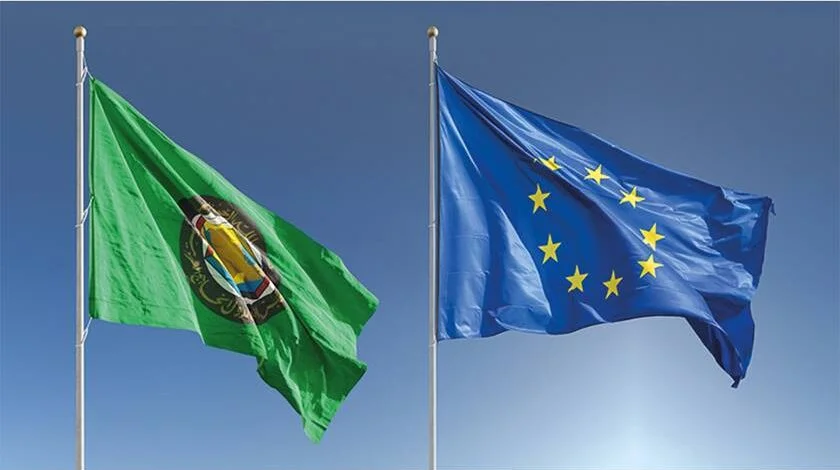
Representatives of the Gulf Cooperation Council (GCC) legislative bodies held a coordination meeting in Brussels on Thursday ahead of the second GCC-EU Parliamentary Meeting, scheduled to take place on October 16.
The meeting brought together speakers and representatives of the Shura, parliamentary and national councils of GCC member states to discuss preparations for the upcoming engagement with European lawmakers.
Chaired by Bahrain’s Council of Representatives Speaker Ahmed bin Salman Al Musallam, the discussions focused on the meeting’s agenda and issues of mutual interest between the Gulf countries and the European Union.
According to the GCC General Secretariat, the consultations were intended to strengthen coordination among Gulf representatives and develop common positions ahead of discussions with their European counterparts.
GCC Secretary-General Jasem Mohamed Albudaiwi emphasized the importance of parliamentary diplomacy in strengthening relations between the two regions. He said the coordination meeting reviewed the agenda for the second GCC-EU Parliamentary Meeting and provided an opportunity for representatives to exchange views on matters requiring closer cooperation.
Participants highlighted the strategic relationship between GCC member states and the European Union, stressing the need to continue developing cooperation across different sectors, including parliamentary engagement. They also expressed hope that the upcoming meeting would contribute to strengthening institutional dialogue and identifying new opportunities for cooperation.
The discussions were preparatory in nature, and the GCC Secretariat did not announce any new agreements or binding commitments. The outcomes of the parliamentary meeting itself will therefore be important in determining whether the consultations lead to further initiatives.
The meeting reflects the continued development of relations between the Gulf countries and the European Union, particularly as both sides seek to strengthen their partnerships amid changing regional and international circumstances.
Cooperation between the GCC and EU extends across trade, investment, energy, security and political dialogue, while parliamentary engagement provides an additional channel for exchanging views on shared challenges. Such interactions can help strengthen understanding between institutions and support wider diplomatic relations beyond meetings between government leaders and foreign ministers.
The latest consultations are also taking place amid heightened regional security concerns, making sustained communication between Gulf and European representatives increasingly relevant.
As the second GCC-EU Parliamentary Meeting convenes in Brussels, its discussions will provide an opportunity to assess the priorities of both sides and explore how parliamentary cooperation can contribute to stronger political and economic relations.
The meeting represents another step in the broader effort to maintain dialogue and strengthen institutional cooperation between the Gulf and Europe.

Anoush Taimur is an International Relations graduate from DHA Suffa University, Karachi, currently based in Doha. Her research interests include Gulf politics, small-state diplomacy, Global South studies and conflict
mediation. Her work examines how states create influence through connectivity, institutions and strategic relationships. She can be reached at [email protected]