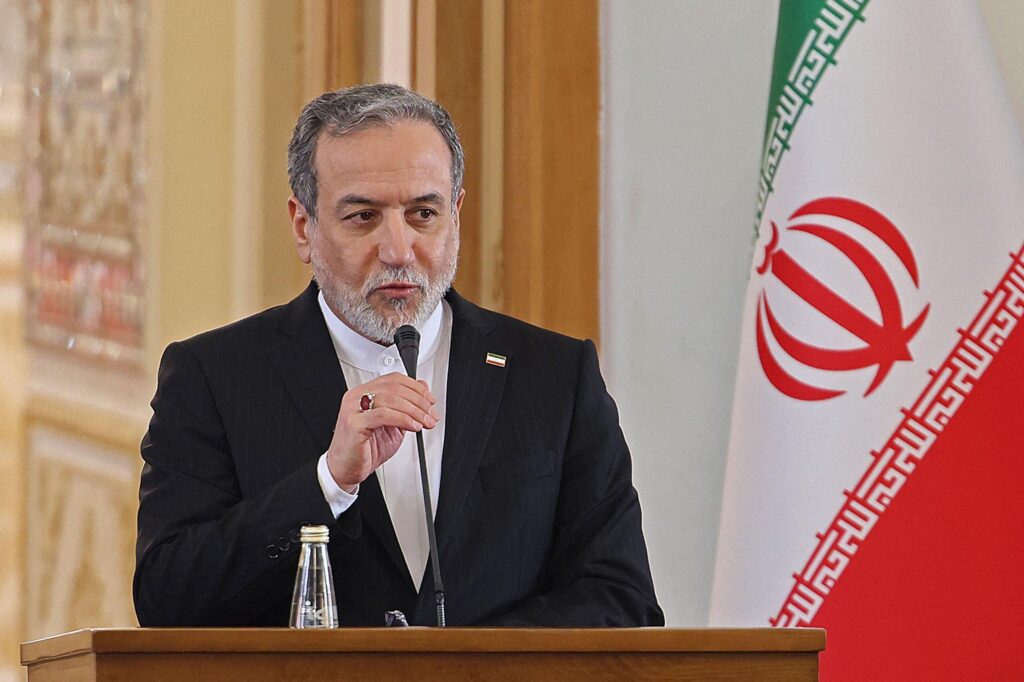
Iranian Foreign Minister, Abbas Araghchi, has outlined a proposed seven-day diplomatic arrangement with the United States that could lead to the full reopening of the Strait of Hormuz, as efforts continue to address one of the most significant sources of tension in the Gulf.
Speaking in an interview with Iraq’s Al Ekhbariya television, Araghchi said indirect communication between Tehran and Washington was continuing through regional intermediaries, including Pakistan and Qatar.
Under the arrangement described by the Iranian foreign minister, the strait could reopen on the sixth day if Washington accepted Tehran’s conditions. Araghchi also claimed that the United States had accepted some Iranian demands while seeking additional provisions.
However, American officials have not publicly confirmed the proposed timetable or Tehran’s account of the negotiations, and no formal agreement has been announced.
Read More: Iran’s Parliament Approves Mehrdad Akhlaghi as New Defense Minister
The proposal comes amid continuing restrictions affecting maritime traffic through the Strait of Hormuz, a critical route for international energy supplies and commercial shipping. The disruption has affected countries far beyond the immediate region, increasing pressure on governments to pursue diplomatic solutions.
Iran has repeatedly linked maritime security to wider questions concerning sanctions, military activity and its relations with Washington.
The United States, meanwhile, has maintained pressure on Tehran while periodically signaling openness to negotiations.
These differences have complicated efforts to reach an understanding, particularly as regional governments seek assurances that any agreement would provide a sustainable framework for navigation rather than a temporary reduction in tensions.
Pakistan and Qatar’s reported involvement reflects their continuing diplomatic engagement with both sides and their interest in preventing further escalation.
Read More: Iran Shifts Tactics in Attacks on Ships Around Strait of Hormuz
The proposed sequence of steps could provide a basis for renewed discussions, but several important questions remain unresolved. It is unclear which Iranian conditions Washington may be prepared to accept, what guarantees would accompany the reopening of the strait and how any arrangement would be implemented or monitored.
Gulf governments and international shipping operators would also require confidence that commercial vessels could resume normal operations without facing renewed threats. For countries dependent on energy imports, progress toward restoring maritime traffic would have immediate economic significance.
However, the absence of a confirmed agreement means the proposal remains an expression of Tehran’s negotiating position rather than an established diplomatic breakthrough.
Further statements from Washington and the regional intermediaries will be important in determining whether the discussions can move toward a mutually accepted arrangement and contribute to broader stability in the Gulf.

Anoush Taimur is an International Relations graduate from DHA Suffa University, Karachi, currently based in Doha. Her research interests include Gulf politics, small-state diplomacy, Global South studies and conflict
mediation. Her work examines how states create influence through connectivity, institutions and strategic relationships. She can be reached at [email protected]