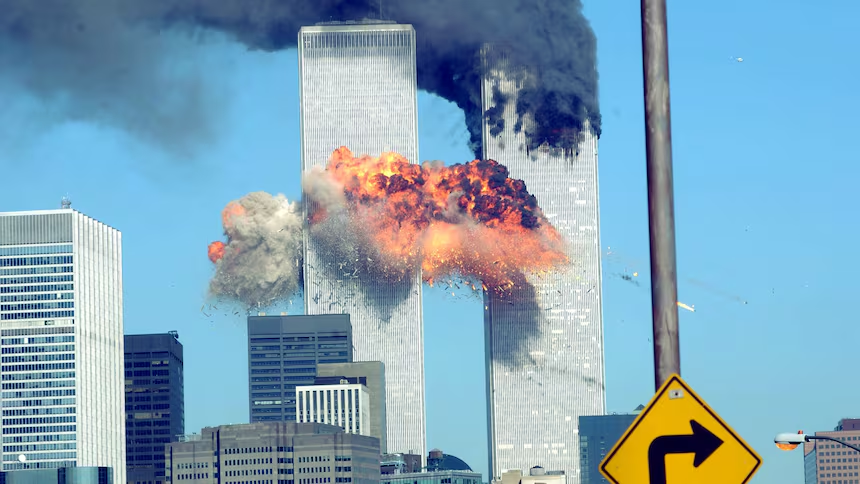
Twenty-five years ago, the world watched in disbelief as two passenger planes crashed into New York’s World Trade Center, another struck the Pentagon and a fourth came down in Pennsylvania. September 11, 2001, was not simply a terrorist attack on the United States. It became a dividing line in modern history.
The attacks killed nearly 3,000 people and triggered wars, intelligence reforms, new security laws, a global campaign against militant groups and a dramatic reshaping of American foreign policy.
But on the 25th anniversary of 9/11, one question remains difficult to answer: Is the world actually safer from terrorism than it was that morning in 2001? The answer is neither a simple yes nor no.
The nature of the threat has changed dramatically. The large, centrally planned attacks that defined the 9/11 era have become considerably harder to execute. But terrorism itself has not disappeared. Instead, it has fragmented, moved across borders and increasingly migrated into the digital world.
According to the 2026 Global Terrorism Index, deaths from terrorism worldwide fell by 28 percent in 2025 to 5,582, while terrorist incidents dropped by 22 percent to 2,944, the lowest levels recorded since 2007. Yet the picture is far from reassuring. Six of the ten countries most affected by terrorism are in sub-Saharan Africa, while Pakistan has emerged as the country most impacted by terrorism.
For the United States, 9/11 produced one of the most sweeping transformations of the national security system in its history. Airport security was fundamentally redesigned. The Transportation Security Administration was created. The Department of Homeland Security brought 22 federal agencies and bureaus under one roof.
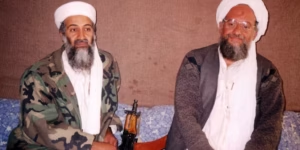
Intelligence agencies were reorganized, the National Counterterrorism Center was established and the Director of National Intelligence position was created. The USA PATRIOT Act also dramatically expanded the government’s ability to investigate suspected terrorism and intercept communications.
Washington also changed the way it viewed terrorism. Before 9/11, terrorism was largely treated as a law-enforcement problem. Afterwards, it became a central national-security and foreign-policy issue.
Afghanistan was invaded within weeks. Iraq followed in 2003. The United States built a global network of military, intelligence and diplomatic partnerships designed to prevent another attack on American soil.
Twenty-five years later, there is little doubt that the United States is better prepared to prevent a repeat of the 9/11-style operation.
But safer does not mean safe. The FBI now describes the terrorism threat as more complicated than it was after 9/11. The most immediate danger is increasingly posed by individuals or small cells radicalized online, often acting without direct orders from a foreign terrorist organization.
Read More: Beyond Border Strikes: Why Militancy Continues to Thrive in Afghanistan
That creates a very different security challenge. A large operation requires money, communication, logistics and people. A lone actor may need little more than an ideology, an internet connection and access to a weapon. This is why the United States has effectively moved from fighting an identifiable enemy to managing a constantly changing ecosystem of extremist threats.
The country is therefore considerably better protected against another 9/11, but it cannot realistically claim immunity from terrorism.
Perhaps the most striking irony of the 25-year story is Afghanistan. The Taliban government that Washington went to war against in 2001 is once again ruling Kabul. But the Taliban of 2026 are not exactly the Taliban of 2001.
They are more politically pragmatic, more experienced in diplomacy and much more conscious of the need to engage with neighbouring countries and major powers. Their government maintains diplomatic relationships and contacts with a growing number of countries and foreign missions.
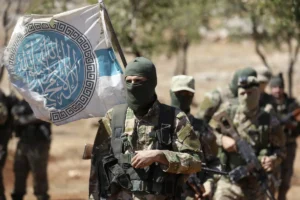
Russia has gone further than most. Moscow formally recognized the Taliban’s “Islamic Emirate of Afghanistan,” while other states have adopted a pragmatic approach without formally granting full recognition. A recent UN assessment said the Taliban had 42 representative offices abroad, while 28 foreign missions and international organizations were represented in Kabul.
This represents a significant change in foreign policy. The Taliban are no longer simply presenting themselves as an isolated ideological movement fighting foreign occupation. They are trying to behave like a government seeking recognition, trade, investment and regional legitimacy.
Their relationships with China, Russia, Iran and the Central Asian states demonstrate this pragmatic shift. But that does not mean the Taliban have fundamentally transformed.
Their internal political system remains highly centralized around Supreme Leader Hibatullah Akhundzada. The United Nations has described him as the absolute ruler of Afghanistan, while noting that women and girls remain among those most severely affected by Taliban policies.
The question of terrorism is even more complicated. The Taliban say Afghanistan will not be allowed to become a base for foreign terrorist organizations. They have also taken action against Islamic State-Khorasan in Afghanistan.
Yet the presence and activities of militant groups remain a major international concern. The UN continues to identify groups including ISIL-K, al-Qaeda, the TTP, BLA and ETIM as active in or connected to the Afghan security environment. And for Pakistan, this is no longer an abstract concern.
Pakistan has perhaps the most complicated 25-year relationship with the post-9/11 world. It became a frontline state in the war against terrorism, suffered enormously from militant violence and paid a huge human and economic price.
There were periods when the country appeared to be moving towards greater security. Major military operations weakened militant networks and terrorist attacks declined substantially from their peak years. But the security picture has deteriorated again.
The 2026 Global Terrorism Index ranked Pakistan as the country most impacted by terrorism in the world in 2025. The country recorded 1,139 terrorism-related deaths and 1,045 incidents. More than 74 percent of terrorist attacks and 67 percent of terrorism-related deaths occurred in Balochistan and Khyber Pakhtunkhwa.
The Tehrik-e-Taliban Pakistan remains the country’s deadliest terrorist organization. According to the same index, TTP was responsible for 56 percent of terrorism-related deaths in Pakistan in 2025 and carried out 595 attacks resulting in 637 deaths.
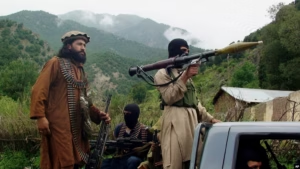
This is where the Taliban’s return to Kabul becomes particularly significant for Islamabad. Pakistan had hoped that a Taliban government would help secure the western border and restrain the TTP. Instead, relations between Islamabad and Kabul have become increasingly tense.
Pakistan argues that militant groups operating from Afghan territory have intensified attacks inside Pakistan. The Taliban, meanwhile, reject accusations that they deliberately support anti-Pakistan militants.
The result is a dangerous paradox. The United States went into Afghanistan in 2001 partly because Afghanistan had become a sanctuary for al-Qaeda. Twenty-five years later, Afghanistan is again at the centre of a regional debate over militant sanctuaries, although the groups, circumstances and geopolitical environment are very different.
So, is the world safer? In one important sense, yes. The global security architecture built after 9/11 has made it much more difficult for a terrorist organization to replicate the scale, sophistication and international impact of the 2001 attacks.
Intelligence sharing is deeper. Airport security is tighter. Financial networks are monitored more aggressively. Terrorist leaders have been hunted across continents. International counterterrorism cooperation has become routine.
But terrorism has adapted. Al-Qaeda’s spectacular model has been challenged by military and intelligence pressure. ISIS demonstrated that territorial control could briefly create a new model of jihadist power. Today, the threat is increasingly decentralized, online and difficult to predict.
And while terrorism has declined globally, its geography has shifted. Africa has become a major centre of militant violence, Afghanistan remains a security concern, and Pakistan is experiencing one of its worst reversals in years.
Read More: Beyond Deportations: Trust, Trade, and Tensions in Pakistan-Afghanistan Relations
The United States, meanwhile, is safer than it was in the immediate aftermath of 9/11, but its own intelligence agencies warn that the terrorist threat has not disappeared. It has simply become harder to see.
Perhaps that is the central lesson of the past quarter-century. September 11 changed terrorism. It changed America. It changed Afghanistan. It changed Pakistan. And it changed the way governments around the world think about security.
But it did not end terrorism. Twenty-five years later, the world has become better at preventing another 9/11. The harder challenge is preventing the next form of terrorism before it becomes visible, because the next threat may not arrive on a hijacked aircraft. It may emerge from a phone screen, a small online community, a border region or a failed political system.
And that makes the post-9/11 security battle not a war that has been won or lost, but a conflict that has continually changed shape.

Farkhund Yousafzai is a seasoned journalist and analyst with over a decade of experience in the media industry. He specializes in national politics and international relations and regularly contributes as an analyst to national and international media outlets.