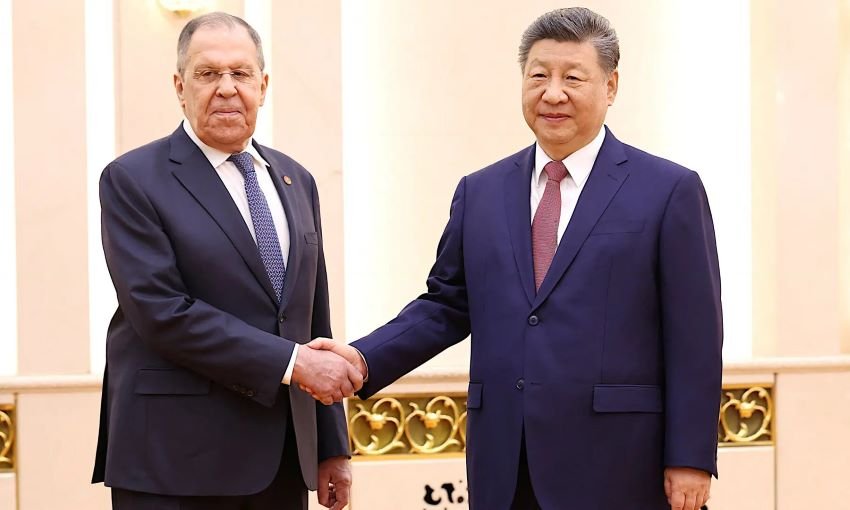
Beijing (TDI): Chinese President Xi Jinping met Russian Foreign Minister Sergei Lavrov in Beijing on Wednesday, as a series of world leaders visit China against the backdrop of the ongoing Middle East conflict.
Lavrov’s visit comes alongside high-level engagements by leaders including Spanish Prime Minister Pedro Sanchez, Abu Dhabi’s Crown Prince Mohamed bin Zayed Al Nahyan and Vietnam’s PresidentTo Lam, highlighting Beijing’s growing diplomatic role during the crisis.
During his meeting with Lavrov at the Great Hall of the People, the Chinese president called for deeper China-Russia cooperation, stressing the importance of mutual trust, strategic coordination, and economic complementarity.
Lavrov, speaking after the meeting, said Russia could help offset energy shortages faced by China as disruptions continue in the Strait of Hormuz due to the war involving Iran.
China, a major energy importer, has been grappling with rising prices for fuel and other essential commodities as supply chains remain strained.
Read More: China Willing to Cooperate with Russia to De-escalate Mideast Situation, Says FM
Xi has positioned China as a potential mediator in the conflict, reiterating in recent meetings that Beijing is ready to play a “constructive role” in advancing peace efforts.
In talks with Sanchez, Xi warned that the world is facing growing instability and called for stronger international cooperation, while the Spanish leader welcomed China’s involvement in seeking a diplomatic resolution.
Analysts say the surge in diplomatic activity reflects the urgency of the crisis, particularly for countries concerned about energy security and regional stability.
Lavrov also held separate talks with Chinese Foreign Minister Wang Yi, where both sides discussed the Middle East conflict, the situation in the Asia-Pacific, and the war in Ukraine.
Read More: US Urges Three-Way Nuclear Deal With Russia and China
The Russian foreign minister further warned of rising geopolitical tensions in East Asia, including issues related to Taiwan, the South China Sea, and the Korean Peninsula.
Despite close ties between Beijing and Moscow, analysts note that their interests may not fully align, particularly as high energy prices pose challenges for China’s economy while benefiting Russia’s export revenues.
The flurry of high-level visits underscores China’s increasing diplomatic engagement as countries navigate the economic and security fallout of the ongoing conflict.