Davos (TDI): In a significant development at the World Economic Forum in Davos, the United States and Denmark have agreed to reopen talks on their 1951 defense agreement concerning Greenland’s security.
The decision, revealed by a source familiar with discussions involving US President Donald Trump and NATO Secretary-General Mark Rutte, marks a renewed focus on Arctic defense cooperation amid rising geopolitical competition in the region.
The original 1951 pact, which allowed the United States to establish military facilities in Greenland during the early Cold War, has long underpinned transatlantic defense strategy in the Arctic.
The new negotiations aim to modernize the framework to reflect contemporary security challenges, particularly the strategic interests of Russia and China in the Arctic Circle.
However, officials stressed that there has been no discussion about transferring any parts of Greenland to US sovereignty; something Trump has talked about again and again in his statements, creating a major rift with US’ European allies.
Read More: EU Freezes Trade Deal with US as Greenland Tensions Soar
At the heart of the talks is the growing recognition among NATO allies of the need to deter potential threats and secure vital maritime routes that are becoming increasingly navigable due to Arctic ice melt.
NATO’s Rutte, speaking at related sessions in Davos, indicated that Arctic security cooperation would be a central theme, emphasizing collective efforts to counter Russian and Chinese influence in the region.
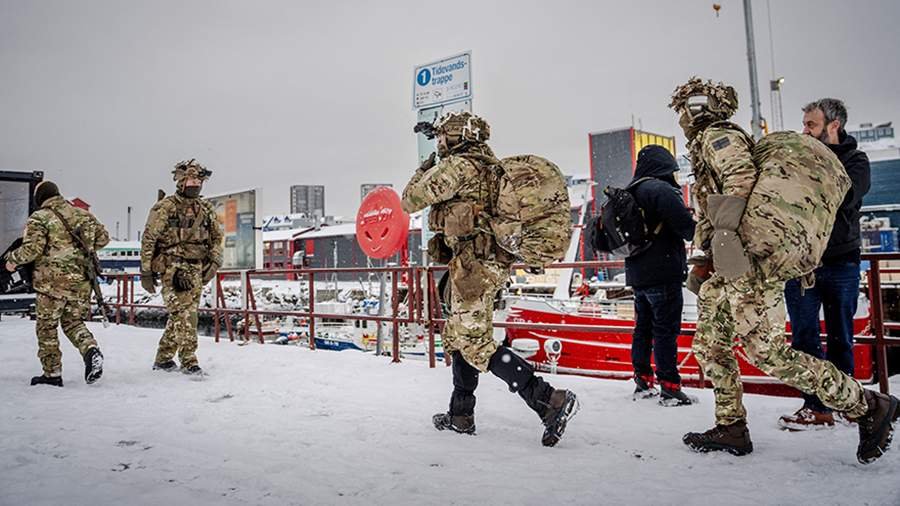
Arctic states, including the US, Denmark (through Greenland), Canada, and the Nordic nations, are seeking ways to bolster their military and logistical presence without escalating tensions.
Greenland occupies a key strategic location between North America and Europe. Its vast territory and proximity to critical air and sea routes make it a focal point for defense planning, especially as global powers vie for access to emerging shipping lanes and natural resources.
European allies have broadly supported enhanced Arctic security measures, though details of how NATO forces might be deployed or coordinated remain under discussion.