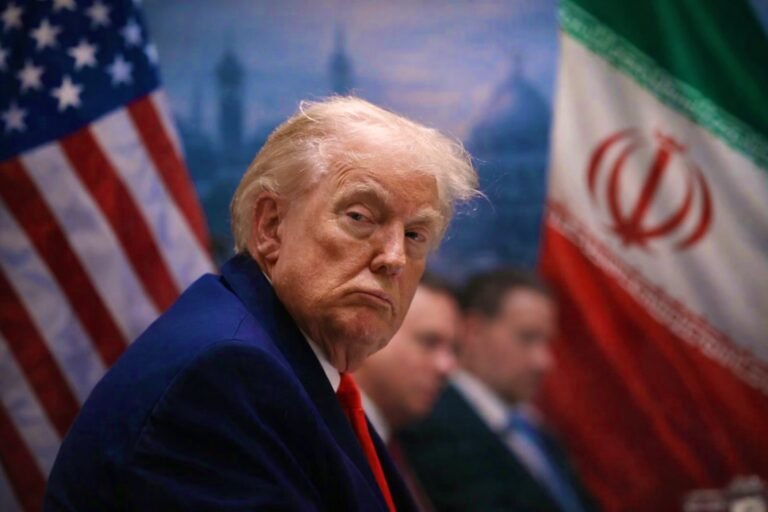
The United States is trying to compel Iran to change the current strategic status quo; not just its nuclear activities but its broader regional posture. On the other end, Iran has continued to pursue its nuclear program and its regional posturing. This raises a critical question: why has U.S. compellence struggled for decades to change Iran’s behavior?
The coercive diplomacy employed by the USA toward Iran involves a combination of sanctions, military deployments, and diplomatic pressure. In recent times, there have been several warning statements, mobilization of military and an attack on nuclear sites in Iran by the USA. The USA is continuously demanding, Tehran compromise in a deal with the USA. On the other hand, Tehran is resisting this coercive diplomacy and takes it as a threat to its sovereignty and dignity.
Any deal under the given conditions and behavior can somehow be a source of humiliation on the international stage for Iran. So that made the process of successful compellence difficult to achieve, which also became further complicated due to the lack of assurance for the US-Iran compellence scenario.
Even in ordinary scenarios, if you humiliate a person by saying, You do this or else I’m coming. The other person will rather stand up and say, All right, I’m not doing it, I don’t care. I’m going to come back at you. That’s what kind of statements are coming out now from the USA toward Iran. This made coercive diplomacy or compellence more difficult to be successful.
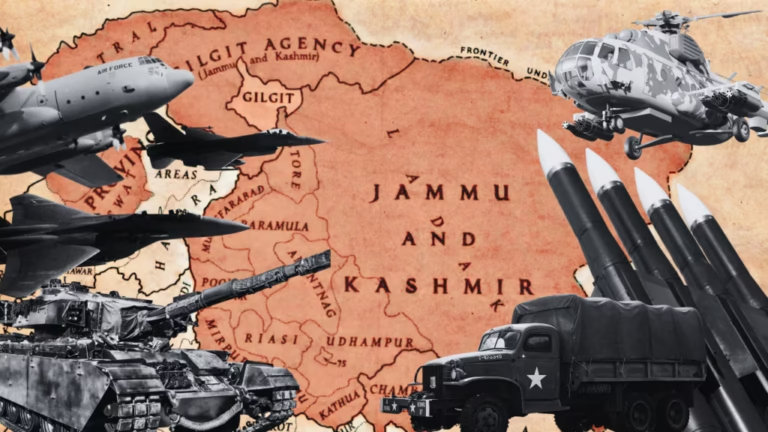
All those things happen in ordinary human life, It’s the same with the states too. They will find a hundred more reasons not to do certain things, choosing instead to address the issue in a subtle, gradual way rather than confronting it directly. For example, take the case of 2001 and 2002. India moved the entire Indian army to the Pakistan border and said to hand over 20 terrorists to us. What was the Pakistani response?
Read More: US-Iran Nuclear Talks Back on Track After Regional Diplomacy Saves Meeting
They counter-mobilized troops and said, We are ready. But if you say, don’t do this or else, it’s easier for the countries to avoid the situation from happening. And you may not be openly saying, I’m retarded because I’m not doing that. You may probably come and say, I wasn’t going to do it anyway. So a successful compellence is much more difficult to achieve than deterring opposition.
Behind every successful compellence, there is an assurance that once the behavior occurs, the pain will stop. So if a compeller is trying to pressure a target into ceasing behavior or changing behavior into a more positive direction that the compeller wants, that target state, after it has changed its behavior, will no longer suffer the consequences or the pain that is being imposed on it.
Sometimes, there are grave concerns by the target state that once they make concessions or once they yield, that will reveal a weakness that will incentivize their adversary to keep going, to turn the pressure up even more, to pursue, instead of a behavior change, a change in regime or something like that. This is a question that’s being raised about U.S. policy towards Iran.
The U.S. imposed a great deal of pressure to compel Iran to change its behavior concerning its nuclear program, which resulted in concessions in a 2015 agreement. But subsequently, within a couple of years, it appears the United States has reactivated its pressure for new demands. And compellence could be less successful because the assurance that the pain will stop is no longer credible. Now it appears that the U.S. would keep on going and keep on pressuring concessions out of Iran to the point of regime change, which then makes compellence a much more difficult proposition. And it makes it far less appetizing for a target to make those concessions.
To succeed in compellence, there is a need for assurance to the target state that the pain will stop after they agree to the new status quo. In a scenario where signing will result in possible humiliation, a threat to the state’s integrity, and there is also a lack of assurance that the state will stop suffering, what will make the state sign a deal? The assurance and even a possible chance of amusement for Iran after compellence could make the USA’s efforts to compel Iran successful.
*The views presented in this article are the author’s own and do not necessarily reflect the views of The Diplomatic Insight.