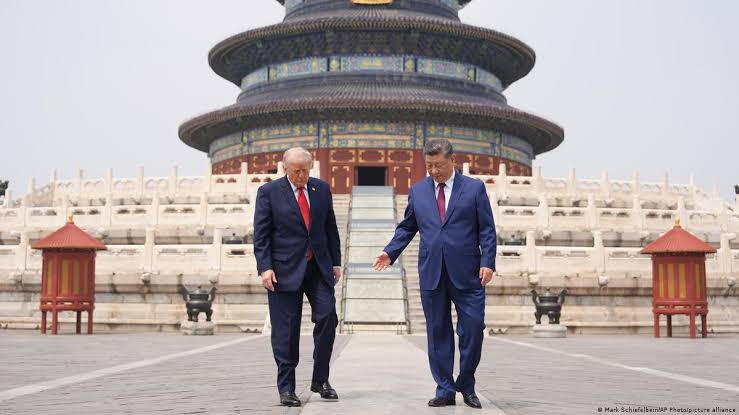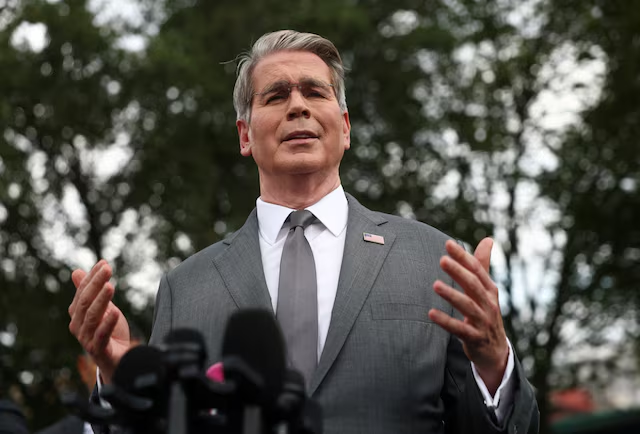
New York (TDI): The United States and China have agreed to cooperate on managing risks associated with artificial intelligence (AI), including exchanging safety practices and establishing a direct communication channel to address serious incidents involving advanced AI models, US Treasury Secretary Scott Bessent has said.
Speaking at the National Committee on US-China Relations’ 60th Anniversary Gala Dinner in New York on Tuesday, Bessent said the two countries had launched a new dialogue on AI at the direction of US President Donald Trump.
The initiative is intended to address shared risks and prevent misunderstandings between the two countries, despite their continuing differences over trade, economic policy and other strategic issues.
“We also expect to exchange best practices for evaluating and testing advanced models before their release and for keeping human judgement firmly in command of this technology,” Bessent said.
He added that Washington and Beijing were establishing a direct channel through which either side could promptly alert the other to serious incidents involving its AI models.
Read More: China Uses Innovation to Master Sediment and Floods in Yellow River
Bessent described the initiative as part of a broader effort to maintain communication between the two countries while acknowledging that their interests would not always align.
“We should harbour no illusions about the differences between the United States and China,” he said, adding that their approaches to various challenges would not necessarily converge.
Addressing bilateral trade relations, Bessent said the long-standing US trade imbalance with China had been a major source of friction.
He argued that the Trump administration was pursuing a more balanced economic relationship through measures aimed at addressing trade disparities and what Washington considers unfair Chinese trade practices.
“Let me state firmly and unequivocally tonight, as we work toward a more balanced relationship, our objective is to de-risk, not to decouple,” he said.
Bessent said the US economy had become overly dependent on foreign supply, while China’s economy had increasingly relied on external demand.
Read More: What is Panda Diplomacy and How China Uses Pandas as a Soft Power Currency?
He argued that Washington needed to expand domestic production to meet its consumption needs, while Beijing should strengthen domestic consumption of goods produced within China.
“In other words, the United States must produce more of what we consume, while China must consume more of what it produces,” he said.
According to Bessent, cooperation could help strengthen both economies without preserving the structural imbalances that have contributed to tensions between them.
He also said the administration’s renewed focus on economic strength should not be interpreted as hostility towards trading partners, describing reciprocity as a central principle of its approach.