Lima (TDI): The United States is mounting its most assertive diplomatic push in years to strengthen ties with Peru ahead of the presidential election on April 12.
Newly appointed US Ambassador Bernie Navarro is leading the outreach to deepen cooperation on defense and critical minerals.
China has overtaken the United States as Peru’s dominant trade partner over the past decade. Chinese trade flows with Peru now exceed US levels by more than double, particularly in mining and infrastructure.
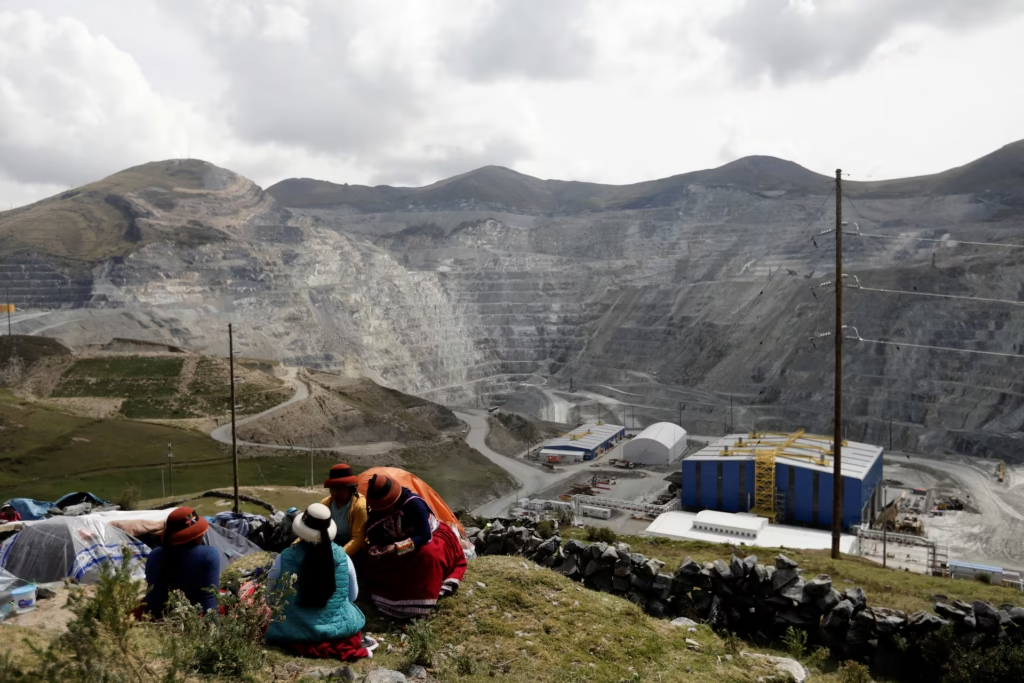
Peru ranks as one of the world’s top copper producers, making it a vital source of critical minerals for global supply chains.
More than 30 candidates are competing in the first-round vote on April 12, with no clear frontrunner. All candidates are currently polling below 15 percent, making a June runoff all but certain.
The highly fragmented election presents Washington with a fresh opportunity to rebuild relations and safeguard reliable access to strategic resources while addressing growing Chinese influence across South America.
Read More: JD Vance Visits Budapest Days Before Hungary Election to Back Orbán
Navarro has flagged Peru’s recent political volatility as a growing concern for the business environment. The country has had eight presidents since 2018.
“The United States will never interfere in Peruvians’ right to self-determination, but stability is needed,” he told local radio station RPP last month.
The US Embassy declined to make Navarro available for an interview. Analysts note a correlation between the past ten years of political instability and increased Chinese investments flowing into Peru.
Peru has positioned itself as a gateway for Chinese trade with South America. The Chinese-built Chancay megaport north of Lima, operated by Cosco Shipping, was inaugurated in late 2024. It has cut sea journey times to Asia and now serves as a transit hub for goods such as electric vehicles bound for regional markets.
The port has raised concerns in Washington over foreign control of strategic infrastructure. Former US Southern Command chief General Laura Richardson warned it could serve as a “gateway” for Chinese military and intelligence activities in South America.
Read More: Xi Attends APEC Summit in Peru
Peruvian authorities’ efforts to strengthen regulatory oversight were blocked earlier this year when a court ruled in favor of Cosco’s claim that the port is a private investment. The decision is under appeal.
Felipe James, head of Peru’s manufacturing industry chamber, met with Ambassador Navarro in February. The two sides launched a joint working group aimed at expanding trade and investment. James said that the relationship with the United States is really strengthening.
Margaret Myers of the Inter-American Dialogue noted that “China is not leaving.” She added that US efforts are likely to focus on areas intersecting with national security interests rather than attempting to displace China’s economic importance to Peru.
Peru has slipped back into a trade deficit with the United States after a brief surplus in 2024. Officials in Lima are trying to lift tariffs imposed by US President Donald Trump, which they argue violate the bilateral free trade agreement in effect since 2009.
The diplomatic initiative comes as Peru prepares for a pivotal vote that could shape its future international partnerships in mining, infrastructure, and strategic industries.

Muhammad Usman Hashmi is a researcher in International Relations, focusing on climate diplomacy, global governance, and political economy in the Global South. He has contributed to policy dialogues with the Foreign Policy Community of Indonesia and serves as a Senior Research Fellow at the International Council on Human Rights, Peace and Politics. He is also associated with Rethinking Economics Islamabad, contributing to research on development and sustainability.