Islamabad (TDI): The United Nations Educational, Scientific and Cultural Organization (UNESCO) has reiterated its commitment to strengthening Pakistan’s disaster preparedness systems, particularly the country’s flood early warning capacity, during a validation workshop held in Islamabad.
The workshop was convened to review and finalize findings of a comprehensive assessment of Pakistan’s Flood Early Warning System (FEWS), which evaluates the effectiveness of monitoring, forecasting, communication, and response mechanisms across federal and provincial levels.
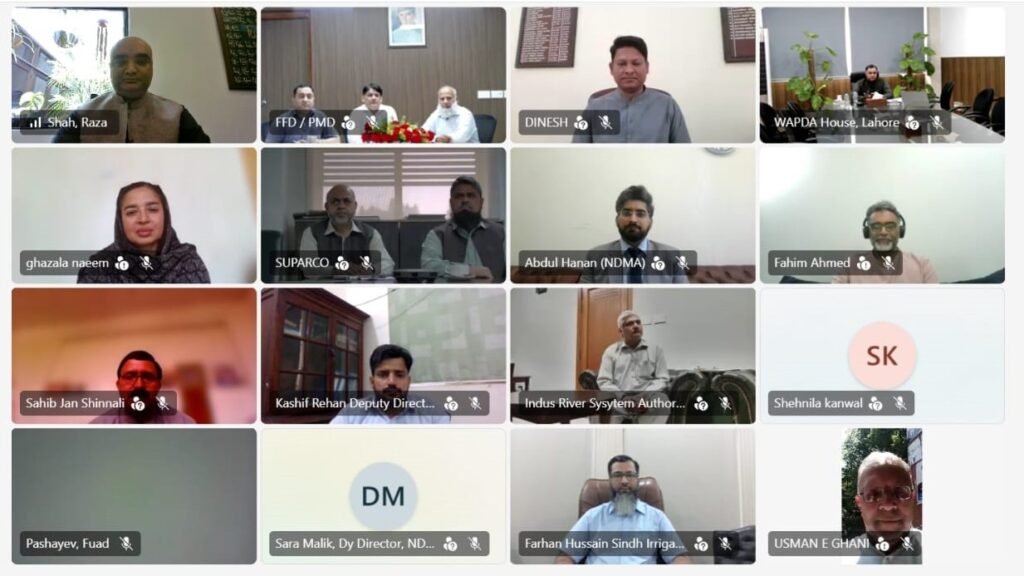
The event, held online, brought together 37 representatives from federal and provincial governments, technical agencies, academia, development partners, and UN organizations engaged in disaster risk reduction and climate resilience.
According to participants, the review highlights both progress and persistent challenges, especially in last-mile communication and the timely translation of forecasts into action during recent flood events, including the 2025 monsoon season. The session brought together representatives from government departments, technical agencies, academia, development partners, and UN organizations working in disaster risk reduction.
Read More: Rising Temperatures Threaten World Heritage Sites, UNESCO Warns
Opening the workshop, UNESCO Representative in Pakistan Fuad Pashayev emphasized the importance of collective ownership and practical implementation, noting that the objective is to ensure the system reflects operational realities and delivers actionable solutions for communities at risk.
Stakeholders reviewed key gaps such as data integration, inter-agency coordination, and community-level engagement. Discussions also focused on improving interoperability between institutions and strengthening the link between scientific forecasting and on-ground decision-making.
Participants stressed the need for a more people-centered, impact-based early warning approach that incorporates indigenous knowledge and enhances local leadership involvement in preparedness and response.
The validation process aims to refine strategic recommendations that will strengthen Pakistan’s capacity for anticipatory action and disaster risk reduction. These recommendations are expected to support national efforts to build resilience against climate-induced disasters.
Read More: UNESCO Alarmed by Impact of War Escalation on Schools in Middle East
UNESCO reaffirmed that the findings align with global frameworks including the Sendai Framework for Disaster Risk Reduction and the UN Early Warning for All initiative, and said it will continue to provide technical and policy support to enhance Pakistan’s flood resilience systems.

Sohail Majeed
Sohail Majeed is a Special Correspondent at The Diplomatic Insight. He has twelve plus years of experience in journalism & reporting. He covers International Affairs, Diplomacy, UN, Sports, Climate Change, Economy, Technology, and Health.