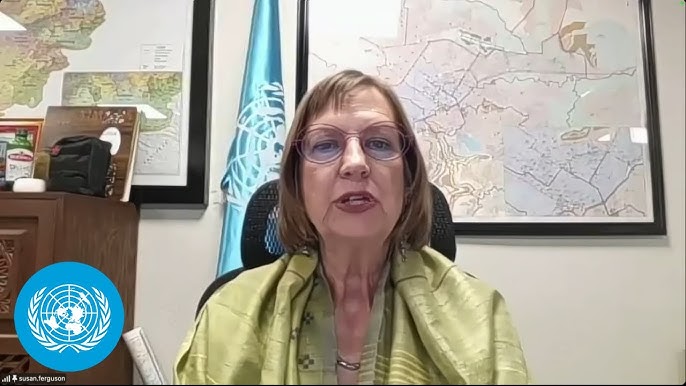
Five years after the Taliban seized control of Afghanistan, UN Women’s Special Representative in the country, Susan Ferguson, told reporters at UN Headquarters in New York that the situation facing Afghan women and girls remains unparalleled.
Since the takeover, de facto authorities have issued more than 100 decrees stripping away women’s rights and institutionalizing discrimination, making Afghanistan the only country where women and girls face such sweeping restrictions on education, work, movement, public participation and legal equality.
Ferguson pointed to recent examples, including one decree that makes a husband criminally liable for domestic violence only if he causes severe, visible injuries, which his wife must prove in court, often with the help of a male guardian who may be her abuser.
Another preserves men’s right to divorce while requiring women to obtain a husband’s permission or pursue lengthy legal proceedings, and implicitly permits child marriage.
Read More: Rights of Women & Girls Dismantled in 5 Years of Taliban Rule, Says UN Women
The human toll is stark. In a UN Women survey of 3,200 women, more than half said they now leave home only once or twice a month, nearly three-quarters said they feel unsafe leaving without a male guardian, and more than half avoid public spaces like markets and clinics altogether. Seven in ten described their mental health as “bad” or “very bad.”
Ferguson warned that this crisis is colliding with a funding collapse just as needs are rising. More than half of the 74 Afghan women’s organizations UN Women surveyed in April are likely to suspend operations or close within a year because of aid cuts, and nearly three-quarters experienced funding cuts in 2025, with two-thirds reporting six months or less of operational funding left.
More than half of these groups have already scaled back gender-based violence support, and two-thirds have cut education and income programs. A separate June survey of over 100 NGOs and UN agencies found more than half had been forced to lay off Afghan women staff due to funding shortfalls.
Meanwhile demand is climbing: every women’s organization surveyed in April reported rising economic vulnerability among women, and more than eight in ten reported an increase in early and forced marriage.
Read More: Taliban Mark Five Years in Power as Afghanistan Struggles
This year, more than 10.7 million Afghan women and girls need humanitarian assistance, and 4.9 million women and children are expected to require treatment for malnutrition, with the country also facing recurring natural disasters and climate shocks.
Ferguson called the timing a “stark contradiction;” organizations that remain among the last lifelines for Afghan women are being asked to do more with less, just as the crisis deepens.
She urged governments and international donors to increase, rather than cut, funding for Afghan women and girls, framing continued support as essential to resisting what she called the creeping “normalization” of excluding half a country’s population from public life.
“There is nothing normal about excluding half a country’s population from public life,” she said. “We must never allow it to become normal.”