Under President Donald Trump’s second term, Pakistan-US relations have seen a pragmatic improvement driven by mutual interests in security, resources and emerging technologies.
Pakistan has leveraged it’s strategic location, intelligence capabilities and economic assets to foster constructive engagement. Here’s a breakdown:
Counterterrorism Cooperation and Quick Wins for Trump
Pakistan delivered tangible results that Trump could publicly highlight. Renewed intelligence sharing and operation against ISIS-K ‘s Sharifullah (known as “JAFFAR”) which was at Kabul airport bombing in 2021.
Revival of a joint U.S.-Pakistan counterterrorism dialogue: U.S. CENTCOM officials publicly called Pakistan a “phenomenal partner” in counterterrorism a sharp contrast to first-term criticisms.
This gave Trump “wins” to boast about in speeches (e.g., addressing Congress) and helped rebuild some trust after years of accusations of “safe havens”. This development reduced the distance between Islamabad and Washington.
Access to Critical Minerals and Resources
Pakistan holds vast untapped deposits (estimated at trillions of dollars) of copper, rare earth elements, antimony, and other minerals in Balochistan and elsewhere.
These are strategic for U.S. supply chains in batteries, defense, electronics, and the green energy transition — areas where the U.S. wants to reduce dependence on China.
Deals worth hundreds of millions (including a $500 million partnership framework) were signed or advanced. Pakistan offered access to hydrocarbons/oil reserves and sent initial shipments of enriched minerals.
This aligns with Trump’s “America First” economic focus and efforts to diversify global supply chains away from Chinese dominance.
Read More: ‘Very Good Ties With Pakistan’: Trump Rules Out Intervention in Islamabad-Kabul Tensions
Personal Diplomacy and Nobel Nomination
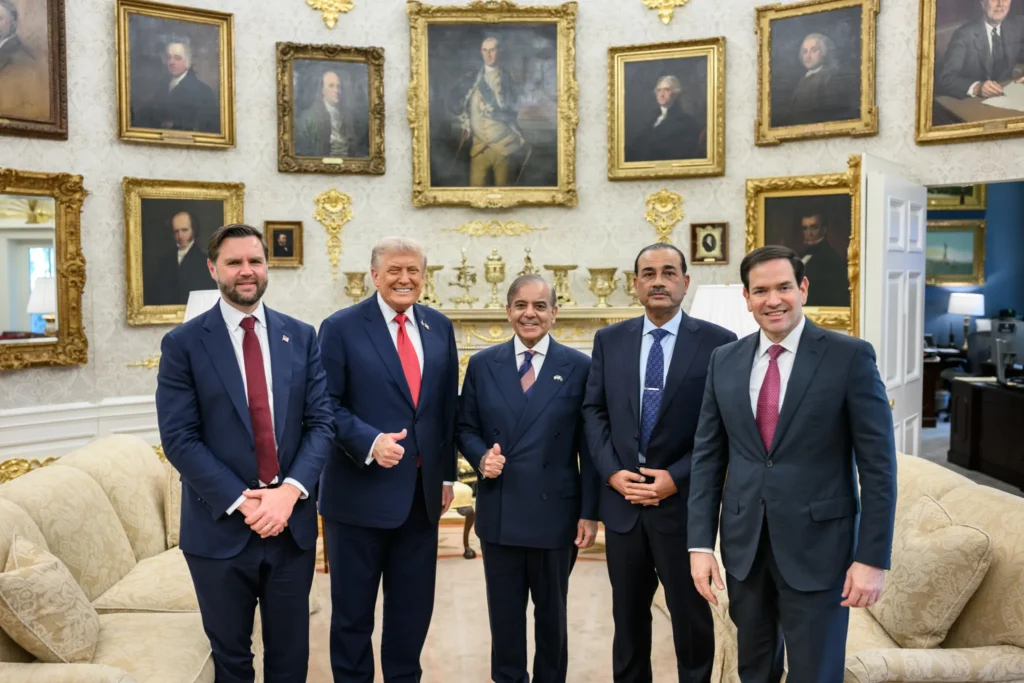
Pakistan’s leadership (especially Army Chief Field Marshal Asim Munir and PM Shehbaz Sharif) skillfully used personal engagement:
- Multiple White House meetings and invitations (including unprecedented hosting of the army chief alone).
- Public praise from Pakistani officials calling Trump a “peacemaker” and nominating him for the Nobel Peace Prize (multiple times) for his claimed role in de-escalating India-Pakistan tensions.
Trump responded by calling Munir his “favorite Field Marshal,” praising Pakistani leaders as “great people,” and saying he has a “very positive relationship” with Pakistan.
Trump is known to respond well to validation and personal rapport — Pakistan capitalized on this while India pushed back on mediation claims.
Strategic Balancing and Messaging to India/China
The outreach serves as a reminder to India that the U.S. has options in South Asia and won’t be taken for granted (especially amid U.S.-India tensions over tariffs, Russia oil, etc.).
It nudges Pakistan slightly away from over-reliance on China (while not ending CPEC) and creates leverage in a multipolar world. Pakistan positioned itself as a useful partner for regional stability without full alignment.
These factors fit Trump’s transactional style: Pakistan provided quick, deliverable benefits (terrorist captures, minerals access, crypto openings) in exchange for diplomatic warmth, lower tariffs, and business opportunities.
The relationship remains pragmatic rather than a deep strategic alliance — it could shift if deliverables slow or other priorities (like China containment) dominate.
This dynamic directly ties into Pakistan’s global importance: Its location, military/intelligence capabilities, mineral wealth, young population, and ability to balance major powers make it a country Trump find useful in 2025–2026 geopolitics.